


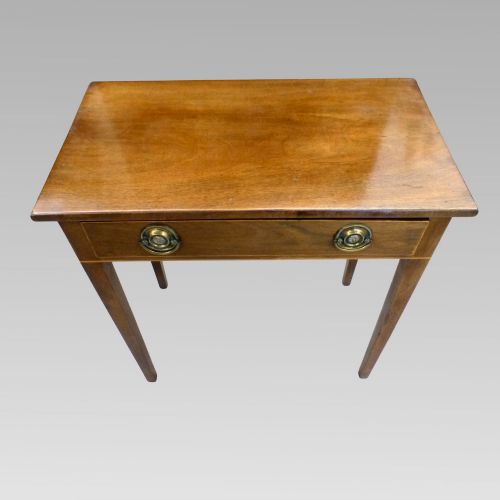


English Inlaid Side Table
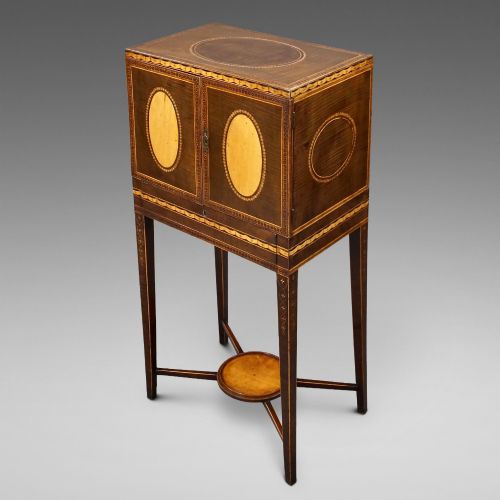
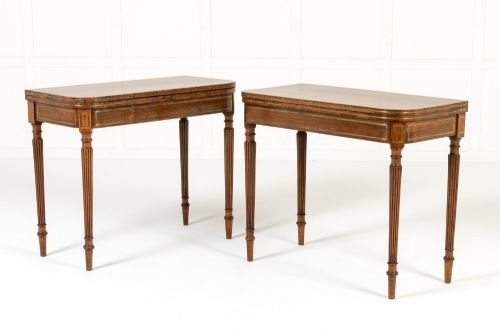
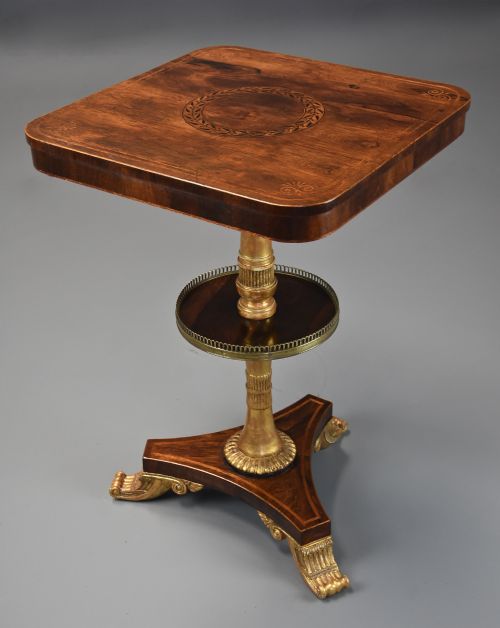
An English inlaid side table brings refined cabinet-making timber, brass mounts and intricate decorative banding into a sitting room or hallway.
English Inlaid Side Table
When you search for an English inlaid side table, you encounter diverse forms spanning centuries of domestic furniture design, from card and pembroke tables to simple occasional surfaces.
The versions met most frequently on this page include Georgian mahogany demi lune folding designs, Victorian walnut pieces with marquetry panels, and Edwardian satinwood or mahogany occasional tables.
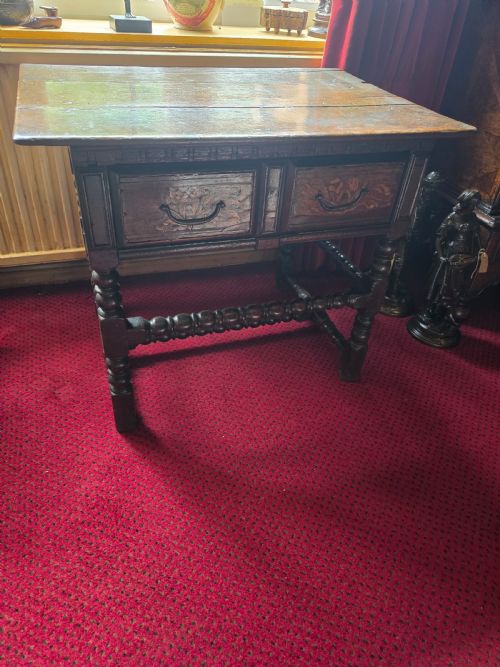
Cabinet-makers adapted these tables for various domestic uses, producing lowboys, work tables, wine tables, and nesting sets tailored to the drawing room or hall.
Timber and Inlay Technique
Workshops built these tables using sturdy primary carcase woods such as mahogany, oak, and walnut, frequently applying fine surface veneers like satinwood, rosewood, and harewood.
Craftsmen enriched the timber surfaces through detailed wood inlay, boxwood stringing, and elaborate marquetry panels depicting floral or geometric motifs.
Several tables cleverly double as chess boards or secret work stations, proving that Georgian cabinet-makers loved a hidden multi-tasker.
Assessing Craftsmanship and Materials
The standard of a piece depends heavily on the precision of the cabinet work, particularly the tightness of the joinery and the complexity of the inlaid banding.
Superior examples employ choice burr walnut, figured mahogany, or richly coloured exotic veneers alongside crisp, meticulously cut marquetry rather than simpler painted or printed substitutes.
George Bullock·Waring & Gillow·Ince & Mayhew·Druce & Co.
The English Inlaid Side Table Glossary
- Marquetry
- Decorative veneer work arranged in pictorial patterns or scrolls. Craftsmen assemble different woods to create elaborate surface designs on tabletops.
- Stringing
- A narrow strip of contrasting wood inlaid into channels in the timber surface. This technique outlines drawers, borders, and table edges.
- Demi lune
- Half-moon shape characteristic of side and card tables designed to stand flat against a wall. These often feature folding leaves supported on swing legs.
- Pembroke table
- A small rectangular table with hinged drop leaves on either side. These typically incorporate a single drawer and slender legs.
- Lowboy
- A small pedestal table or low dressing table featuring one or more rows of drawers. Georgian examples often stand on cabriole or tapered legs.
English Inlaid Side Table: Frequently Asked Questions
Where should I place an inlaid side table?
These tables suit hallways, drawing rooms, or landings where their decorative tops and compact proportions remain visible.
Drop leaf and demi lune formats adapt easily to tight spaces or against walls when not in use.
How do I clean inlaid table surfaces?
Dust gently with a soft dry cloth and avoid harsh chemical polishes that can degrade older veneer adhesives.
Maintain appropriate humidity levels in the room to prevent timber shrinkage or lifting of the delicate boxwood stringing.
What distinguishes a card table from a side table?
Card tables feature a folding top that opens to reveal a baize or leather lined playing surface, often supported by a pivoting rear leg.
Standard side tables provide a fixed surface meant primarily for display or holding lamps and decorative objects.
How can I identify the period of an inlaid table?
Examine the underlying construction timbers, secondary woods used in drawer linings, and the specific style of the inlay work.
Georgian and Regency pieces tend to favour mahogany and satinwood stringing, whereas Victorian and Edwardian examples frequently display busier marquetry and walnut veneers.