





English Impressionist Fine Art
English impressionist fine art captures the shifting light and pastoral scenery of Britain across Victorian and mid-century decades.
English Impressionist Fine Art
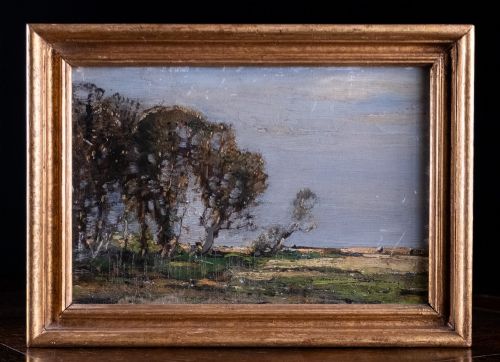
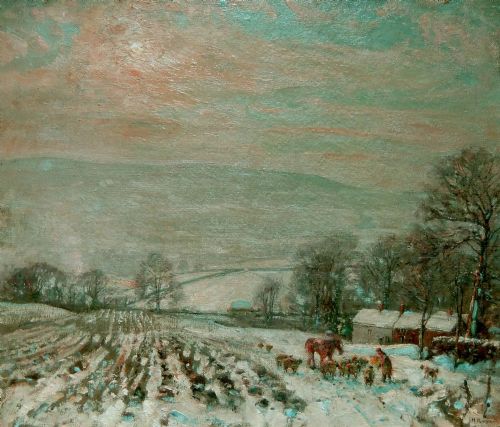
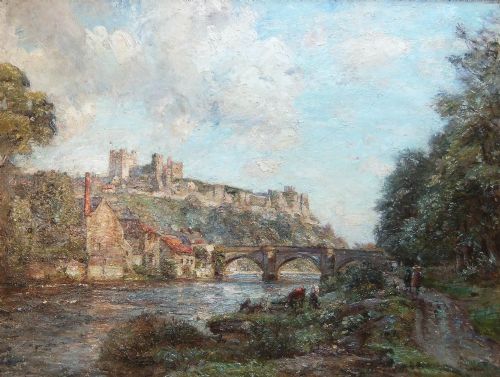
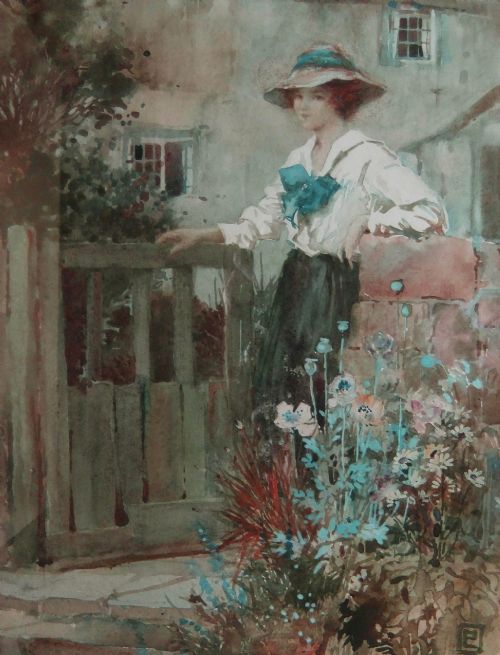
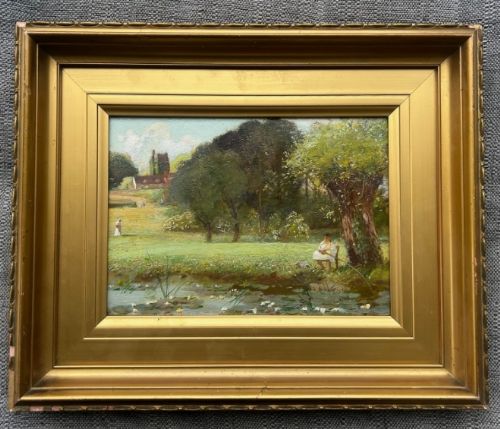
When someone searches for English impressionist fine art, they are looking at paintings that record rural landscapes, riversides and coastal villages through loose brushwork and natural light. The pieces on this page span from the late Victorian era through the Edwardian period and into the mid-twentieth century.
The most common form to meet here is an oil painting on canvas or board, alongside watercolours on paper. Regional Yorkshire views and northern river scenes appear frequently among these landscape subjects.
Materials and methods
Artists painted primarily with oil paint on stretched canvas, wooden panels or primed boards, building texture with direct brushwork. Others applied watercolour pigments onto paper to capture translucent washes of light.
Framing typically involves wood mouldings, often period appropriate to the date of execution, supporting the preservation of the canvas or paper support.
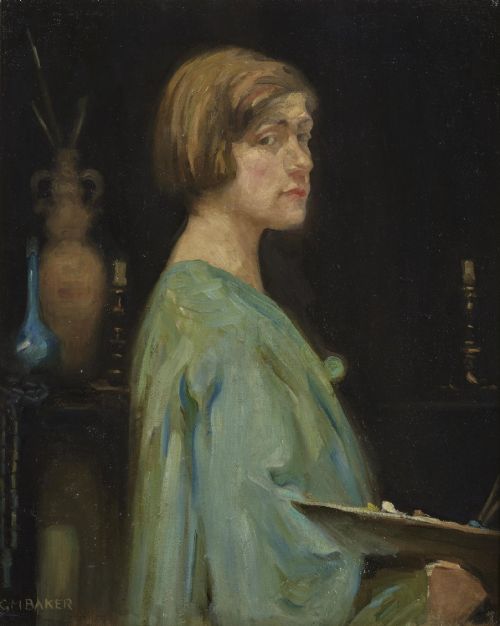
Self-portraits with paint palettes and gypsy caravans add unexpected personal narratives to the rows of Yorkshire river valleys.
Distinctions in quality
Quality rests in the handling of light and the surety of the brushwork, where confident pigment application brings movement to a landscape or interior. Pieces that capture atmospheric conditions with distinct compositional balance stand apart from routine topographical recording.
The relationship between the artist's hand and the subject determines the distinction within this group, separating standard regional records from works of sustained observation.
Kershaw Schofield·Herbert Royle·Percy Lancaster·Edgar Woollatt·Harry Freckleton·Sir David Murray·Reginald Grange Brundrit·Owen Bowen·William Greaves·Ernest Higgins Rigg·Florence Hess·Fred Stead·Charles Henry Harrison Burleigh·Peter Jackson·Robert Lesley Howey·Frederick William Jackson·Rowland Henry Hill·Beatrice Parsons·Walter Emsley·J Henry Inskip
The English Impressionist Fine Art Glossary
- Board
- A rigid flat panel utilised as a painting support instead of woven canvas. It provides a firm surface often seen in plein air works.
- Canvas
- A heavy woven fabric stretched across a wooden frame to hold oil paint. It remains a standard foundation for traditional paintings.
- Watercolour
- A paint medium consisting of water-soluble pigments applied to paper. It allows for transparent layers and luminous washes.
- Impressionism
- An art style focused on accurate depiction of light in its changing qualities. Artists utilised visible brushstrokes and open compositions.
- Plein air
- The act of painting outdoors to capture direct observation of a landscape. Painters recorded natural light directly onto their panels.
English Impressionist Fine Art: Frequently Asked Questions
What subjects appear in English impressionist fine art?
These works predominantly depict rural British landscapes, pastoral scenes with livestock, river valleys, and coastal villages. Scenes from Yorkshire and northern England recur frequently.
Artists also recorded domestic settings, gardens, and urban parks during the Victorian and Edwardian periods.
How should I care for an oil painting on board?
Keep the painting away from direct sunlight and fluctuating humidity to protect the wood panel and oil paint layers. Avoid damp environments that might affect the wooden support.
Dust the surface gently with a soft, dry brush and leave professional cleaning to a trained conservator.
Are watercolours framed differently from oil paintings?
Watercolours on paper require framing behind glass to protect the pigment from moisture and airborne pollutants. They often include a card mount to separate the paper from the glass.
Oil paintings on canvas or board are typically framed without glass to let the texture of the paint remain visible.
How can I tell the period of a landscape painting?
The recorded dates of the artist provide the most reliable guide to a painting's era. Stylistic elements, clothing in figurative works, and framing materials offer additional clues.
Signatures, exhibition labels, and inscriptions on the reverse of the canvas or board often confirm the date and location.