



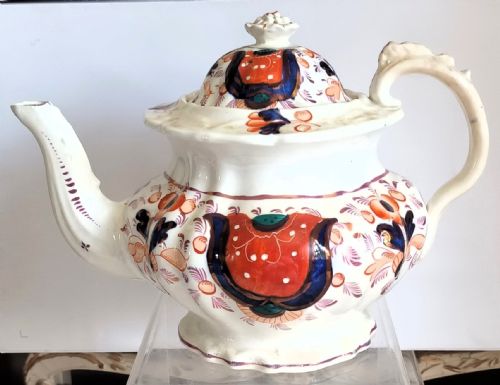


English Imari Pottery
English imari pottery brings rich cobalt blue, iron red and gold leaf together on ironstone, porcelain and earthenware forms.
English Imari Pottery
When you search for english imari pottery, you encounter a distinct decorative tradition spanning the nineteenth century and the Edwardian era. These pieces draw heavily on Japanese export aesthetics, filtered through domestic ceramic factories to produce vibrant tableware and display items.
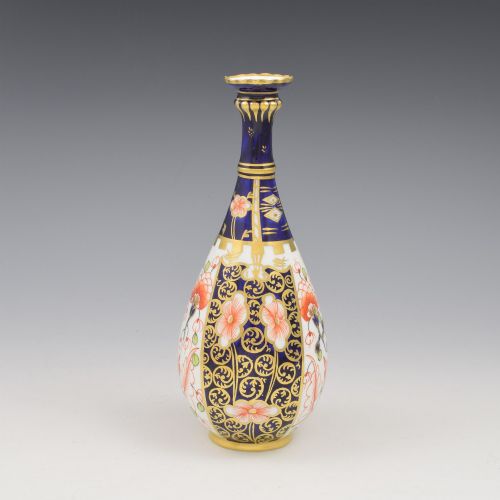
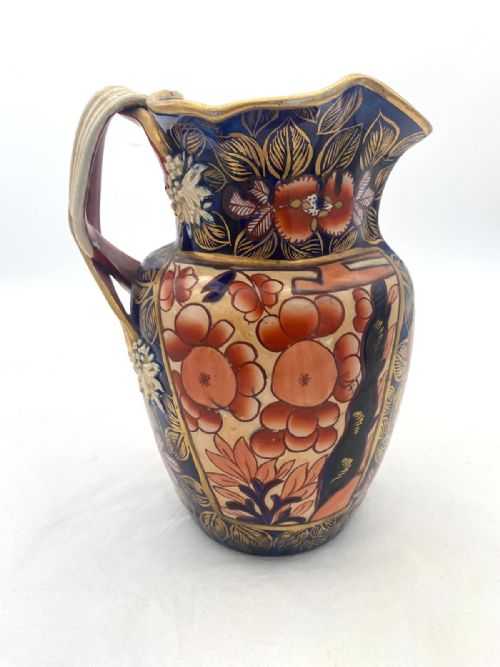
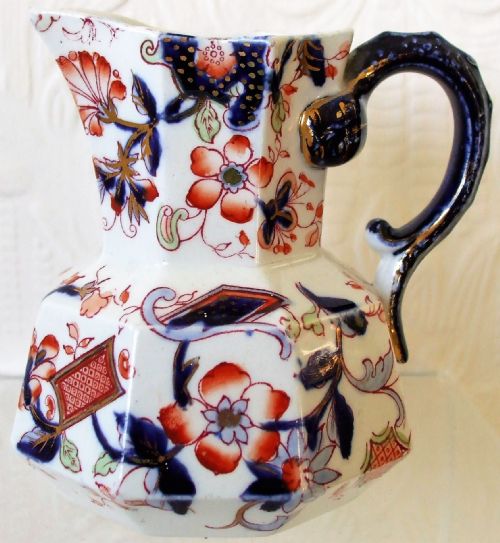
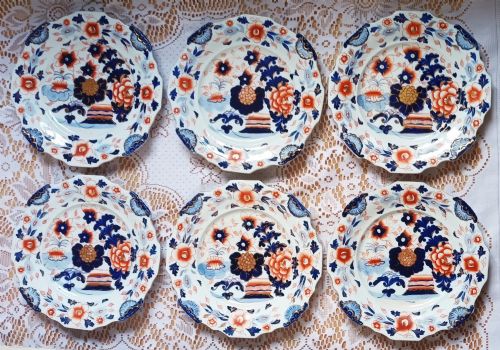
The objects on this page consist predominantly of nineteenth century ironstone and porcelain plates, jugs, pedestal bowls and vases. You meet robust ironstone sets alongside finer porcelain stems, reflecting how different makers adapted the palette for everyday service or decorative mantelpieces.
Vibrant patterns bridge Georgian, Regency and Victorian tastes, often pairing cobalt underglaze with brick-red enamel and gilding. These items survive as functional vessels and decorative display plates that hold their visual impact after a century or more.
Materials and production techniques
Potters built these vessels using dense bodies of ironstone, porcelain or earthenware, shaped into octagonal jugs, pedestal bowls and plates. Ironstone provided a durable, heavy substrate capable of enduring daily household service.
Decoration relied on a combination of underglaze blue, hand-applied enamel colours and gold leaf highlights. Firing fixed the cobalt and glaze before painters added the iron red and gilding in subsequent kiln runs.
English Imari Pottery Retail Price Guide 2026
Typical asking prices for english imari pottery among the pieces listed under this phrase on Sellingantiques today, from the lower quarter to the upper quarter. They describe what is for sale here now, not the wider market.
Listings feature nineteenth century ironstone, porcelain and earthenware forms including pedestal bowls, jugs, plates and vases.
Assessing quality in the range
Quality rests upon the crispness of the underglaze transfer printing and the precision of the hand-painted enamel infill. Strong pieces display well-defined outlines where cobalt blue does not bleed beneath the glaze.
The application of gold leaf and iron red separates standard production from finer cabinet pieces. Rich gilding that retains its burnished lustre indicates careful initial firing and preservation over generations.
Royal Crown Derby·Mason's Ironstone·John Ridgway·Davenport
The English Imari Pottery Glossary
- Ironstone
- A dense, heavy ceramic paste patented in the nineteenth century to imitate Chinese porcelain while offering greater durability for tableware.
- Imari
- A style of ceramic decoration originating in Japan, characterised by a palette of cobalt blue, iron red and gold leaf.
- Enamel
- Opaque coloured glass fused to the surface of fired pottery during a low-temperature secondary kiln firing.
- Gilding
- The application of gold leaf or powdered gold to ceramic surfaces to highlight patterned details and borders.
English Imari Pottery: Frequently Asked Questions
What is english imari pottery?
English imari pottery comprises nineteenth-century plates, jugs, bowls and vases decorated in imitation of Japanese export wares. Potters used a characteristic palette of cobalt blue, iron red and gold leaf on ironstone and porcelain.
These wares bridge Georgian, Regency and Victorian tastes, serving both practical dining needs and decorative display. The style remains distinct through its vibrant contrasting colours and rich surface patterns.
How were these pieces used?
Many items functioned as practical tableware, including soup bowls, dinner plates, teapots and water jugs. Ironstone provided the durability required for everyday nineteenth-century household service.
Other forms, such as pedestal bowls and bud vases, served primarily as decorative mantelpiece or cabinet ornaments. Their robust construction allowed them to survive active domestic use over many generations.
How do I date these ceramics?
Dating relies on factory marks, ceramic bodies, and stylistic shifts between Georgian, Regency, Victorian and Edwardian periods. Ironstone bodies and specific pattern names offer clear chronological markers.
Nineteenth-century pieces often feature impressed or printed maker marks on the base alongside pattern numbers. Comparing stylistic details like border motifs helps place a piece within its manufacturing era.
How do I care for ironstone?
Wash ironstone and porcelain pieces gently by hand using warm water and mild soap to protect the surface enamels and gold leaf. Avoid soaking items with historical crazing or hairline fractures.
Keep pieces away from modern dishwashers and harsh abrasives to preserve the delicate hand-painted iron red and gilding. Proper handling ensures the vibrant colours remain intact for years to come.