


English Glass Tazza
These English glass tazza pieces are raised serving dishes that bring height and clarity to a table.
English Glass Tazza
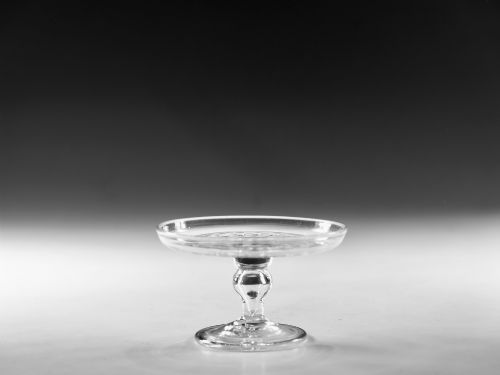
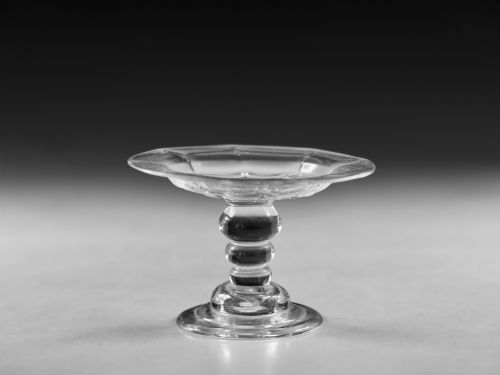
An English glass tazza is a raised pedestal dish designed for serving sweets, patches, or fruits at the table. These pieces span from the early eighteenth century through to the Victorian and Edwardian eras, displaying varied forms such as miniature patch stands and large centrepieces.
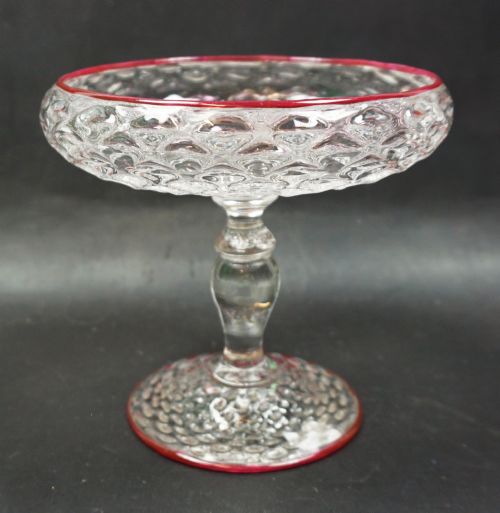
The versions most commonly met on this page include Georgian lead glass examples with folded feet alongside later Victorian and Edwardian cut and coloured crystal pieces. Makers utilised clear glass, flint glass, and cased glass to achieve different optical weights and colour effects.
Forms range from simple baluster sweetmeat glasses and patch stands to elaborate etched or silver-plated centrepieces. Each period brings distinct proportions and decorative treatments, from honeycomb moulding to delicate cane work.
How they were made
The creation of these pieces relies heavily on lead glass, flint glass, and crystal glass, blown and sometimes moulded into distinct pedestal forms. Honeycomb moulding and wheel-cutting provide texture and catch the light across the bowl and stem.
Techniques such as cased glass overlay a clear core with coloured glass, seen in yellow and red cane decorations. Folding the foot back under during blowing creates a stable, thickened rim that anchors the pedestal stem.
Object forms on this page include patch stands, sweetmeat glasses, and large centrepieces.
What varies in quality
Quality rests in the crispness of the moulding, the weight of the lead crystal, and the purity of the metal. Early examples show remarkable clarity and heavy spreading feet that balance the proportion of the upper dish.
The skill of the cutter or blower determines the precision of the facets, the evenness of the coloured overlay, and the harmony between stem and tazza top.
The English Glass Tazza Glossary
- Tazza
- A shallow bowl raised on a pedestal foot, used historically for serving sweetmeats or fruit. These pieces sit elevated above the table surface.
- Patch stand
- A tiny pedestal dish used in the eighteenth century to hold small cosmetic patches for the face. They share the same form as miniature tazzas.
- Sweetmeat glass
- A small stemmed glass vessel designed for preserved fruits, nuts, or sweet confectioneries. They often feature ribbed or moulded bowls.
- Cased glass
- Glass made by fusing a layer of coloured glass over a clear or contrasting body. Artisans then cut through the outer layer to reveal the colour underneath.
- Folded foot
- A base edge turned back under itself during manufacture to add weight and stability. This technique appears frequently on early pieces.
English Glass Tazza: Frequently Asked Questions
What was an English glass tazza used for?
These elevated dishes served sweetmeats, small cakes, dried fruits, or decorative confectionery during formal dining. Their height added tiered dimensions to table settings.
Smaller variants like patch stands held cosmetic face patches, while larger centrepieces anchored dessert displays.
How do I date an antique glass tazza?
Dating relies on material composition, stem formation, and foot construction. Early eighteenth-century examples often feature heavy lead metal and folded feet.
Later Victorian pieces introduce bright colours, heavy cut crystal, and sometimes silver-plate combinations reflecting changing dining fashions.
How should I display a tazza?
Place these pieces where natural light passes through the clear or coloured crystal to highlight the moulding and cutting. Dining tables, sideboards, and cabinet shelves suit them well.
Ensure they rest on stable surfaces away from heavy foot traffic due to their elevated pedestal centres of gravity.
What is the difference between a tazza and a compote?
While both terms describe elevated serving vessels, tazza is the traditional historical term often applied to European pedestal dishes. Compote appears more frequently in descriptions of later nineteenth-century wares.
Both serve the same primary function of holding fruit or sweets above the table level.