


Cut Crystal Compote Dish
These cut crystal compote dish options bring weight, brilliance and proportion to a table, combining clear glass with bronze mounts and traditional forms.
Cut Crystal Compote Dish
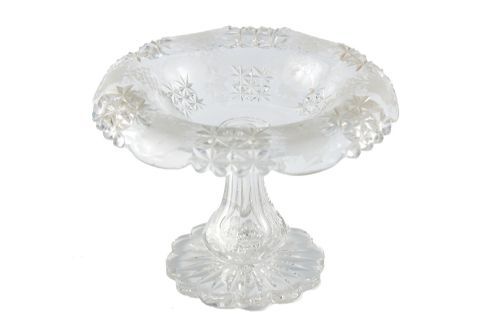
A cut crystal compote dish stands on a raised foot and stem, serving historically for fruit or as a decorative focal point. The listings here include Victorian, Edwardian, and Georgian examples alongside larger centrepieces and fruit bowls.
Most items you will meet on this page are mid to late 19th-century or early 20th-century pieces, including tazzas and large bowls in cut glass and lead crystal. Some examples combine the glass body with gilt bronze or patinated bronze detailing.
How they were made
The heavy glass bodies are shaped and finished by cutting deep facets, flutes, and geometric patterns into the surface of lead crystal or cut glass. This process requires precise handwork to achieve sharp edges that catch the light.
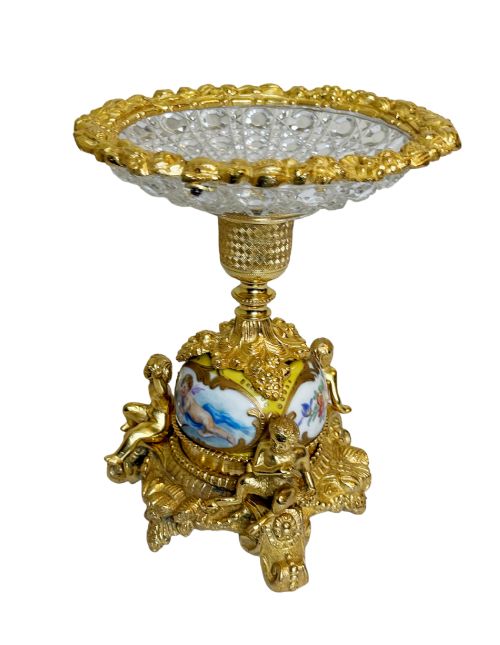
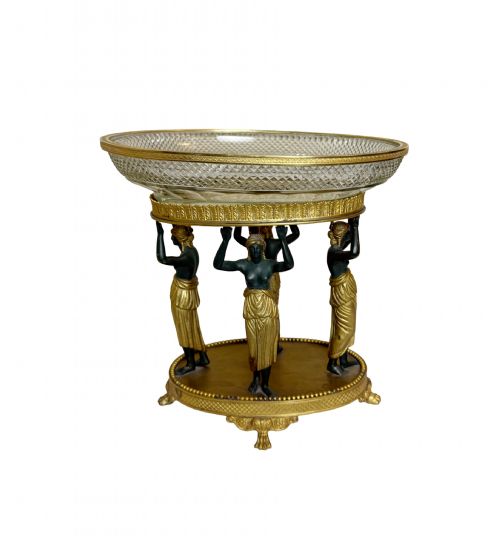
Many of the more elaborate examples integrate cast metal components, fixing the glass bowls to patinated bronze, gilt bronze, or porcelain mounts. These structural additions demand specialist metalworking alongside glass-cutting skills.
Some of these grand Victorian centrepieces feature cast cherubs keeping watch over the fruit bowl below.
What varies in quality
The clarity and weight of the crystal set the baseline for quality, alongside the depth and crispness of the facet cutting. Superior pieces show sharp, clean lines in the glass rather than softened or rounded edges.
The integration of bronze or gilt bronze detailing dictates the tier of the piece. Fine mounts with chased or cast ornamentation elevate a simple glass bowl into a grand decorative centrepiece.
The Cut Crystal Compote Dish Glossary
- Compote
- A raised dish on a stem and foot, traditionally used for serving fruit or sweets at the table. It sits higher than a standard flat bowl.
- Tazza
- An Italian term for a shallow saucer-like dish mounted on a stem and foot. In 19th-century English glass, it often functions similarly to a compote.
- Lead Crystal
- Glass containing a high proportion of lead oxide, which increases the weight, refractive index, and ringing sound when struck. It is the standard material for deep cut glass.
- Centrepiece
- A large decorative object placed in the middle of a dining table. These often combine cut glass bowls with bronze or gilt metal structures.
- Gilt Bronze
- Bronze that has been coated with a thin layer of gold leaf or mercury gilding. It provides a bright, durable metallic finish often paired with crystal.
Cut Crystal Compote Dish: Frequently Asked Questions
What is a cut crystal compote dish used for?
These dishes were originally designed to hold fruit, nuts, or sweetmeats at the end of a formal meal. Today, they function primarily as decorative table centrepieces or mantel ornaments.
Their raised form allows them to display light effectively when placed near windows or lamps.
How do I date a cut glass bowl?
Dating relies on the style of the cutting, the shape of the foot, and the presence of any metal mounts. Georgian and early Victorian pieces often feature heavier lead content and hand-polished facets.
Later Edwardian and 20th-century items may show more uniform mechanical cutting or different base signatures.
Are these pieces English or Irish?
The selection includes traditional Irish crystal alongside English production from the 19th century. Irish glass from houses like Waterford is particularly noted for its heavy weight and deep cutting.
Continental pieces, including French Empire and Rococo Revival styles, often incorporate bronze mounts alongside the glass.
How should I clean my compote dish?
Wash the glass gently in lukewarm water using mild detergent, avoiding harsh abrasives that can scratch the surface. If the dish includes bronze or gilt metal mounts, keep the moisture away from the metal to preserve the finish.
Dry thoroughly with a lint-free cloth to restore the sparkle of the cut facets.