


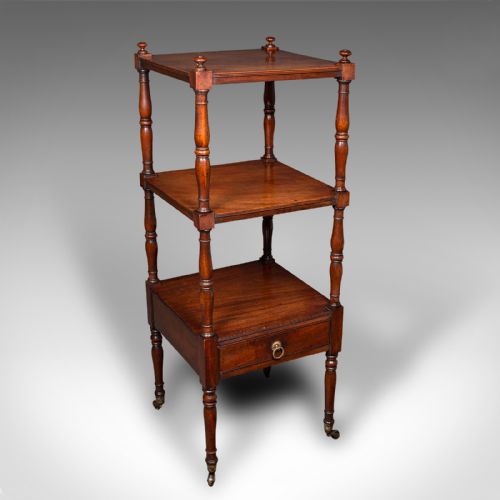


English Georgian Display Table
An english georgian display table brings sophisticated 18th-century presence to a room, offering surface space designed to show off silver and small treasures.
English Georgian Display Table
An english georgian display table encompasses specific occasional furniture designed to elevate prized objects, silver, and table plateaux within period interiors. Buyers exploring this category will frequently encounter tilt-top occasional tables, presentation side tables, and cabinets on stands originating from the 18th and 19th centuries.
The selection extends to multi-tiered serving pieces and specialised display stands, including dumb waiters and three-tier open whatnot structures. Georgian revival pieces from the Victorian era also appear alongside authentic 18th-century examples, maintaining traditional forms and construction methods.
Materials and construction
Cabinetmakers utilised rich timber species including mahogany, walnut, oak, and harewood, frequently pairing primary woods with decorative lighter veneers such as satinwood and boxwood. Inlay work and precise joinery define the cabinet-making standards of the period, creating durable frames designed to support heavy silver and display items.
Functional metal elements such as brass fixtures, pewter, and mirrored glass integrate directly into the structural design of presentation tables and table plateaux. Tilt-top mechanisms and multi-tiered configurations required precise mechanical skill to ensure stability during daily use.
Listings feature woods like mahogany, walnut, harewood, satinwood, and boxwood, combined with brass, pewter, and mirrored glass.
Judging execution and age
The distinction between standard utility furniture and superior examples lies in the refinement of the timber selection and the complexity of the inlaid marquetry. Finer pieces demonstrate meticulous attention to detail in the turning of columns, the fit of cabinet doors, and the preservation of original mirrored glass.
Age and period integrity separate authentic 18th-century pieces from later revival interpretations. Original surface patination and period hardware contribute significantly to the character and desirability of each display table.
The English Georgian Display Table Glossary
- Display table
- A specialised table featuring a glazed or open top specifically designed to exhibit silverware, collections, and valuables. These pieces often incorporate hinged lids or mirrored surfaces.
- Tilt-top
- A tabletop mechanism allowing the surface to pivot into a vertical position when not in use, saving space in period hallways and reception rooms. This clever engineering is typical of 18th-century occasional tables.
- Dumb waiter
- A multi-tiered serving table featuring stacked circular trays supported on a central pillar with tripod legs. These practical stands allowed diners access to food and tableware without servant assistance.
- Whatnot
- An open shelving unit or display stand featuring multiple tiers supported by slender uprights. They were traditionally used for displaying ornaments, books, and tea services.
- Table plateau
- A decorative mirrored tray placed in the centre of a dining table to reflect candlelight and display silver presentation pieces. They often feature detailed metal surrounds.
English Georgian Display Table: Frequently Asked Questions
What is an english georgian display table?
An english georgian display table is a period furniture piece created in the 18th century or early 19th century, designed to showcase silver, collections, and valuables. These items range from tilt-top occasional tables to glazed cabinets on stands.
They reflect the refined tastes of Georgian interior design, combining practical surface areas with decorative timber work such as mahogany and walnut.
How were dumb waiters used historically?
Dumb waiters served as multi-tiered storage units during formal meals in Georgian country houses. Their rotating or stacked circular trays held dishes, glasses, and utensils.
This allowed households to dine with greater privacy by reducing the constant presence of servants in the dining room.
Where should I place a display table?
These tables suit reception rooms, hallways, and drawing rooms where their surfaces can display small collections, silver, or decorative objects. Tilt-top variants offer the versatility of being stored flat against a wall when floor space is required.
Placing them away from direct heat sources helps protect the antique veneers and polished timber finishes.
How do I spot a georgian revival piece?
Georgian revival pieces date from later periods, such as the late Victorian era, while faithfully copying 18th-century styles and proportions. Examination of the timber age, construction joinery, and interior secondary woods helps distinguish the original Georgian pieces from later interpretations.
Both categories utilise traditional materials like mahogany and walnut, but show distinct differences in wear and tool marks.