



English Georgian Bureau Bookcase
An English Georgian bureau bookcase combines a fitted writing slope and a shelved upper cabinet, offering practical storage and display for the home.
English Georgian Bureau Bookcase
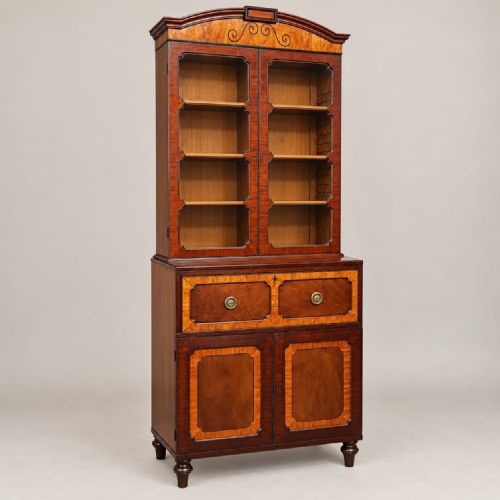
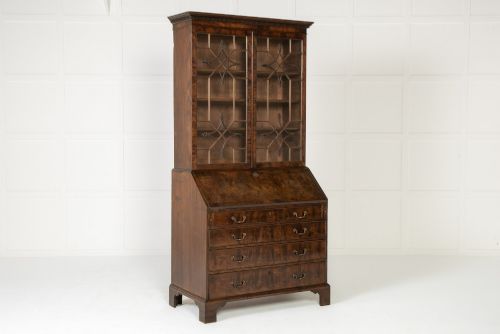
An English Georgian bureau bookcase is a dual-purpose piece combining a lower writing cabinet with an upper shelved storage section. These items appear across the eighteenth and nineteenth centuries, including pieces from the Queen Anne, George I, George II, George III, and Regency periods.
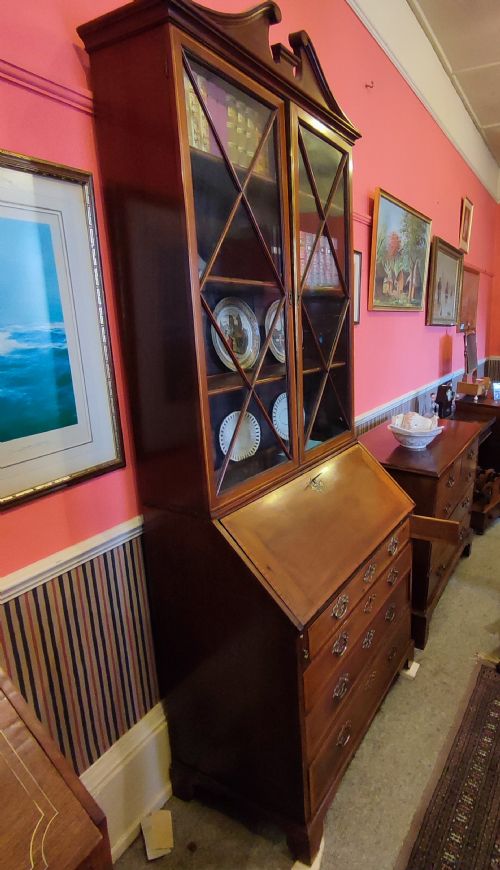
The format typically involves a fall-front desk or secretaire drawer that drops to reveal internal pigeonholes and small drawers. Above this writing section sits a glazed or panelled cabinet designed for books or display.
Most examples encountered here are constructed from mahogany or walnut, with solid timbers and veneers reflecting the prevailing taste of the Georgian eras. Variations also include Edwardian interpretations of earlier styles.
Materials and construction methods
Cabinet makers utilised dense hardwoods such as mahogany and walnut, frequently selecting figured veneers like burr walnut, flame mahogany, and satinwood for the exterior surfaces. These woods were applied to sturdy secondary timbers such as oak.
Glass is fitted into the upper cabinet doors, often in multi-pane or astragal glazed configurations. Brass hardware, including escutcheons and drop handles, secures the drawers and fall-fronts.
English Georgian Bureau Bookcase Retail Price Guide 2026
Typical asking prices for english georgian bureau bookcase among the pieces listed under this phrase on Sellingantiques today, from the lower quarter to the upper quarter. They describe what is for sale here now, not the wider market.
Many bureau interiors conceal hidden compartments behind sliding pigeonhole partitions, designed for securing private letters and small valuables.
Distinguishing quality in construction and material
Quality rests in the choice of timber figure, such as highly decorative burr walnut or flame mahogany veneer, and the crispness of internal drawer construction. Superior pieces demonstrate meticulous joinery in the pigeonholes and secret compartments of the bureau section.
The integrity of the original glass, brassware, and surface patination differentiates exemplary pieces from later alterations or heavily restored examples.
The English Georgian Bureau Bookcase Glossary
- Bureau bookcase
- A cabinet combining a sloping or pull-out writing desk with an upper shelving unit. This form provides both enclosed workspace and bookcase storage.
- Secretaire
- A piece of furniture containing a drawer or drop-front designed for writing, fitted with internal compartments. It often replaces the traditional sloping fall-front in taller cabinet forms.
- Burr walnut
- A wood harvested from the warted growths of walnut trees, yielding intricate, swirling grain patterns. Cabinet makers prized this material for high-status eighteenth-century facades.
- Astragal
- A moulding profile used to divide panes of glass within cabinet doors. These thin wooden bars create geometric patterns across the upper bookcase section.
- Patina
- The surface sheen and colour acquired by wood over decades of handling and ageing. Original finishes contribute to the visual depth of antique furniture.
English Georgian Bureau Bookcase: Frequently Asked Questions
What is a bureau bookcase?
A bureau bookcase is a tall piece of furniture featuring a lower section with a desk surface and an upper section with shelving for books. It serves as a combined workspace and storage cabinet.
The lower bureau component usually includes a folding slope or a pull-out drawer concealing small compartments for stationery.
How do I date a Georgian bookcase?
Dating relies on observing construction techniques, timber choices, and stylistic details associated with reigns such as George I, George II, and George III. Walnut is more common in early eighteenth-century pieces, while mahogany predominates later.
Changes in handle hardware, foot styles, and veneer types also offer clear indicators of the period in which the item was constructed.
Where should I place this cabinet?
These tall cabinets require adequate wall space and a stable environment away from direct heat sources and strong sunlight, which can dry out antique veneers. They suit studies, libraries, or living rooms where their dual functionality remains accessible.
Ensure the floor is level to prevent distortion of the tall frame and to keep the heavy doors and desk flaps operating smoothly.
Can I use the desk daily?
The fold-down writing surface or pull-out secretaire drawer provides a functional desk space suitable for writing and light paperwork. Care should be taken with the hinges and support lopers when lowering the writing flap.
Regular dusting and occasional waxing help maintain the wood surface against the wear of daily use.