



English Fusee Table Clock
An English fusee table clock brings precision mechanical engineering and rich timber cases into domestic spaces.
English Fusee Table Clock
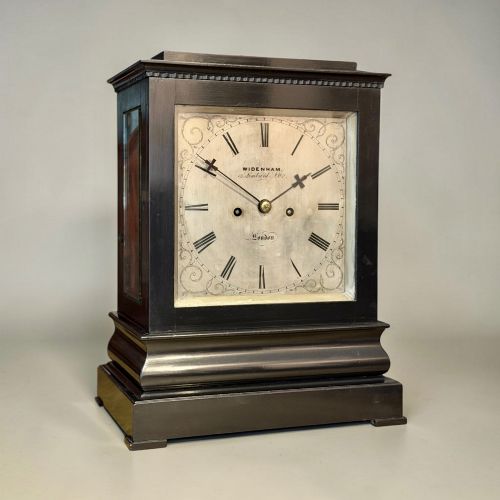
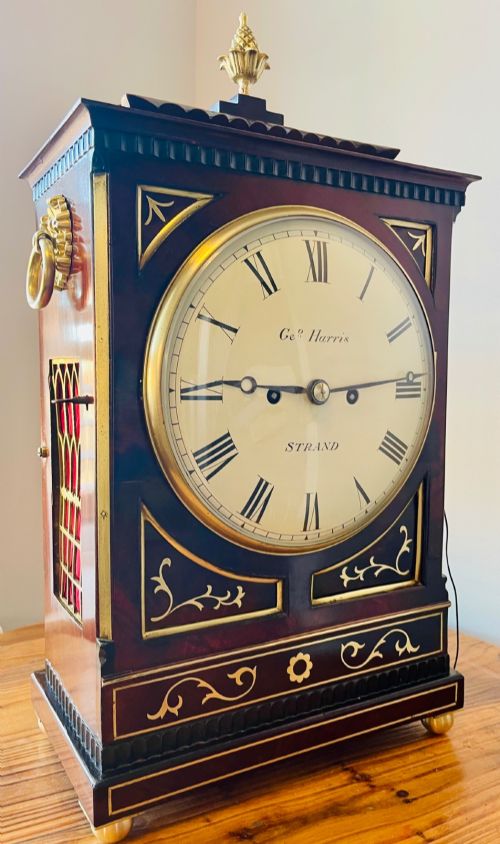
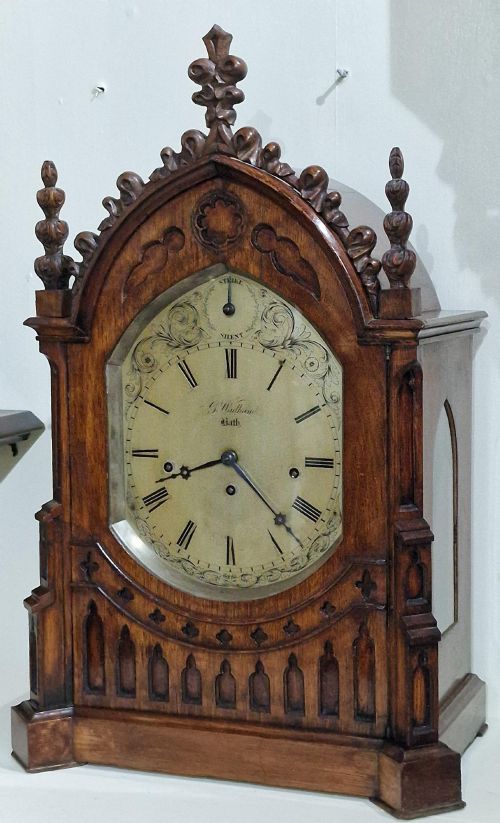
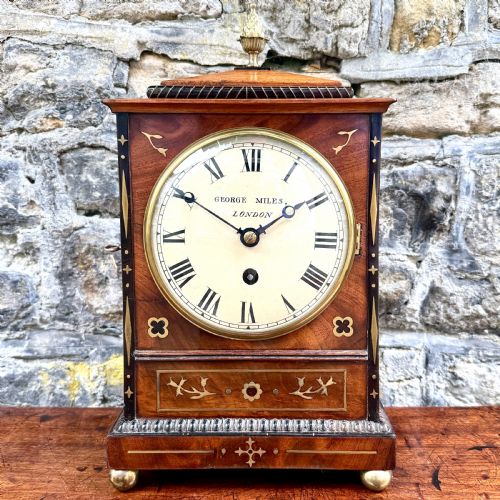
An English fusee table clock is a precision timekeeper driven by a chain or cord wound around a conical pulley, designed to maintain even force as the mainspring unwinds. These pieces appear in forms such as bracket clocks, library clocks, and mantel clocks spanning Georgian, Regency, and Victorian periods.
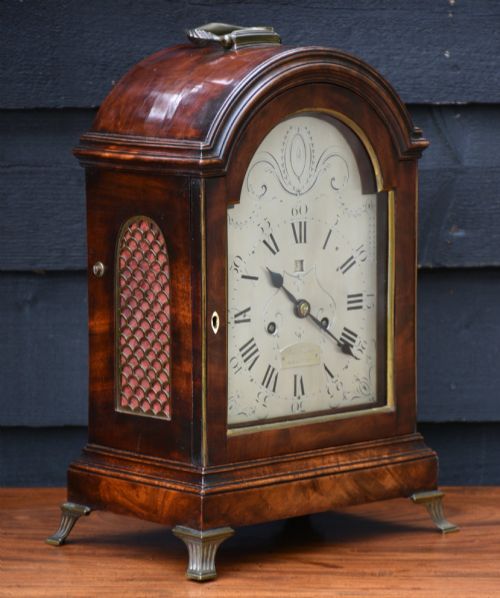
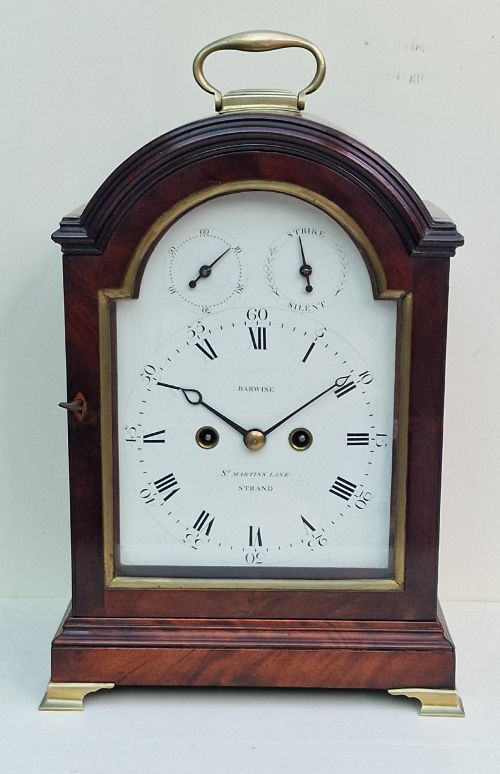
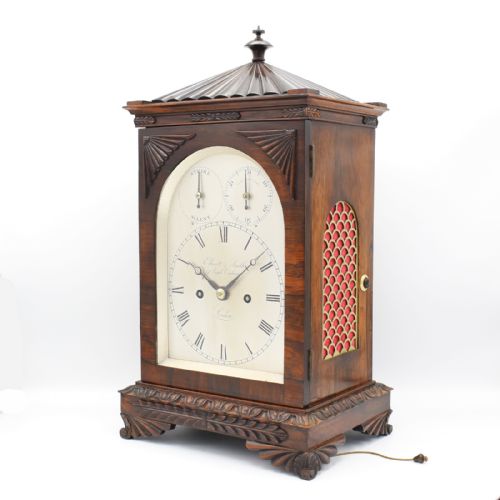
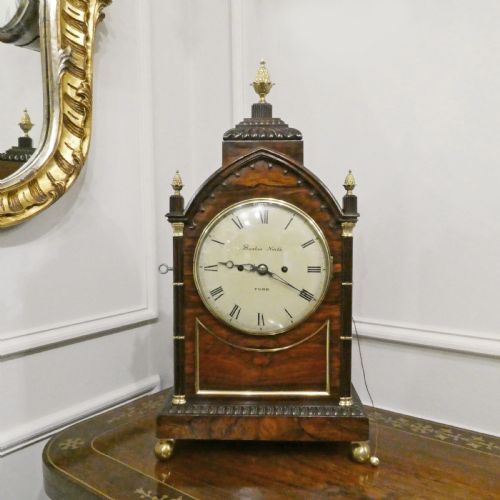
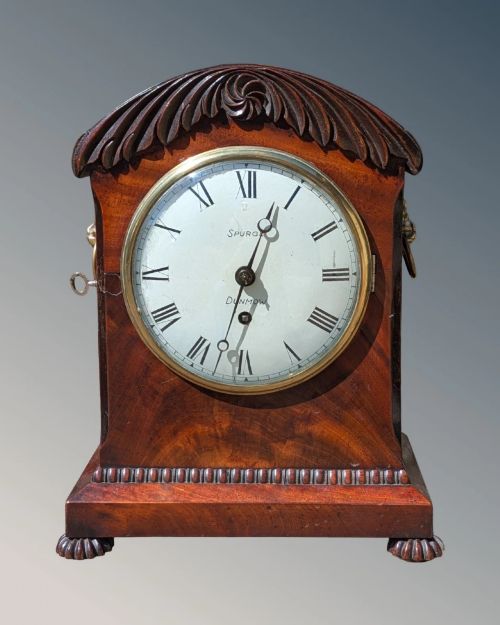
The versions most commonly met on this page are housed in mahogany, rosewood, or ebonised wood cases, often featuring brass details, silvered metal dials, and glass panels. They range from robust single fusee timepieces to complex double and triple fusee movements striking on bells.
How They Were Made
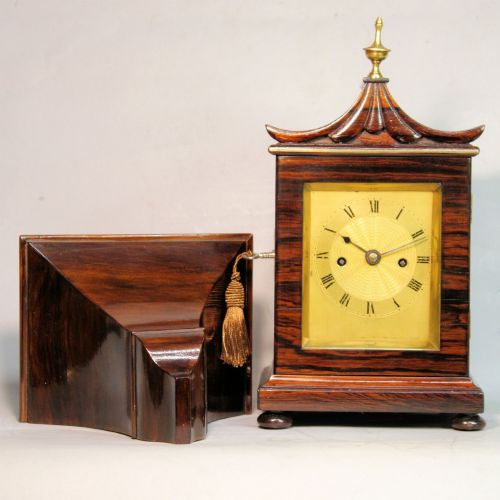
Clockmakers constructed these movements using brass gear trains, escapements, and fusee cones designed to equalise the declining power of the mainspring. Cabinets were built from dense hardwoods like mahogany and rosewood, frequently shaped with pad tops, chamfer edges, or architectural pagoda details.
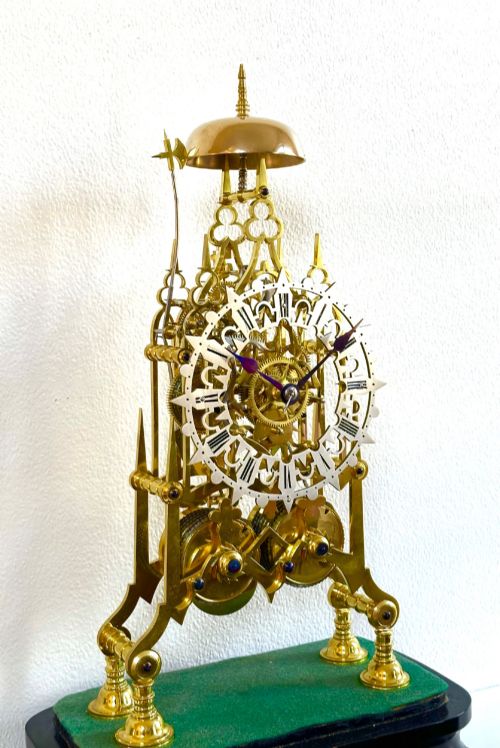
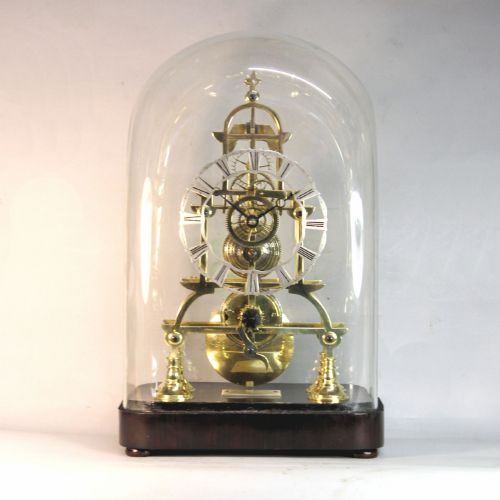
Dials combined engraved silvered metal or painted enamel protected behind glass doors, while specialised skeleton clocks exposed the brass mechanisms entirely within glass domes or brass frames.
Listings feature 18th century, Georgian, Regency, Victorian, and Edwardian periods, housed in mahogany, rosewood, oak, brass, and ebonised wood.
What Varies in Quality
Quality rests upon the execution and complexity of the movement, distinguishing a standard single fusee timepiece from intricate double or triple fusee striking mechanisms. Engraving on the backplate, dial fineness, and the precision of the gear work indicate workshop standards.
Case construction separates ordinary production from superior examples, seen in the selection of figured mahogany or rosewood, clean joinery, and well-cast brass mounts or fretted sound panels.
Widenham of London·George Wadham·Barwise·Ellicott & Smith·Richard Winter·Barber & North·Webster Cornhill London·Spurge Dunmow·Mappin & Webb·Thwaites of London·Dent·Cording of London·William Payne·John Barwise of London·Phillips Brothers·Geo. Carter·Barrett London·J Kingerley Manchester·Thomas Connold·Taylor of London·Richard Rooker·Payne & Co.·Thomas Cole and James Cole·Joseph Jump·Budgen Croydon
The English Fusee Table Clock Glossary
- Fusee
- A conical pulley used in clock movements to maintain constant driving power as the mainspring loses tension. This device ensures steady timekeeping over the running period.
- Bracket clock
- A portable table clock historically designed to sit upon a matching wall bracket or furniture surface. These pieces often feature striking mechanisms and robust wooden cases.
- Library clock
- A refined table clock designed for quiet study spaces, frequently featuring a clean dial and a single fusee movement. They emphasise understated elegance over complex striking trains.
- Skeleton clock
- A clock with an open brass frame that exposes the entire gear train and escapement to view. They are usually displayed beneath a glass shade.
- Silvered metal
- A brass dial plate treated with a silver compound to produce a bright, legible surface for engraved numerals. This technique provides contrast against dark clock hands.
English Fusee Table Clock: Frequently Asked Questions
How do I wind an English fusee table clock?
Winding requires inserting the key into the dial winding square and turning it steadily clockwise until resistance halts the motion. Care must be taken not to overwind the mechanism.
Most fusee clocks run for eight days per wind, utilising a chain or gut line connected to the conical pulley. Regular servicing by a horologist ensures the mainspring and fusee chain remain properly tensioned.
Where should I place a fusee table clock?
These clocks belong on sturdy, level surfaces away from direct sunlight, radiators, and draughts that might affect wood cases and mechanical parts. Mantelpieces, sideboards, and dedicated wall brackets provide stable platforms.
A level surface allows the pendulum or balance wheel to beat evenly, which is essential for accurate timekeeping. Placing the clock at or near eye level also makes viewing the dial and operating the movement convenient.
How do I tell a single fusee from a double fusee?
Examining the side or bottom of the movement reveals how many fusee cones and spring barrels are mounted inside. A single fusee powers only the timekeeping train.
A double fusee adds a second train to drive the striking mechanism, often operating on bells or gongs. Triple fusee movements add a third train for chime melodies such as Westminster.
How do I identify the period of a clock case?
Case styles provide primary clues, with Georgian examples showing architectural lines, Regency pieces featuring brass inlay or pad tops, and Victorian clocks displaying heavier carvings or Gothic revival details. Wood selection also shifts across decades.
Signatures or engraved names on the dial and movement backplate offer further context. Matching these maker names against historical records helps narrow down the decade of production.