






English Flint Glass
English flint glass brings tactile weight and bright clarity to the table, uniting centuries of drinking vessels from balusters to twists.
English Flint Glass
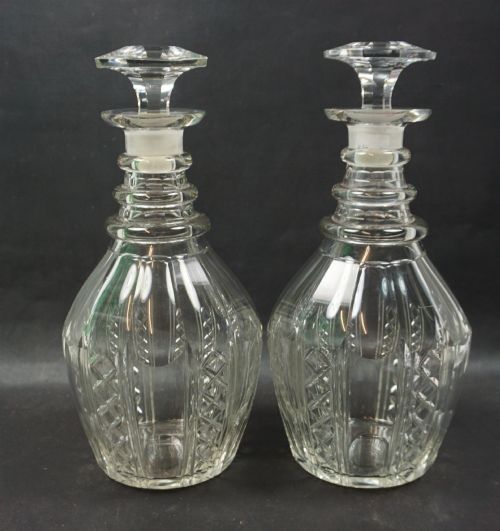
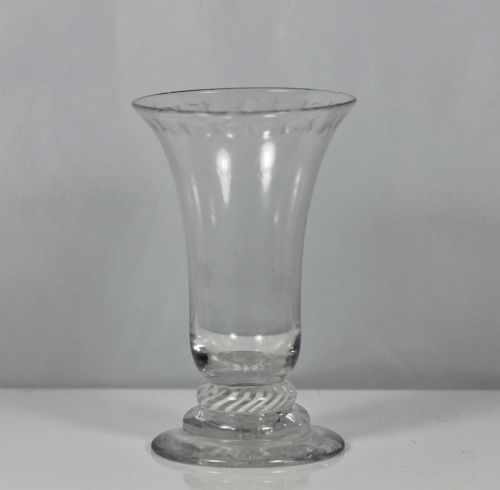
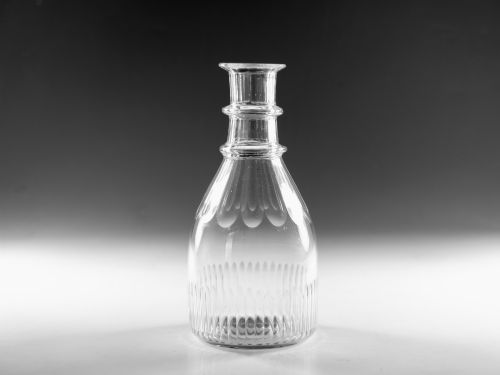
English flint glass encompasses drinking vessels and tabletop items primarily originating from the eighteenth century, alongside occasional later revivals and twentieth-century interpretations. When searching for English flint glass, buyers encounter wine glasses, decanters, ale glasses, jelly glasses, and patch stands shaped by Georgian tastes.
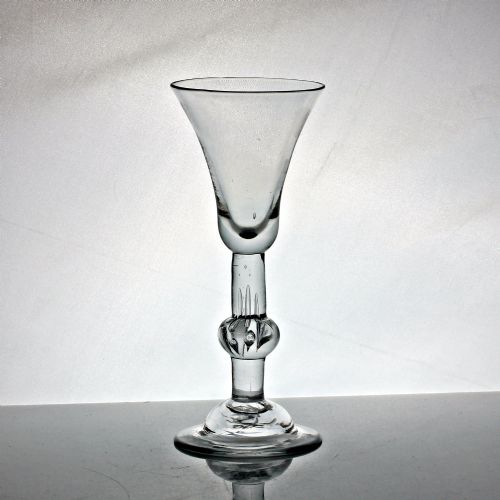
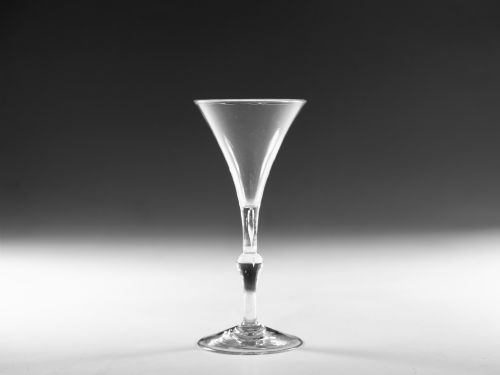
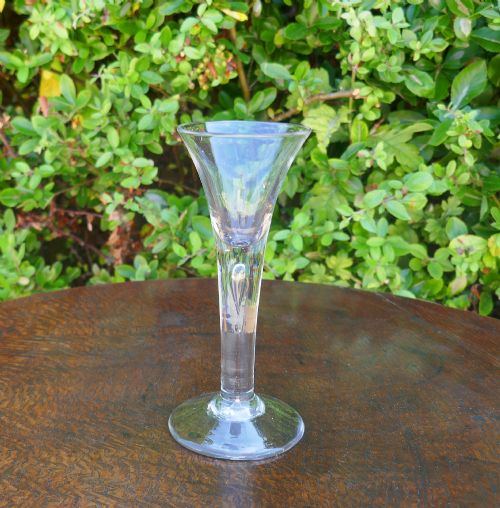
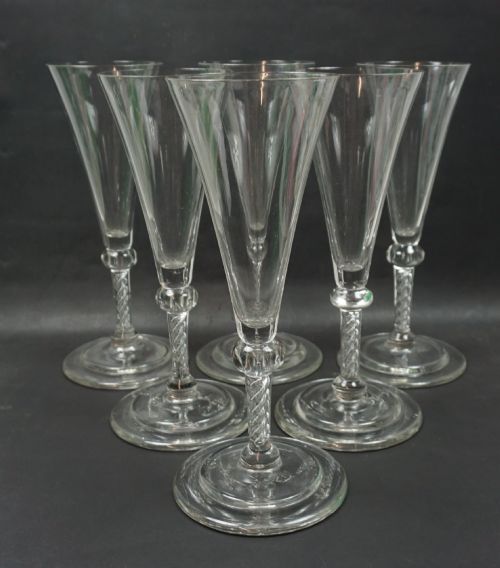
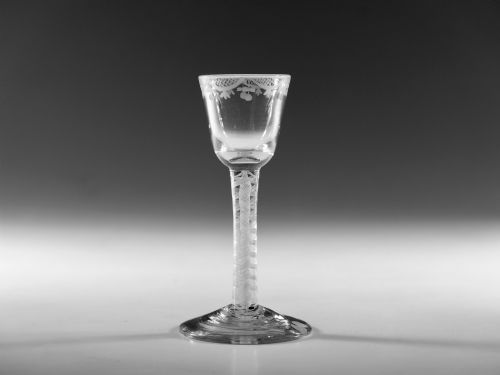
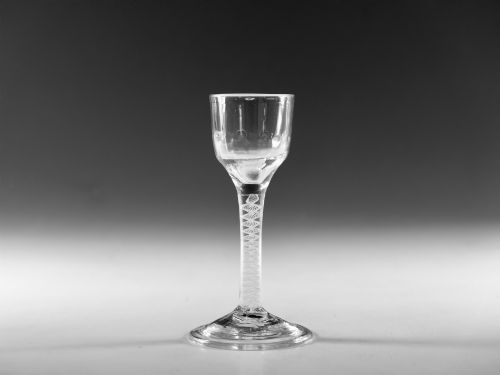
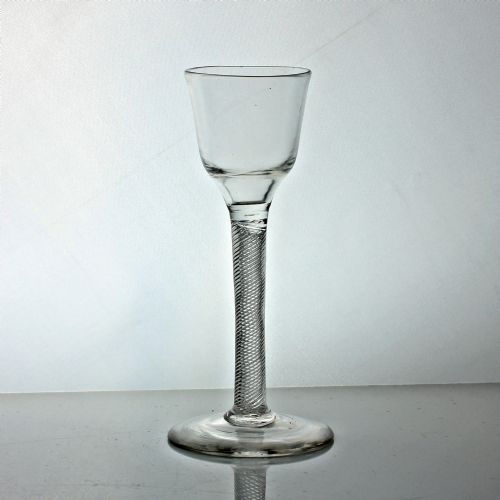
The most common examples on this page are eighteenth-century wine glasses featuring baluster, plain, and twist stems. These drinking vessels trace an evolution from heavy early forms to lighter, more delicate silhouettes decorated with air bubbles or opaque enamel threads.
Materials and Techniques
These items rely on lead glass and clear glass formulations that produce a heavy handle and brilliant light refraction. Makers shaped the molten metal through free-blowing and mould-blowing, creating structural elements such as folded feet, ribbed bowls, and honeycomb moulded patterns.
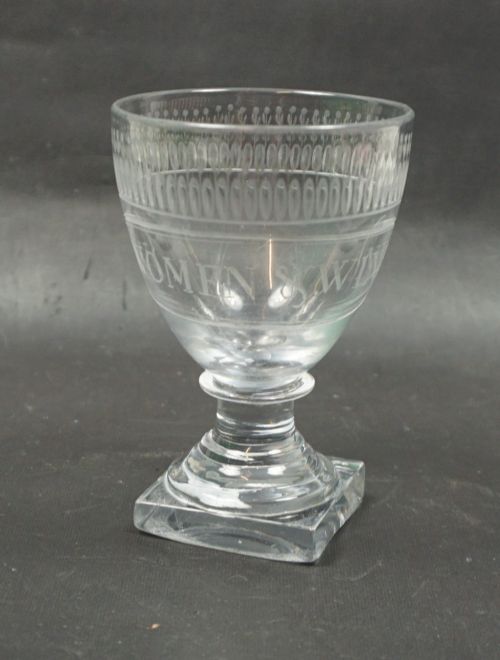
Stem construction defines much of the technique, incorporating drawn air twists, multi-spiral air twists, and double-series opaque enamel twists. Engraving and facet-cutting occasionally add surface detail to decanters, rummers, and flutes.
English Flint Glass Retail Price Guide 2026
Typical asking prices for english flint glass among the pieces listed under this phrase on Sellingantiques today, from the lower quarter to the upper quarter. They describe what is for sale here now, not the wider market.
A tiny trapped air bubble deliberately left inside a stem turns an ordinary glass into a miniature optical playground.
Evaluating the Pieces
Quality rests upon the crispness of the glass metal and the precision of the stem formation. Superior examples display clear resonance, clean optical properties, and sharp definition in moulded elements like honeycombs or flutes.
The English Flint Glass Glossary
- Air twist
- A stem containing elongated internal air bubbles drawn into spiral threads. This technique creates a luminous internal pattern within eighteenth-century drinking glasses.
- Opaque twist
- A stem containing white or coloured enamel glass threads twisted into single or double series cables. These threads date many mid-eighteenth-century vessels.
- Baluster
- A heavy, swelling stem form derived from architectural supports. Early examples display prominent knops and substantial proportions.
- Folded foot
- A glass foot with the rim folded underneath to form a smooth, thickened edge. This technique added strength to vulnerable perimeters.
- Patch stand
- A small circular tray or pedestal dish used in the eighteenth century to hold cosmetic patches. These dainty objects often feature moulded decoration.
English Flint Glass: Frequently Asked Questions
How do I date an English flint glass wine glass?
Dating relies on the evolution of stem forms, bowl shapes, and foot construction. Early eighteenth-century pieces favour heavy baluster stems and folded feet, whereas mid-century examples introduce air and opaque twists beneath lighter ogee or trumpet bowls.
Changes in glass metal composition and cutting styles further separate early Georgian specimens from later revivals or nineteenth-century productions.
What is the difference between air twist and opaque twist stems?
Air twists trap elongated bubbles inside the molten stem before stretching them into delicate internal spirals. Opaque twists utilise solid white or coloured enamel glass rods embedded within the clear metal to form opaque threads.
Both techniques emerged during the eighteenth century, with opaque twists generally appearing toward the middle decades alongside lighter bowl forms.
How were patch stands used?
Patch stands served as small tabletop dishes for holding small fabric beauty patches worn on the face during the Georgian period. These decorative accessories sat on dressing tables alongside cosmetics.
Survivors often feature moulded details such as honeycomb patterns and small pedestal feet, making them prized miniature examples of early glassmaking.
Can you use antique wine glasses for drinking?
Historical drinking vessels remain functional, though hand washing is essential to preserve the fragile historical glass metal. Extreme temperature changes should be avoided to prevent thermal shock.
Many collectors prefer to display these fragile items rather than use them at the table to protect the polished surfaces and wear patterns.