
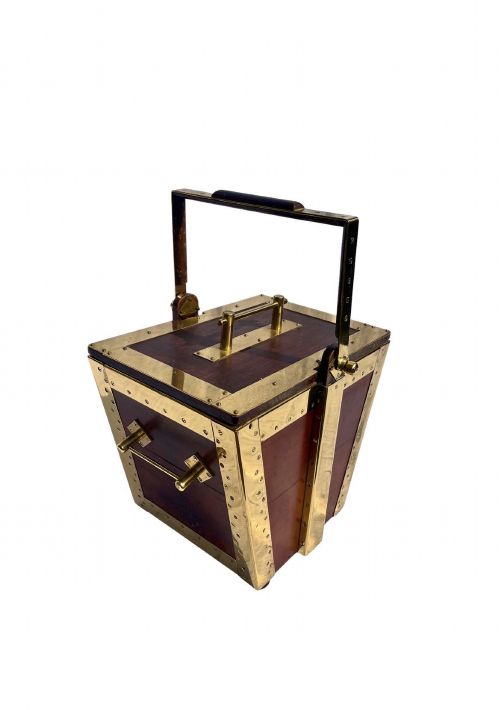


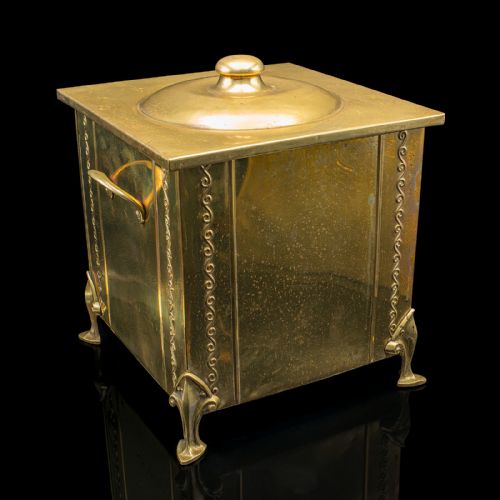
English Fireside Log Bucket
An English fireside log bucket brings functional hearthside storage to a room, holding fuel in metal or timber containers designed to sit beside the grate.

English Fireside Log Bucket
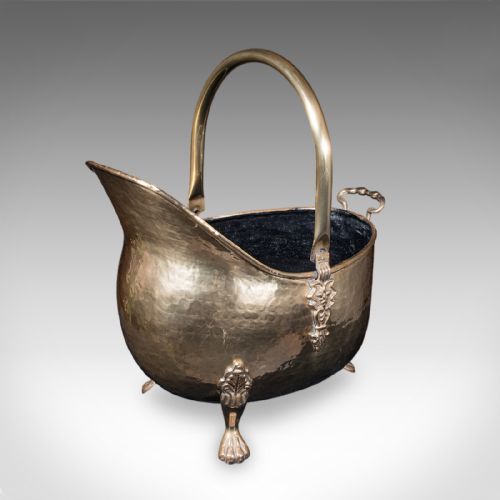
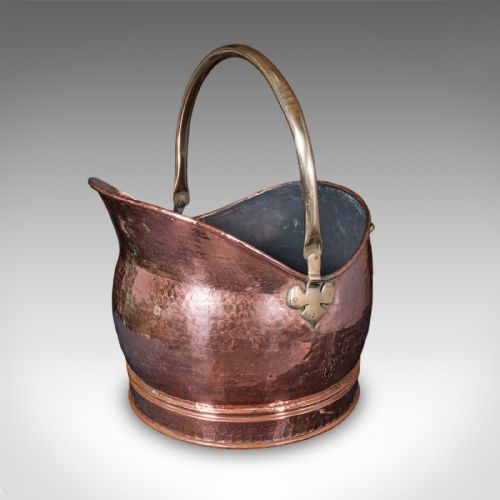
When you search for an English fireside log bucket, you encounter heavy fuel containers designed for hearthside use. These vessels appear in forms such as coal scuttles, coal bins, purdoniums, and coopered buckets.
The pieces on this page span several eras, with Victorian, Edwardian, and Georgian periods most frequently represented. You will also find items from the Regency, 1900, and 1920 periods.
Makers shaped these utilitarian objects for domestic hearths across England, utilising timber and metal. Many examples function equally well today for holding logs, kindling, or peat.
Materials and construction
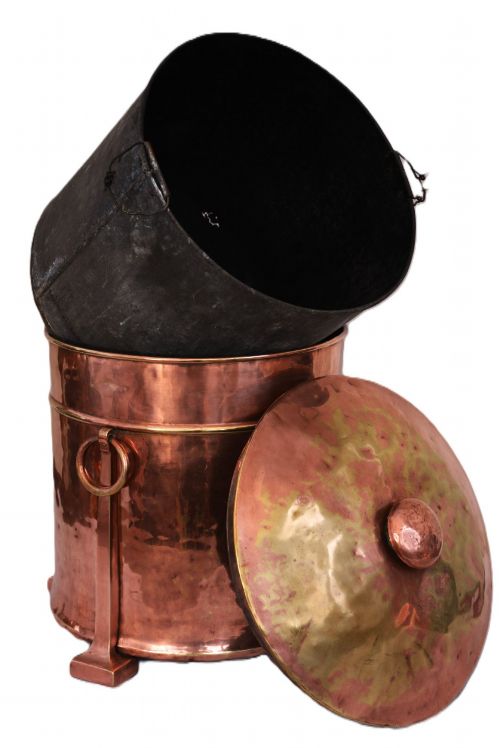
Craftsmen shaped these buckets using metals such as brass, copper, and iron, often applying hand-beaten finishes to the sheet metal. Copper and brass pieces frequently incorporate swing handles and reinforced rims for daily hearthside lifting.
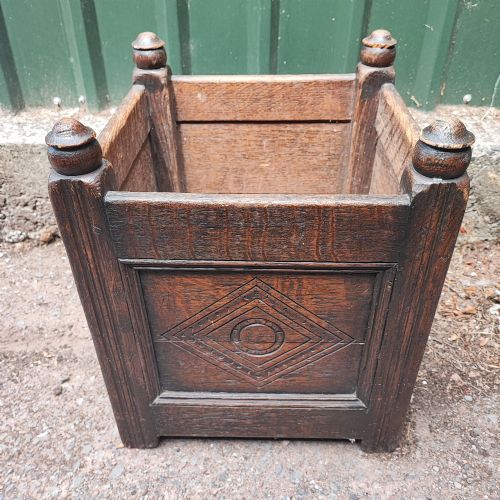
Wooden examples rely on traditional joinery and coopered construction, utilising oak, mahogany, walnut, and country elm. Staves are held together by tight banding, occasionally accented with brass mounts or swing bails.
Some coopered oak log bins double as retired garden planters when the hearth needs a break.
Gradations in quality
Quality rests in the heaviness of the gauge and the integrity of the construction. Solid timber staves fitted cleanly together or thick hand-raised copper sheets indicate superior making.
Hardware details separate standard examples from finer work. Dovetailed joints, substantial brass swing handles, and period-appropriate fixings demonstrate the maker's care.
The English Fireside Log Bucket Glossary
- Purdonium
- A specialised coal box or bin, typically featuring a sloping front or drop-down lid designed to hold fuel inside a domestic interior.
- Coopered
- A method of construction where tapered wooden staves are bound together with metal hoops, much like a traditional cask or barrel.
- Scuttle
- A metal bucket with a wide mouth and a hinged handle, designed for carrying coal or logs to an open fireplace.
- Peat bucket
- A deep storage vessel traditionally used in Ireland and Britain for holding dried peat sods for hearth fires.
English Fireside Log Bucket: Frequently Asked Questions
How were these buckets used originally?
These vessels sat beside the hearth to hold coal, wood, or peat for the fire. Servants carried them from outdoor stores to replenish the main living room grate.
Over time, the designs evolved from simple utilitarian containers into decorative domestic accessories that complemented the fireplace furniture.
Can I still use them for logs?
Most metal and coopered wooden examples remain sturdy enough for holding logs and kindling beside a modern hearth. Copper and brass bins handle daily loading without structural trouble.
Lined interiors or modern inner buckets help protect original timber and metal bases from moisture and debris.
How do I tell Victorian from Georgian pieces?
Georgian pieces often display formal timber choices like mahogany or coopered oak with restrained brass fittings. They reflect the classical proportions of the eighteenth century.
Victorian and Edwardian versions embrace a wider variety of stamped brass, hand-beaten copper, and decorative Arts and Crafts or Art Nouveau detailing.
What maintenance do copper bins need?
Metal buckets require occasional dusting and gentle cleaning to maintain their surface appearance. Avoiding abrasive cleaners preserves the natural patina built up over decades.
Wooden staves benefit from a light application of beeswax to keep the timber nourished and prevent drying out.