


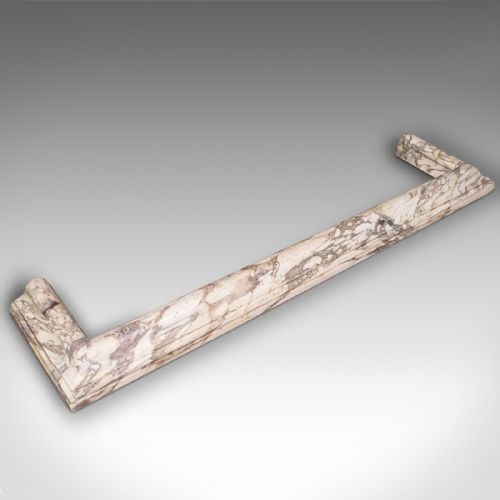
English Fireplace Fender
These English fireplace fender designs frame the hearth with practical elegance, offering both protection for the room and seating by the fire.
English Fireplace Fender
When you search for an english fireplace fender, you are looking at metal and wood hearth surrounds that have anchored rooms from the Georgian period through to the 1940s. These pieces range from simple pierced brass kerbs to substantial oak structures built to withstand daily use.
The selection extends from decorative nursery fire guards to country house club fenders in oak and leather. Each object reflects the heating habits and interior styles of its original era, from Arts and Crafts simplicity to Art Nouveau curves.
Materials and construction
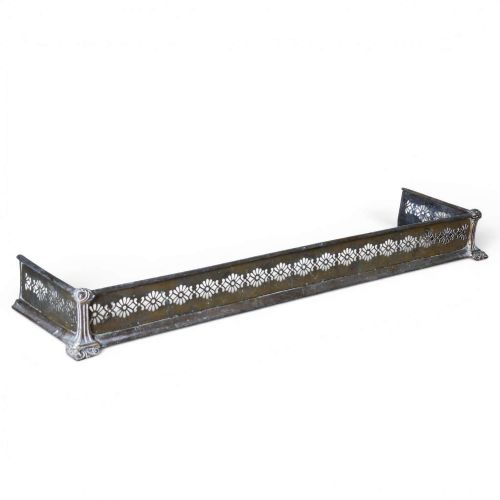
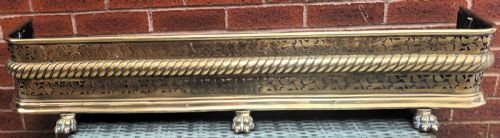
Makers utilised durable metals such as brass, bronze, steel, and wrought iron to construct the primary kerbs and guards. Piercing and decorative casting defined the surface ornamentation on Victorian metalwork.
Timber elements appear in heavy oak club fenders, frequently attributed to makers like William Birch during the Arts and Crafts period. Leather upholstery was integrated into the top rails to create padded seats for warming by the hearth.
The club fender turned the humble fire guard into a comfortable chair, ensuring nobody had to stand when the hearth was warm.
Assessing quality and craftsmanship
Quality rests in the weight of the metal and the substance of the timber rather than superficial decoration. Solid brass, heavy cast bronze, and thick oak denote superior manufacture compared to lighter, purely decorative alternatives.
The integration of padded leather seating on club fenders reveals the standard of interior comfort, where traditional stitching and sturdy internal framing separate utilitarian items from fine country house pieces.
William Birch
The English Fireplace Fender Glossary
- Club fender
- A low, U-shaped hearth surround topped with padded leather seats, designed to let people sit close to the fire. These originated in English country houses.
- Fire kerb
- A low metal barrier placed around the hearth to keep burning embers from rolling onto the floor. It forms the simpler base structure of many fireplace surrounds.
- Ormolu
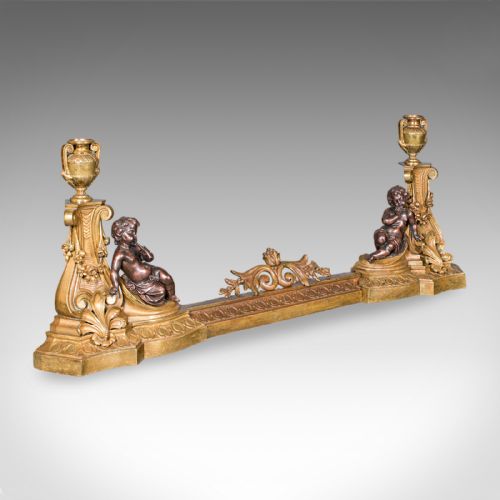
- Finely detailed gilded bronze or brass used for decorative mounts and accents on nineteenth-century furnishings. It provides a bright golden finish.
- Pierced brass
- Sheet metal perforated with decorative patterns, commonly found on Victorian fender panels to allow heat to circulate. This technique lightened the visual weight of the metal.
- Nursery fire guard
- A tall, protective metal mesh screen placed around a fireplace to keep children and pets at a safe distance from the flames. These typically feature robust framed structures.
English Fireplace Fender: Frequently Asked Questions
What is a club fender?
A club fender is a low hearth surround featuring cushioned leather seats along the top rails. This design allowed people to sit directly by the fire in country houses.
They combine a metal or wooden base with upholstered padding, serving as both a protective barrier and practical fireside seating.
How do I date an antique fender?
Dating relies on identifying the prevailing style, materials, and construction methods used in the piece. Victorian examples often display pierced brass, while Arts and Crafts pieces favour heavy oak.
Examining the fixings, patination, and any historical attribution helps narrow the decade of manufacture from the Georgian era onwards.
Are these fenders adjustable?
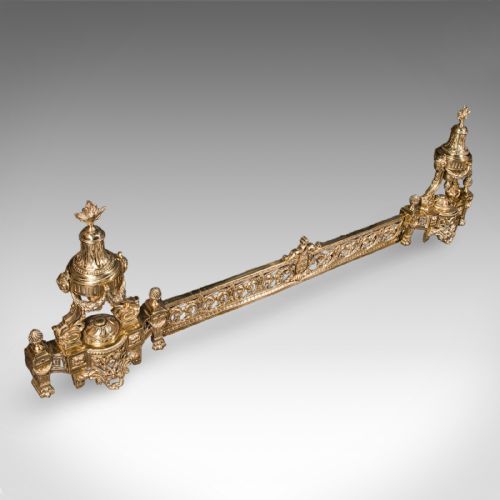
Some period fenders were constructed with mechanical adjustment mechanisms to fit varying hearth dimensions. These allow the frame to slide or extend to the desired width.
Not all pieces share this feature, as many fixed-size hearth kerbs were custom-made for specific fireplaces.
How do I clean brass and bronze?
Metal care requires gentle cleaning to preserve the historical patina rather than achieving a bright, modern polish. Accumulated dust and soot are best removed with a soft cloth.
Avoid abrasive compounds that strip away the aged surface character developed over centuries of use.