


English Dining Armchairs
English dining armchairs bring substance to the table, offering robust timber frames and supportive armrests shaped for long sittings over food and drink.
English Dining Armchairs
English dining armchairs encompass formal mahogany carvers from the eighteenth and nineteenth centuries alongside vernacular Windsor seating built from regional timbers. When you search for english dining armchairs, you encounter everything from delicate shield-back models to heavy kitchen and farmhouse seating.
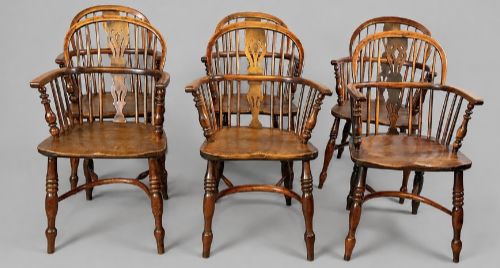
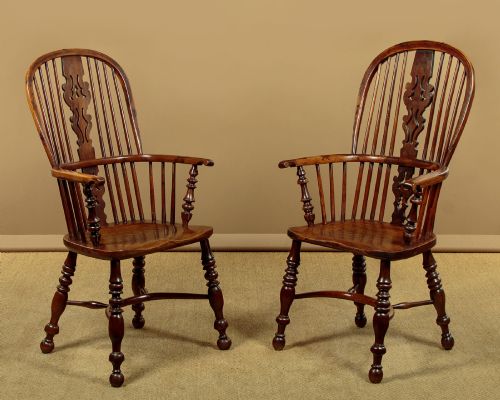
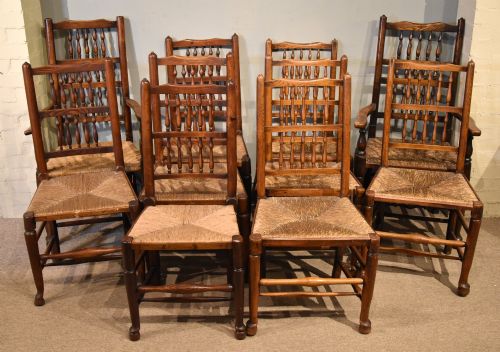
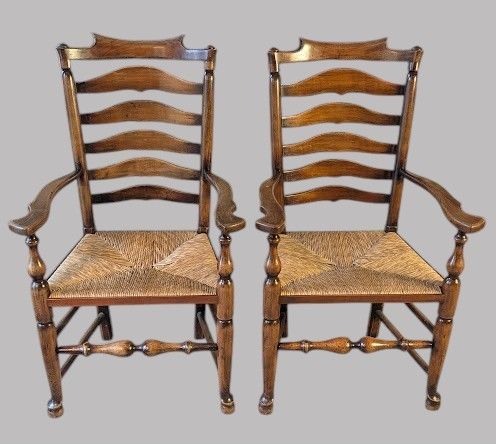
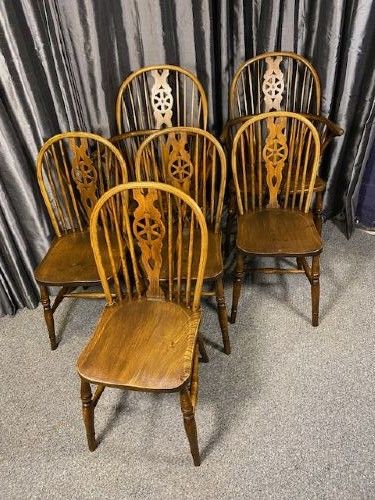
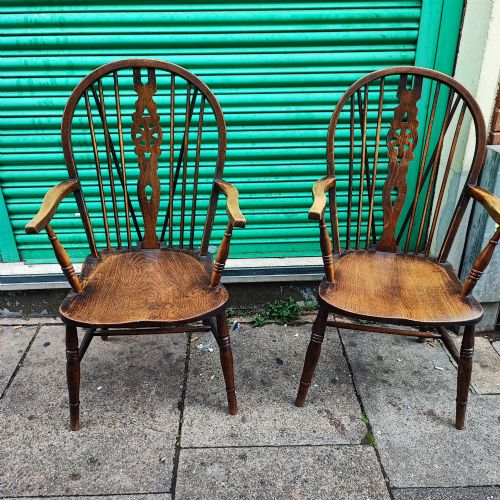
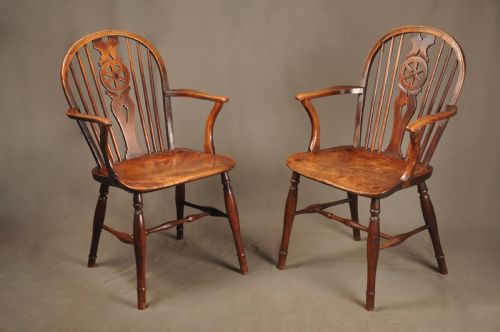
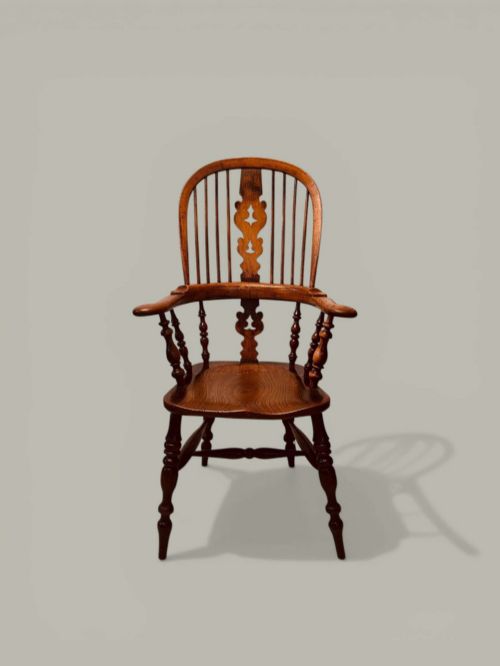
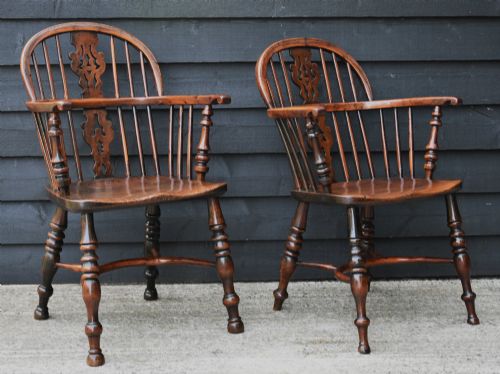
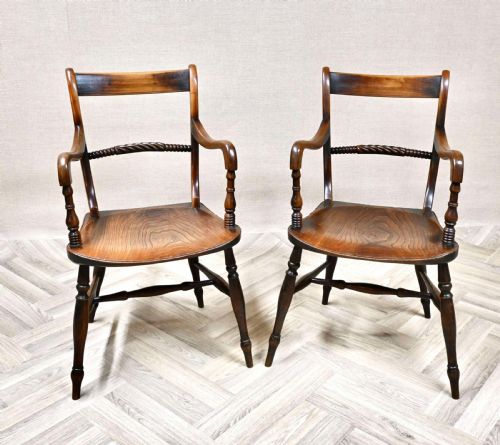
The country tradition dominates the selection, featuring hoop backs, comb backs, and bar backs constructed in provincial workshops. These pieces pair sturdy elm seats with ash, yew, or fruitwood frameworks, often retaining rush or wooden plank bases built for daily domestic utility.
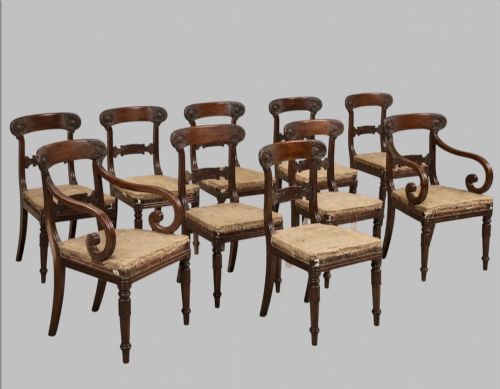
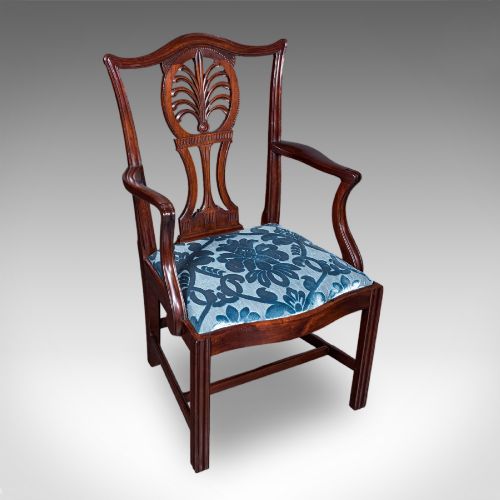
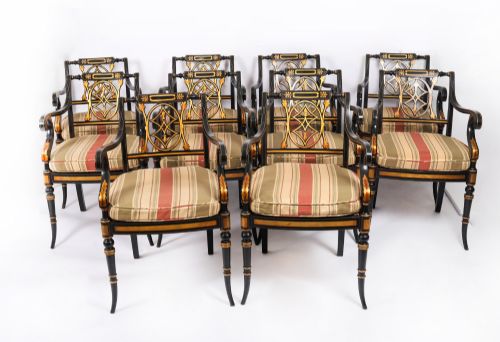
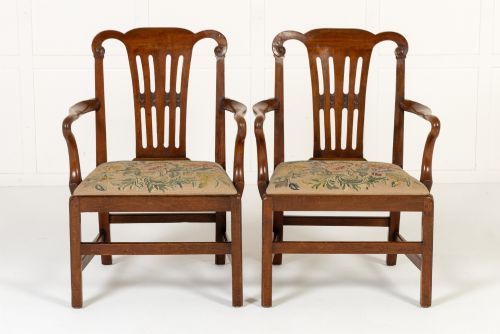
Formal dining sets frequently include matching armchairs alongside larger groups of single chairs, executed in mahogany using Hepplewhite or Regency design idioms. These formal variants bring carved splats, scroll arms, and pierced backs to the dining table.
How they were made
Makers utilised native hardwoods such as elm for solid, resilient seats that resisted splitting under pressure. Ash, yew, and beech supplied the steam-bent hoops, spindles, and legs, while mahogany served formal urban seating.
Country Windsor construction relied on jointing turned legs and spindles directly into thick saddle seats, secured with wedges. Formal chairs employed mortise and tenon joinery alongside hand-carved splats and applied mahogany veneers.
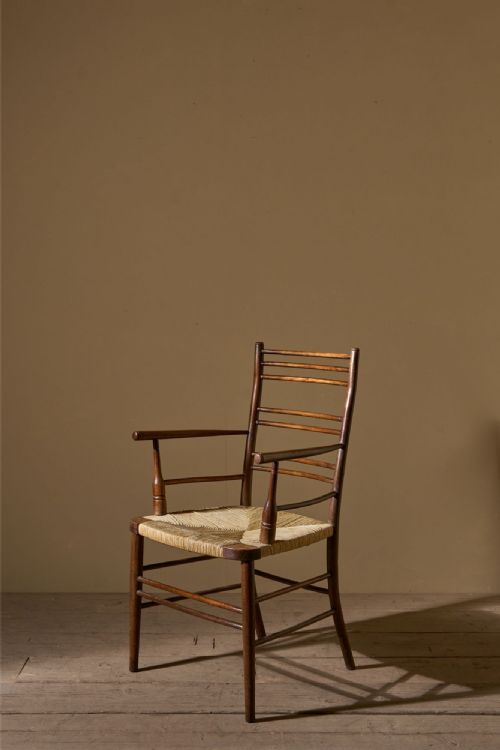
Rush seating provided a woven platform in vernacular Lancashire and farmhouse chairs, contrasting with the drop-in leather or fabric upholstered pads found on formal Regency and Victorian models.
English Dining Armchairs Retail Price Guide 2026
Typical asking prices for english dining armchairs among the pieces listed under this phrase on Sellingantiques today, from the lower quarter to the upper quarter. They describe what is for sale here now, not the wider market.
Some nineteenth-century smokers bow armchairs served patrons in local inns before retiring to domestic dining rooms.
What varies in quality
The integrity of timber selection and the retention of original components dictate the standing of each piece. Yew wood examples with rich grain patterns and crinoline stretchers sit at a different level from standard beech alternatives.
Proportion and carving depth separate standard vernacular output from master-carved regional work. The crispness of pierced splats on mahogany carvers or the fluent sweep of a comb-back Windsor arm indicates the hand of a skilled maker.
Maple & Co·Fred Walker Rockley
The English Dining Armchairs Glossary
- Carver chair
- An armchair designed to match a set of single dining chairs, typically positioned at the head of the table.
- Windsor chair
- A chair built with a solid wooden seat into which the legs, back and arms are separately inserted.
- Crinoline stretcher
- An arched wooden brace connecting the legs of a Windsor chair to provide structural rigidity.
- Splat
- The vertical central strip of wood in a chair back, often pierced or carved in formal styles.
- Smokers bow
- A low-backed Windsor armchair with a continuous curved armrail, historically found in inns and smoking rooms.
English Dining Armchairs: Frequently Asked Questions
What is a carver chair?
A carver chair is an armchair scaled to match a set of single dining chairs, traditionally placed at the head of the table. These pieces provided comfortable seating for the host.
They share stylistic details with the surrounding chairs while offering supportive armrests.
How do I identify a Windsor armchair?
Windsor armchairs feature a solid wooden seat saddle into which the turned legs and back spindles are pegged directly. They often combine different timbers, such as elm seats with ash or yew frames.
Hoop backs, comb backs, and broad arms define the regional variations of this tradition.
Are rush seats original?
Rush seating was commonly applied to vernacular farmhouse and Lancashire dining chairs during the eighteenth and nineteenth centuries. The twisted marsh grass provides a durable, textured platform.
Many surviving pieces retain their historic rush work or have been re-woven using traditional methods.
How do I mix armchairs with single chairs?
Dining sets frequently combine a pair of armchairs with several single chairs for use along the table sides. Matched sets unite timber types and design motifs across the entire group.
Matched pairs of country Windsors also serve as standalone seating in studies or hallways.