



English Desk Clock
An English desk clock brings precise timekeeping and robust craftsmanship to a table or shelf, combining utilitarian mechanics with period design.
English Desk Clock
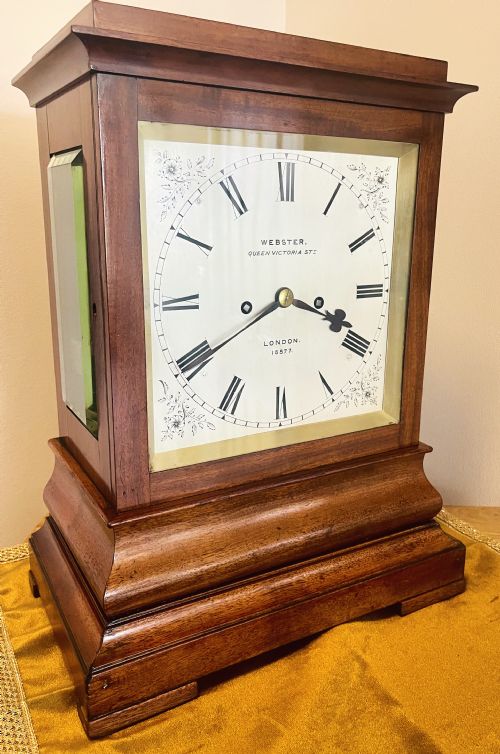
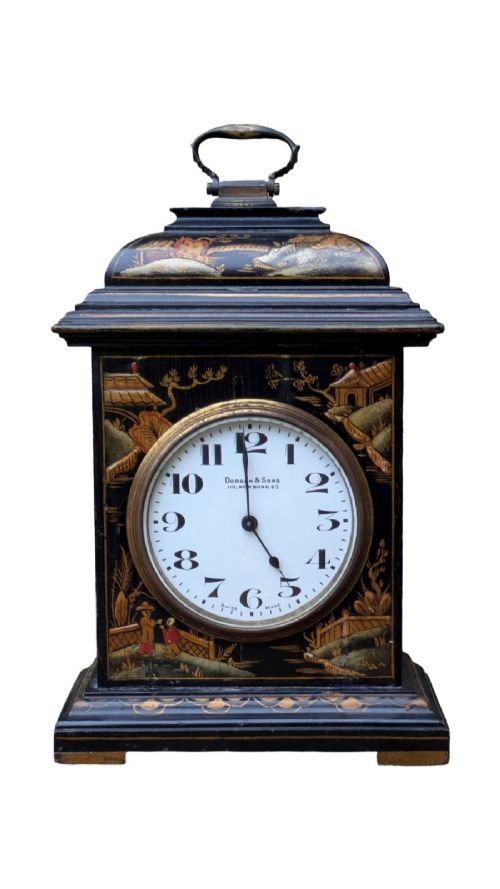
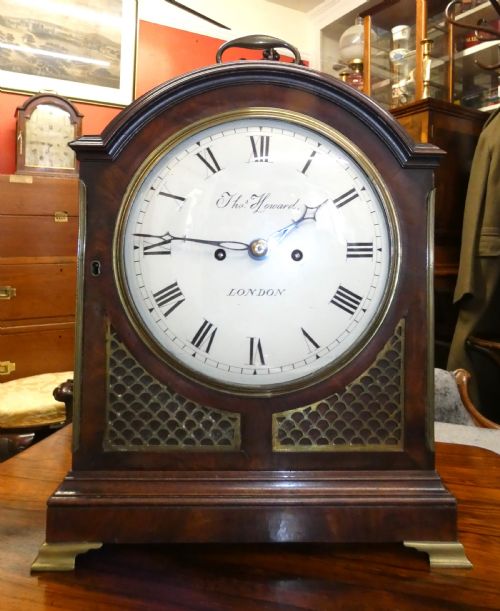
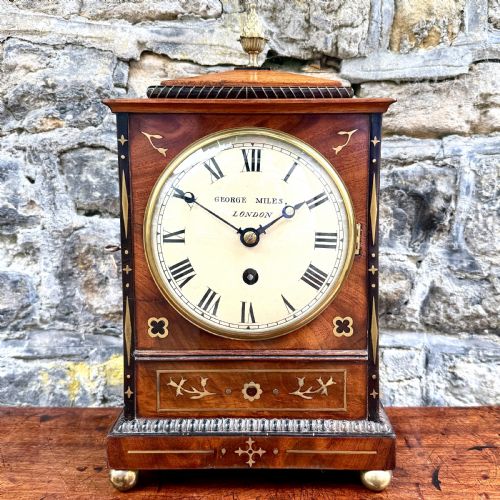
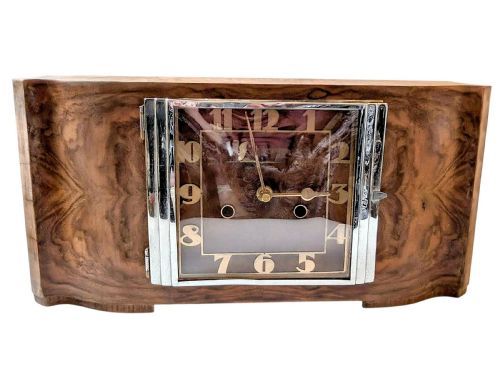
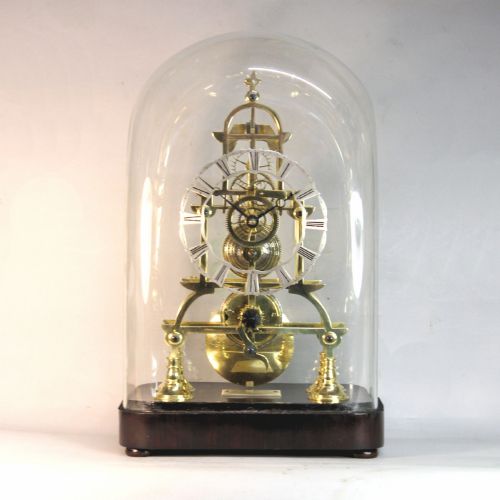
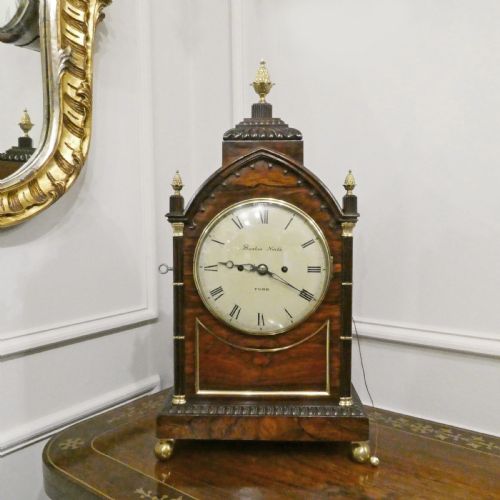
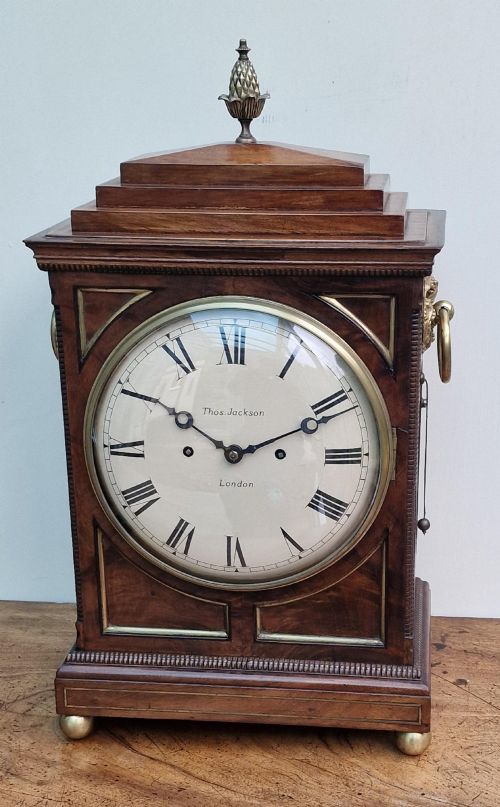
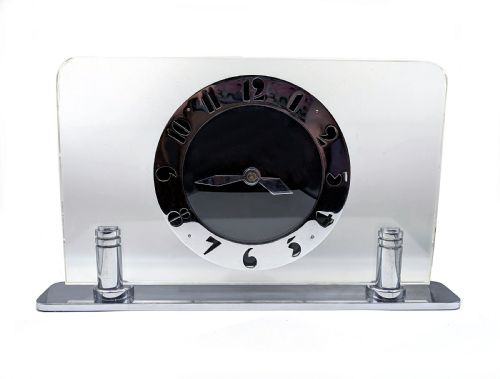
An English desk clock encompasses a wide variety of timepieces designed for tables, brackets, and libraries, often crossing categories with mantel and carriage clocks. The items appearing here range from Regency mahogany library pieces and Victorian skeleton clocks to Art Deco peach mirror glass designs from the 1930s.
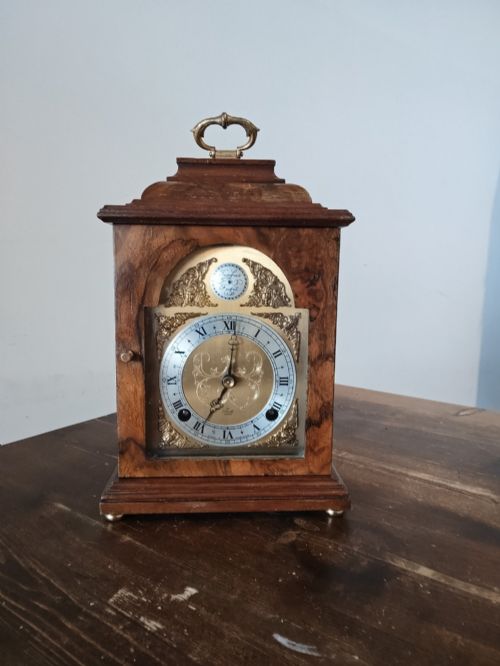
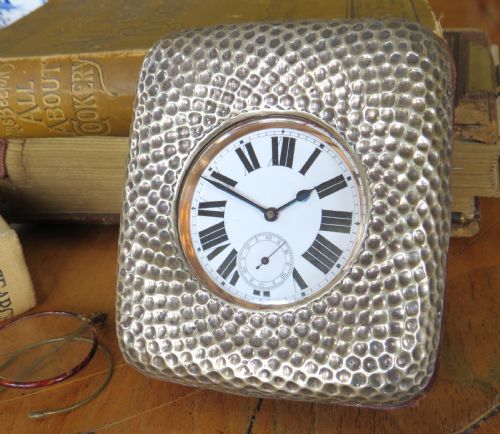
Buyers will encounter compact travel pieces alongside substantial bracket clocks housed in burr walnut, rosewood, and oak. Formats extend from traditional brass-framed carriage clocks to modernist wind-up desk models by makers such as Smiths.
Origins span provincial workshops and London makers, showing centuries of domestic horology executed in distinct regional styles from the Georgian era through to the mid-twentieth century.
Materials and construction
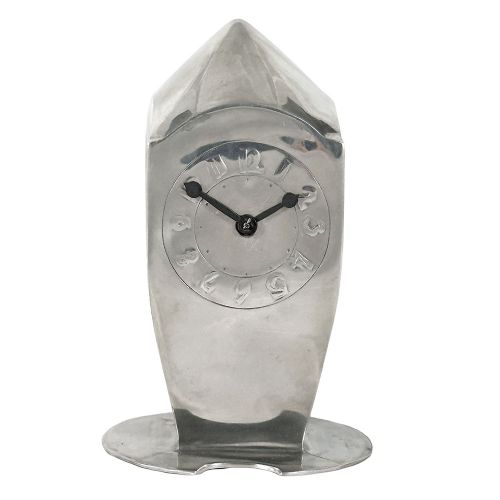
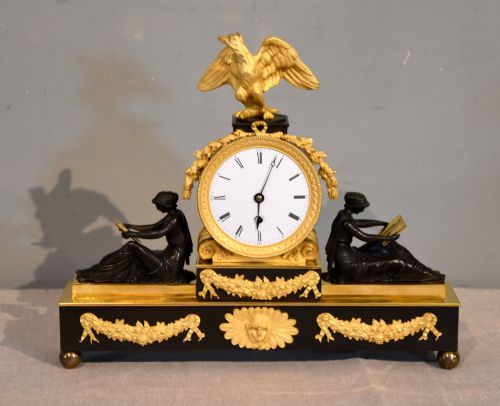
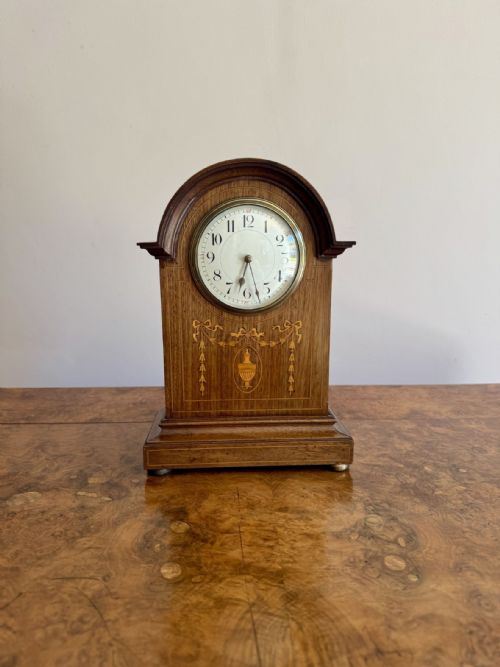
Casework relies heavily on timbers such as mahogany, rosewood, burr walnut, and ebonised wood, frequently decorated with brass inlay or intricate marquetry. Metal versions incorporate brass, bronze, gilt ormolu, chrome, and Tudric pewter.
Clock faces utilise white enamel dials, silvered chapters, and occasionally peach mirror glass or onyx grounds. Internal mechanisms employ 8-day movements, fusee drives, and specialised escapements.
Glass panels protect delicate dials, particularly in skeleton and carriage configurations where brass frames expose the moving gears and striking trains.
English Desk Clock Retail Price Guide 2026
Typical asking prices for english desk clock among the pieces listed under this phrase on Sellingantiques today, from the lower quarter to the upper quarter. They describe what is for sale here now, not the wider market.
Some models squeeze barometers, thermometers, and timekeepers into a single desk accessory.
Distinctions in execution
The degree of refinement in the case timber and the crispness of brass mounts distinguish ordinary production from superior examples. Finely figured mahogany and intricate inlay work indicate higher workshop standards.
Movement sophistication determines functional superiority, where twin fusee setups and specialised escapements demonstrate advanced horological skill compared to standard wind-up mechanisms.
Dials with well-preserved enamel, clean silvering, and clear maker signatures command greater respect among collectors than those showing careless restoration or blurred lettering.
Thomas Howard·Archibald Knox for Liberty & Co·Smiths Clockmakers·Richard Winter·Barber & North·Baetens London·Pickford of London·Thomas Jackson·Bush of London·John Morley·Viner·Smiths Clock Company·J Batson & Son·William Payne·John Barwise·Edwardian Solid Oak·Piggin Norwich·J Kingerley·Joseph Jump·William Evans·Dent of London
The English Desk Clock Glossary
- Fusee
- A conical pulley used in mechanical clocks to maintain an even pull on the movement as the mainspring unwinds. This mechanism ensures consistent timekeeping throughout the duration of the power reserve.
- Skeleton clock
- A timepiece designed with an open framework that exposes the gear train and escapement to view. These pieces are often housed beneath protective glass domes.
- Carriage clock
- A small, portable spring-driven clock originally designed for travel during the nineteenth century. They typically feature a carrying handle and glazed brass panels.
- Bracket clock
- A portable table clock traditionally placed upon a matching wall bracket or resting on furniture. Early versions utilised weight-driven movements before spring-driven mechanisms became standard.
- Timepiece
- A clock that indicates the time without striking the hours or quarters. It possesses a simpler gear train than a striking clock.
English Desk Clock: Frequently Asked Questions
Where should I place an English desk clock?
These clocks suit studies, mantelpieces, and library tables where their mechanical movements and polished wood or metal cases can be appreciated at close range. Ensure the surface is level to keep the pendulum or escapement running evenly.
Keep them away from direct sunlight and damp environments to protect delicate veneers, enamel dials, and polished brass from tarnishing or warping over time.
How do I wind an 8 day movement?
Insert the appropriate key into the winding square on the dial and turn it gently until resistance indicates the mainspring is fully tensioned. Do not force the key once resistance builds up.
Eighty-day movements require attention roughly once a week, making regular maintenance a straightforward part of living with a mechanical clock.
What is the difference between a timepiece and a striking clock?
A timepiece simply tells the time without making any sound on the hour or half-hour. Its internal mechanism focuses entirely on driving the hands.
A striking clock includes an additional gear train and hammer mechanism that rings bells or gongs to announce the passage of time.
How can I tell a Regency clock from a Victorian one?
Regency clocks often feature restrained classical proportions, brass inlay, and brass bracket feet, reflecting early nineteenth-century design tastes. Mahogany and rosewood are typical case timbers for this period.
Victorian pieces frequently display heavier ornamentation, Gothic revival influences, or more elaborate dial surrounds, showing how domestic tastes shifted towards denser decoration later in the nineteenth century.