






English Delftware Dish
An English delftware dish brings tangible eighteenth-century domestic history into a room through its tin-glazed surface and hand-painted pigment.
English Delftware Dish
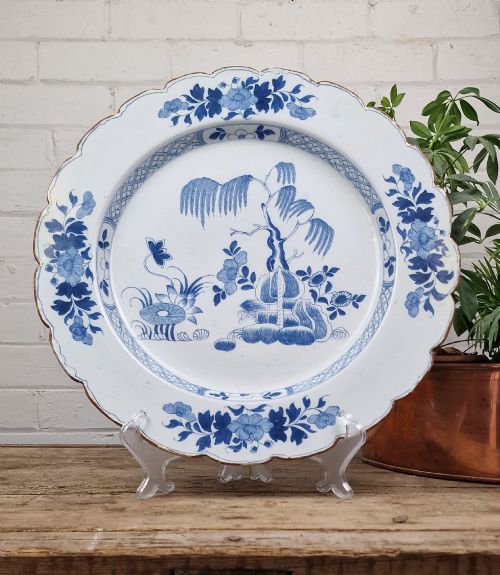
An English delftware dish is a ceramic form produced primarily during the eighteenth century across periods such as Queen Anne and early Georgian eras. Buyers searching for an english delftware dish encounter various utilitarian and decorative formats, ranging from small saucer dishes and salt cellars to large chargers and shallow bowls.
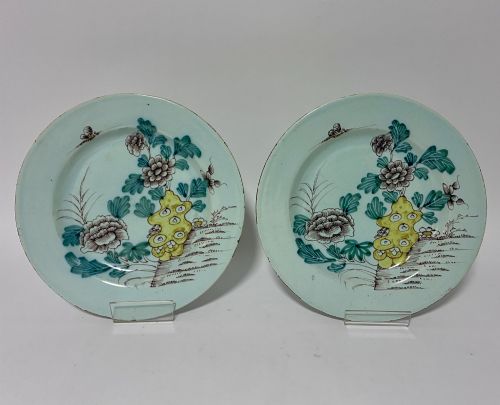
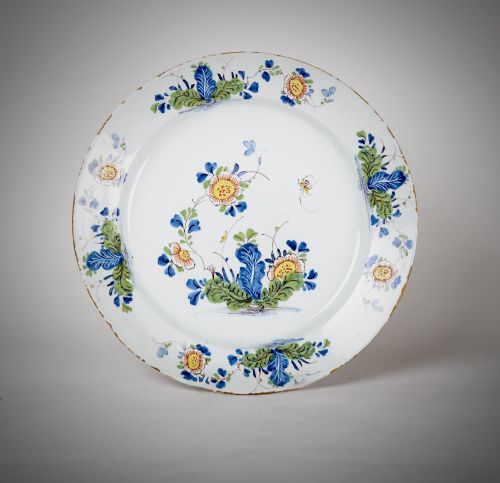
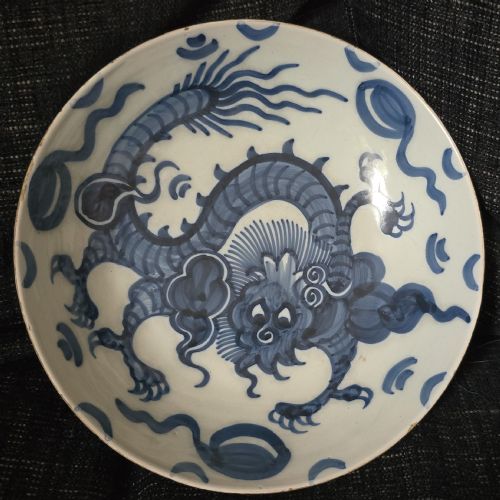
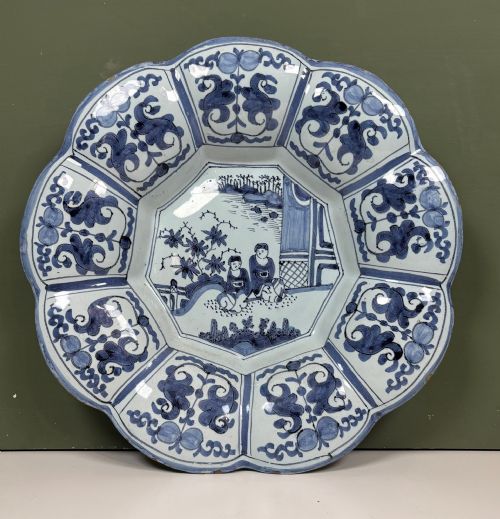
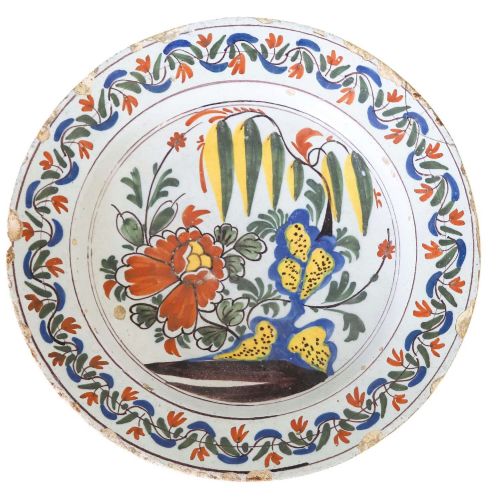
The most common examples on this page are blue and white chargers and plates featuring hand-painted floral or Chinoiserie decoration. Pieces span early eighteenth-century origins through to approximately 1800, capturing both monochrome cobalt designs and polychrome palettes.
Materials and Techniques
Makers shaped these objects from clay to create earthenware bodies that were subsequently coated in an opaque tin glaze. This glaze provided a smooth, white canvas suitable for subsequent brushwork.
Painters applied cobalt pigment or cobalt oxide, alongside other pigments for polychrome examples, directly onto the unfired or absorbent tin glaze. The pieces were then fired to fuse the metallic oxides into the surface.
English Delftware Dish Retail Price Guide 2026
Typical asking prices for english delftware dish among the pieces listed under this phrase on Sellingantiques today, from the lower quarter to the upper quarter. They describe what is for sale here now, not the wider market.
Listings span the eighteenth century, incorporating earthenware bodies, tin glaze, and cobalt pigment across Georgian styles.
Factors of Quality
The precision and fluidity of the hand-painted brushwork dictate much of the visual success of an english delftware dish, with bolder Chinoiserie or floral motifs showing greater artistic control. The consistency and coverage of the white tin glaze across the earthenware body also influence the overall aesthetic weight of the object.
Format scale alters the character of the piece, as large chargers demand more ambitious composition from the painter than smaller plates or salt cellars. The historical intactness of the tin glaze and the preservation of the painted pigments determine the surviving condition of each ceramic.
Lambeth Delft·Bristol Delft
The English Delftware Dish Glossary
- Tin Glaze
- An opaque white ceramic glaze containing tin oxide, which forms the characteristic smooth surface of these earthenwares.
- Charger
- A large decorative plate or dish, typically intended for display on a wall or dresser rather than routine dining.
- Chinoiserie
- A European artistic style reflecting Chinese motifs and landscapes, frequently hand-painted on eighteenth-century ceramics.
- Polychrome
- Decoration utilising multiple colours beyond standard blue, often combining red, yellow, green, and blue pigments.
- Earthenware
- Porous pottery fired at relatively low temperatures, forming the structural clay body beneath the tin glaze.
English Delftware Dish: Frequently Asked Questions
How are chargers displayed safely?
Chargers require specialised plate hangers or dedicated plate stands that distribute their weight evenly across the earthenware body without placing stress on the tin glaze edges.
Placement should avoid direct sunlight and areas of high temperature fluctuation to protect the historic ceramic and pigments.
Can these dishes be used for dining?
Utilising these antique earthenware dishes for daily food service is generally discouraged due to the porous nature of the clay and the fragility of the tin glaze.
Displaying them on walls or dressers preserves the hand-painted cobalt and polychrome surfaces from modern detergents and cutlery wear.
What defines a polychrome dish?
Polychrome examples incorporate multiple coloured pigments in their hand-painted floral or decorative schemes, moving beyond standard blue and white palettes.
These varied pigments were applied directly onto the opaque tin glaze before the final firing process during the eighteenth century.
How do I distinguish Bristol or Lambeth origins?
Distinguishing specific English potteries relies on observing subtle variations in glaze tone, clay body density, and the specific brushwork habits of the painters.
Many surviving eighteenth-century pieces remain attributed broadly to English production centres rather than signed by individual makers.