


English Delft Charger
When handling an English delft charger, you hold a piece of tin-glazed earthenware shaped by eighteenth-century hands.
English Delft Charger
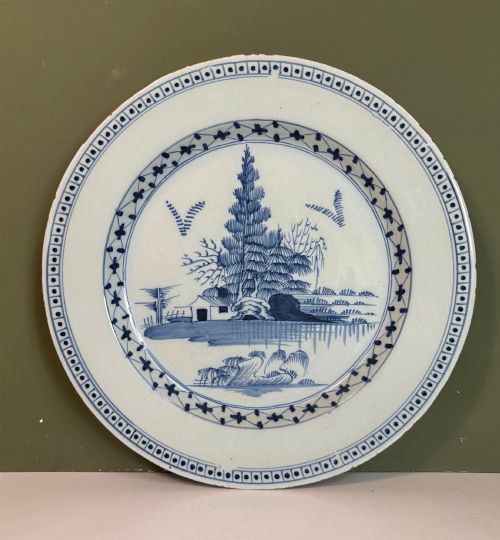
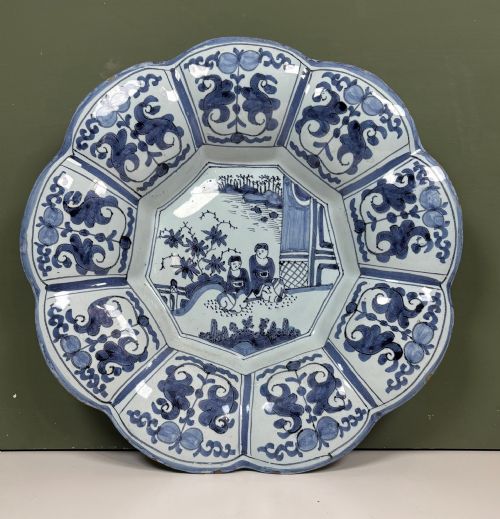
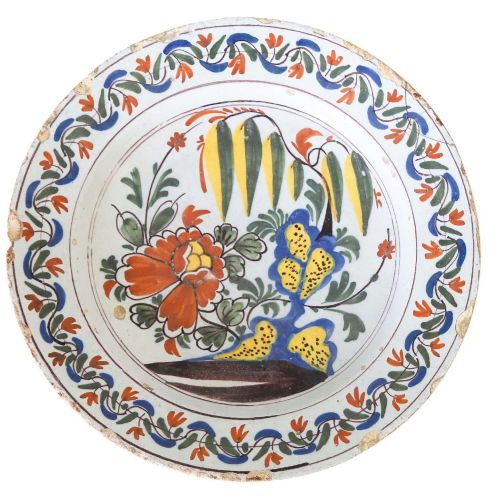
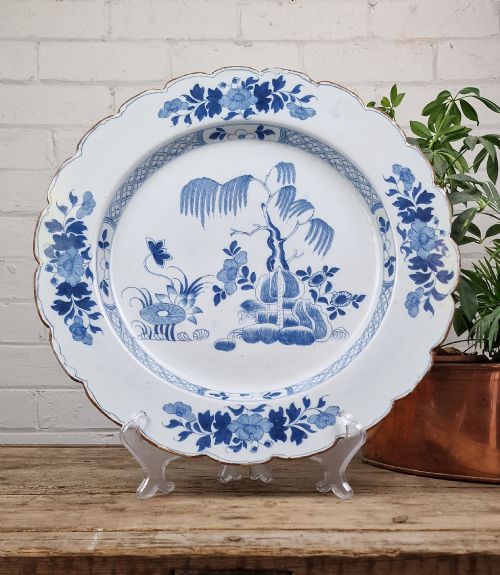
An english delft charger is a wide, shallow earthenware dish designed for display or serving during the eighteenth century. These pieces appear frequently as blue and white or polychrome plates, chargers, and dishes originating from English centres.
The objects span periods from the early eighteenth century through to around eighteen hundred, encompassing styles such as Georgian Chinoiserie and Delftware. Collectors encounter individual chargers, pairs, and small sets that demonstrate the domestic decorative tastes of the era.
How they were made
Potters shaped clay into earthenware bodies, which were then coated in a tin glaze to create an opaque white surface. Artisans applied cobalt pigment and other colours by hand, often incorporating floral motifs, birds, or figurative scenes.
The glazed earthenware pieces went through high-temperature kilns, fusing the metallic oxides into the surface layer. This technique produced the characteristic gloss and vibrant pigment interaction seen on chargers from Bristol and Lambeth potteries.
What varies in quality
The precision of the hand-painted decoration separates standard domestic vessels from superior display pieces. Crisp cobalt blue lines and carefully blended polychrome palettes reflect greater skill at the potter's bench.
The overall preservation of the tin glaze and the stability of the earthenware body dictate the standing of an individual item. Larger chargers with complex pictorial subjects, such as peacocks or marriage themes, represent the finer achievements of the workshops.
Bristol·Lambeth
The English Delft Charger Glossary
- Tin Glaze
- An opaque white ceramic coating containing tin oxide, providing a smooth canvas for painted decoration. This compound gives these dishes their characteristic milky appearance.
- Polychrome
- The use of multiple colours in painted ceramic decoration, typically combining iron red, yellow, green, and blue. Potters applied these pigments over or under the glaze.
- Charger
- A large ornamental or serving plate intended for wall hanging or table display rather than daily dining. These wide vessels form the bulk of surviving earthenware plates.
- Cobalt Pigment
- A metallic oxide used to achieve deep blue painting on ceramic surfaces. It withstands kiln heat without losing its intense hue.
English Delft Charger: Frequently Asked Questions
How were these chargers displayed?
Households placed these large plates on sideboards, mantelpieces, or hung them on walls using specialist wire hangers. Their generous diameters made them ideal for visual impact in eighteenth-century rooms.
They served as decorative art rather than everyday tableware, protecting the fragile tin glaze from the wear of cutlery.
What is polychrome delftware?
Polychrome delftware refers to tin-glazed earthenware decorated with several colours instead of the traditional blue and white pigment. Artisans used combinations of yellow, green, red, and blue to render floral and figurative scenes.
This palette required multiple pigment applications before the final kiln firing to bond the colours permanently to the glaze.
How do you date an eighteenth century charger?
Dating relies on stylistic shifts in painting, tin glaze composition, and recorded workshop practices from locations like Bristol or Lambeth. Earlier pieces from the early seventeen hundreds often feature simpler motifs, while later examples incorporate distinct floral or Chinoiserie elements.
Documented pieces with specific names or dates inscribed on the surface provide firm benchmarks for comparison.
Can you use them for serving food?
Historic earthenware and tin glaze are too fragile and porous for modern culinary use. The lead and tin content in the glaze also makes them unsuitable for contact with acidic foods.
Collectors keep these chargers strictly for display, preserving the delicate pigments and ceramic bodies from further damage.