


English Cut Crystal
English cut crystal brings heavy brilliance and sharp facets to tables, crossing periods from Georgian dining rooms to Edwardian sideboards.
English Cut Crystal
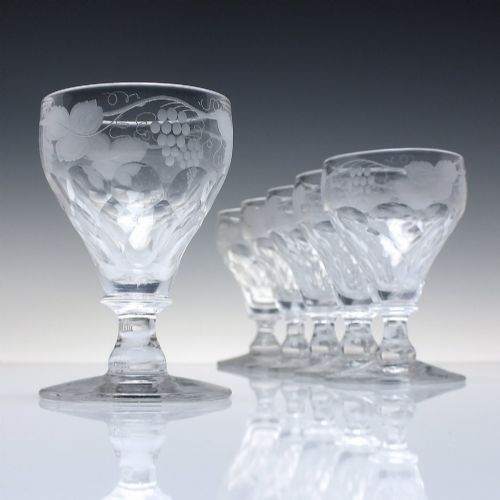
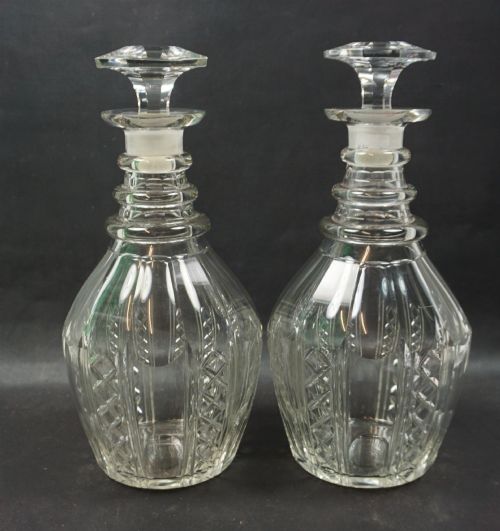
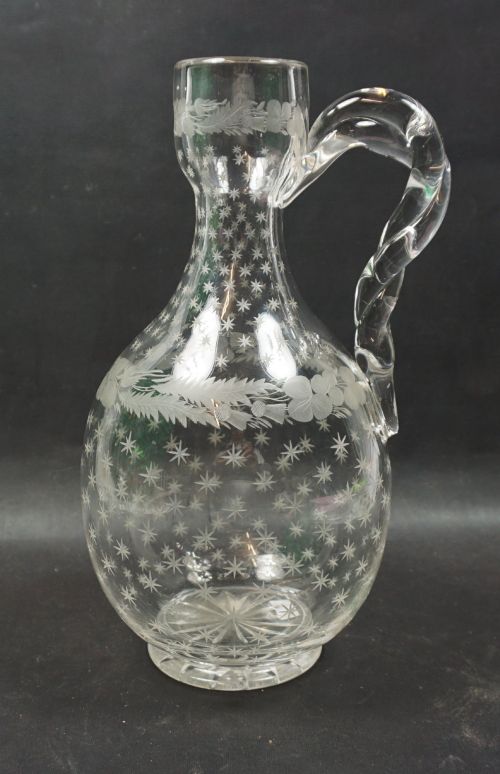
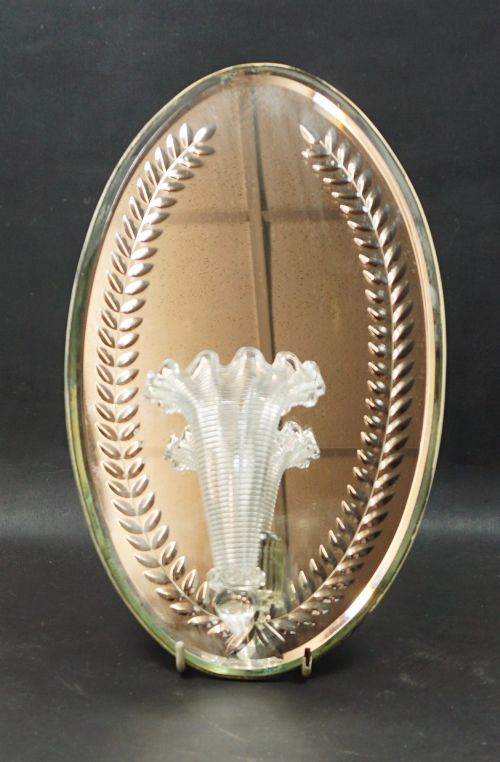
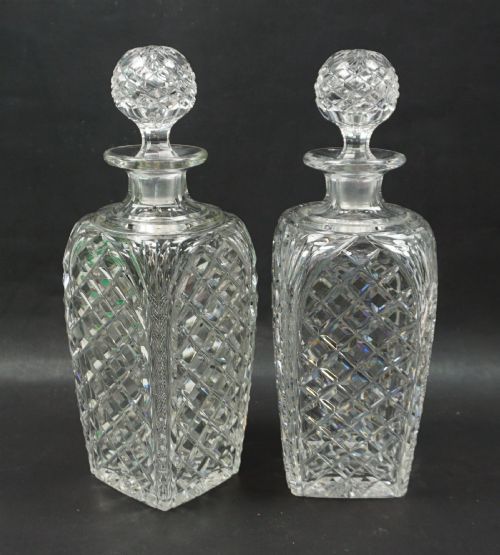
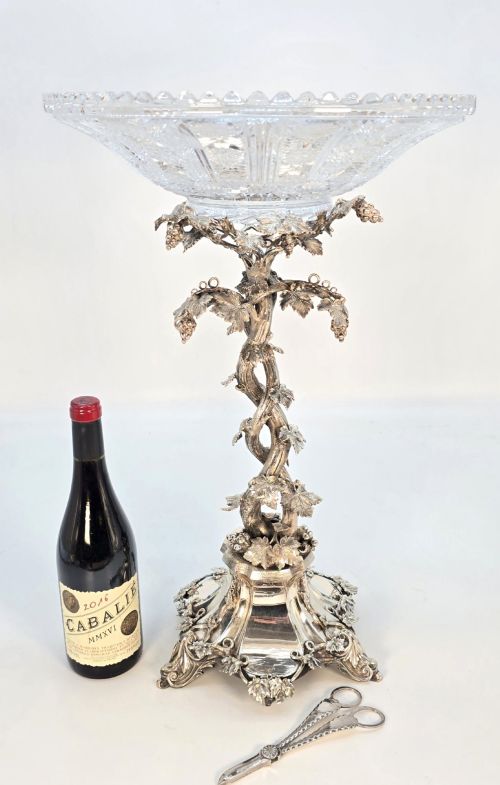
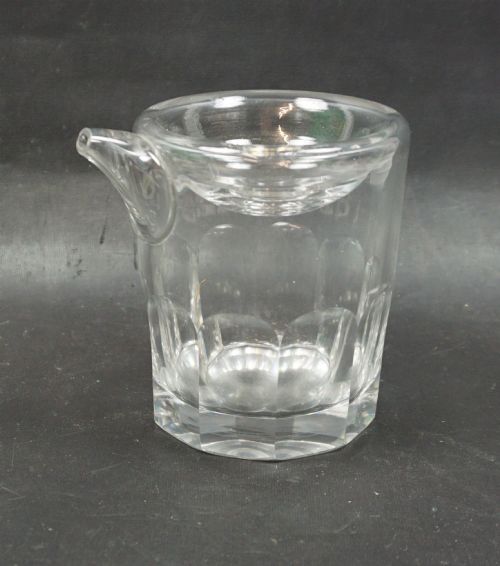
English cut crystal encompasses functional table objects and decorative pieces spanning the eighteenth century through the Edwardian era. Decanters, wine glasses, rummers and jugs form the bulk of the domestic items, alongside lighting such as chandeliers and mantel lustres.
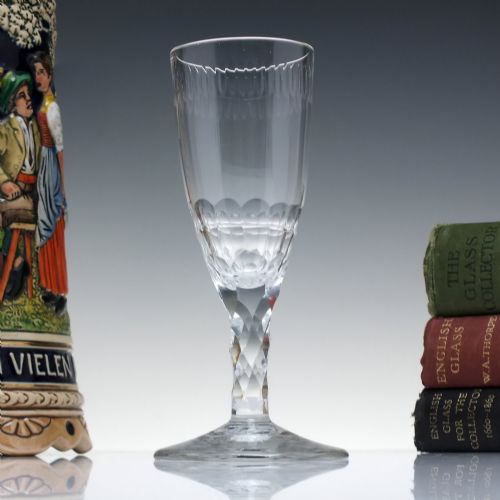
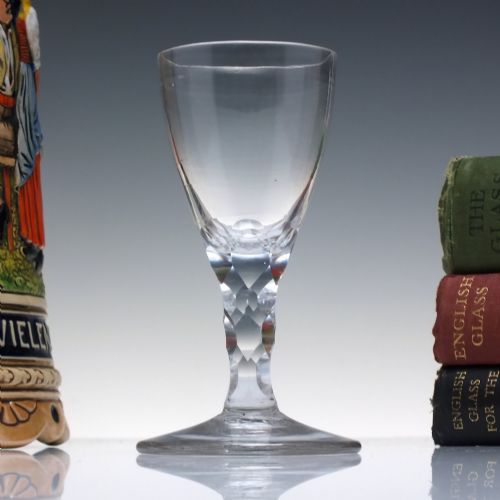
Pieces from the Georgian and Regency periods sit alongside Victorian and Edwardian examples on this page. Buyers encounter everything from early facet stem wine glasses to heavy twentieth-century tumblers and silver-mounted barware.
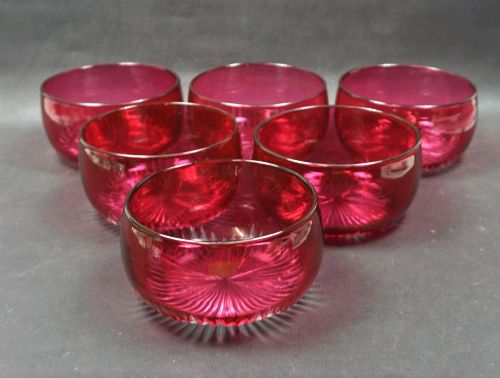
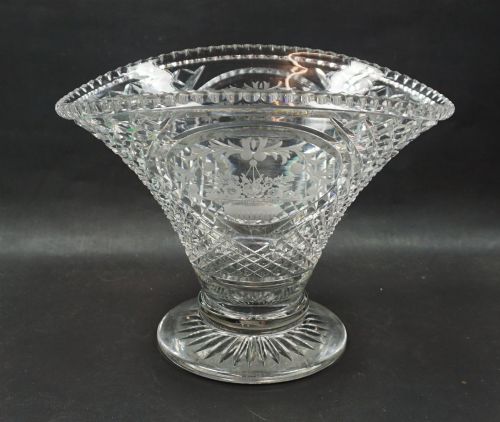
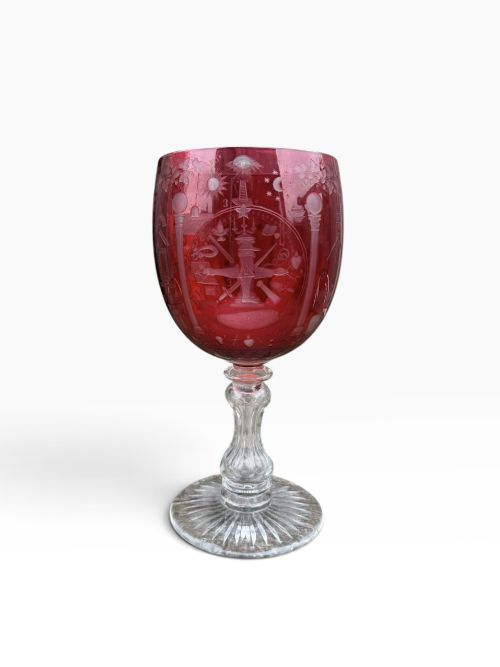
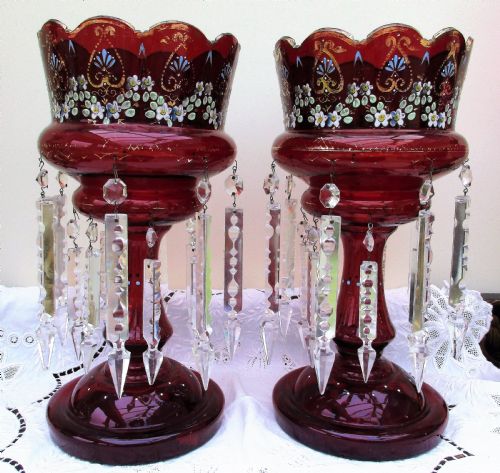
Vessels often feature engraved decoration, colour overlays in ruby or cranberry glass, and mounted silver collars or handles. The selection ranges from small scent bottles and jelly glasses to large table centrepieces and tantalus sets.
Materials and Technique
Makers utilised lead crystal and heavy glass combined with secondary elements like silver plate, hallmarked silver, brass and leather cases. The weight and refractive index of the lead glass allowed deep wheel-cutting that caught candlelight and gaslight effectively.
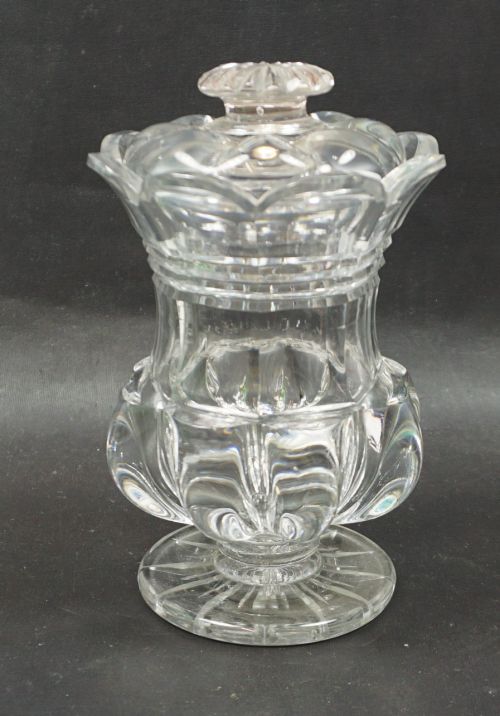
Cutter's work involved pressing vessels against rotating wheels of varying sizes and abrasives to create pillar cuts, diamonds and flutes. Engravers then added detailed motifs including dolphins, crests and floral designs using fine copper wheels.
English Cut Crystal Retail Price Guide 2026
Typical asking prices for english cut crystal among the pieces listed under this phrase on Sellingantiques today, from the lower quarter to the upper quarter. They describe what is for sale here now, not the wider market.
Listings feature items from the Georgian, Victorian, Edwardian and Art Deco periods, utilising cut glass, lead crystal, silver plate and brass.
Gradations of Excellence
Execution of the wheel-cut facets dictates visual impact, separating sharp, uniform geometry from softer, blurred cutting. Crisp edges to the prisms ensure maximum light refraction across the surface of a decanter or goblet.
Metal mounts and silver collars contribute to overall standard when makers integrate them securely with the glass body. Integrated elements such as matching stoppers on decanters and complete sets of rummers or wine glasses elevate the standing of a piece.
William Rudkins·Richardsons·Stevens & Williams·Jonathan Douglas·Barnsley & Co
The English Cut Crystal Glossary
- Lead crystal
- Glass containing lead oxide, which increases weight, clarity and the refractive index for cutting. This material became standard for heavy British tablewares.
- Pillar cut
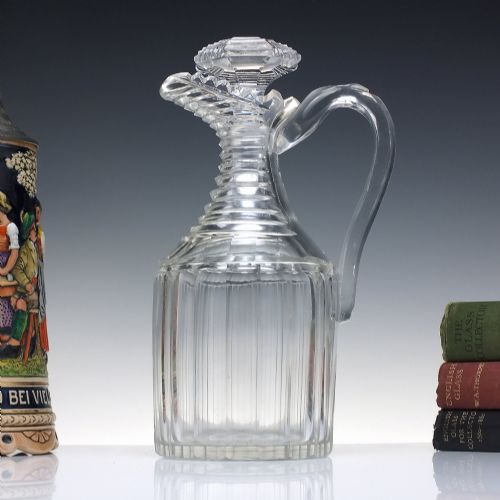
- A decorative pattern of vertical, parallel facets resembling architectural columns. It appears frequently on early nineteenth-century decanters.
- Tantalus
- A locking wooden frame holding spirit decanters to prevent unauthorized access while displaying the contents. Edwardian examples often include games compendiums.
- Facet stem
- A stem formed with multiple flat polished planes rather than a smooth cylindrical shape. These appear on eighteenth-century wine glasses and goblets.
- Mantel lustre
- A decorative ornamental vase hung with glass prisms designed to catch the light. Pairs of these stood upon fireplace mantels during the Victorian period.
English Cut Crystal: Frequently Asked Questions
How do I date an English decanter?
Shape, pontil marks and stopper design indicate age. Georgian vessels often feature kick-up bases and hand-cut facets.
Later Victorian and Edwardian examples display machine-trued cutting and heavier proportions alongside silver collars with hallmarks.
What is a rummer?
A rummer is a large, sturdy drinking glass used for wine, punch or beer during the eighteenth and nineteenth centuries. They sit on short, thick stems with deep bowls.
Many surviving sets feature heavy cut decoration or baluster stems designed for communal tavern or dining table use.
Why do some decanters have numbers on the stoppers?
Matching numbers ensure the original stopper stays with its specific bottle. Glassmakers ground each stopper individually to fit a single neck.
Checking for corresponding marks confirms the components belong together historically rather than being assembled later.
How should I clean antique cut glass?
Wash pieces by hand in warm water using mild soap rather than placing them in a dishwasher. Sudden temperature changes cause cracking in old lead crystal.
Dry them immediately with a lint-free cloth to maintain the clarity of the wheel-cut facets and engraved details.