


English Countryside Wall Art
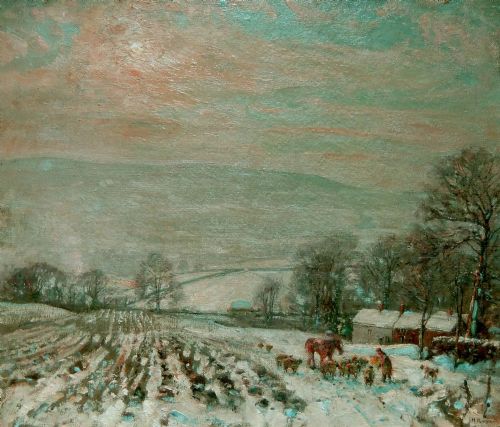
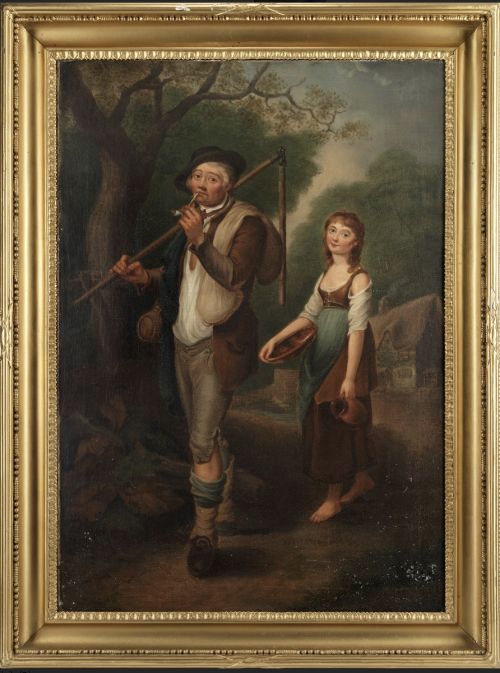
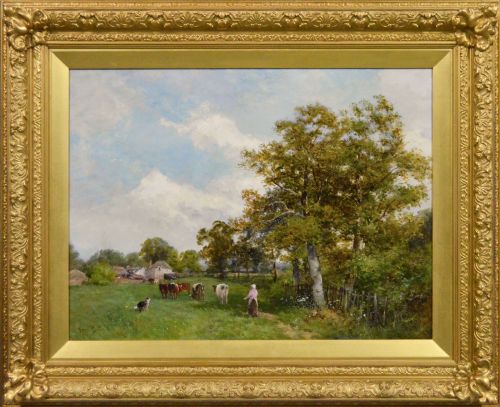
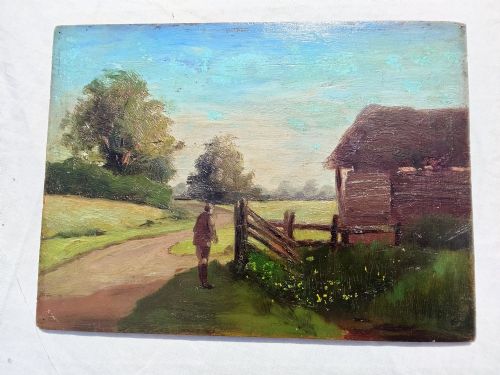
English countryside wall art brings rural vistas into rooms through period paintings capturing fields, rivers, and farms.
Identifying English Countryside Wall Art
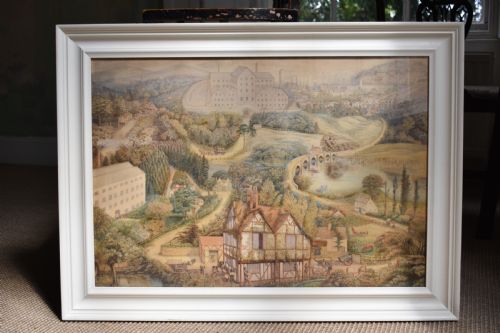
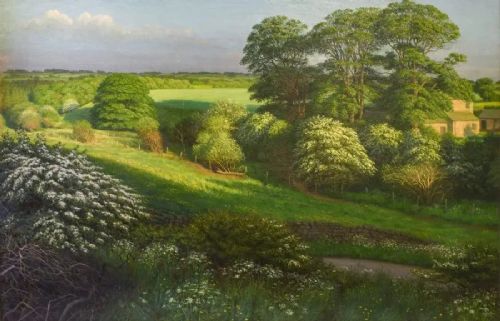
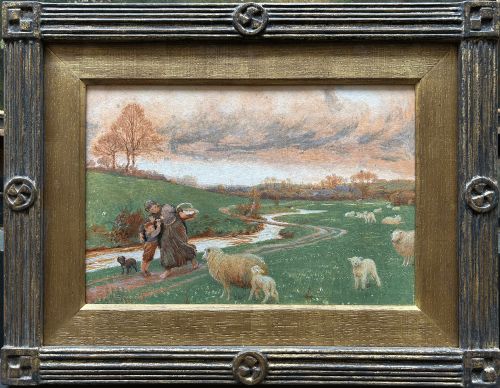
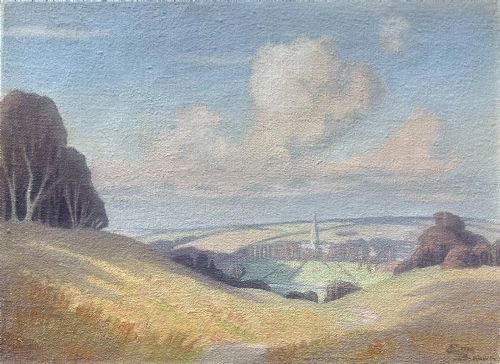
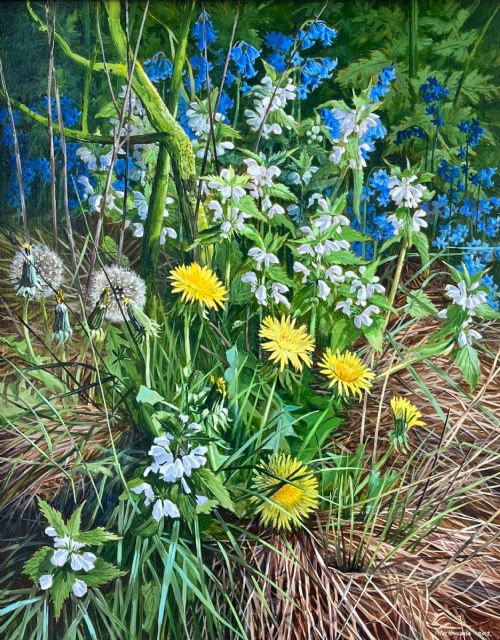
English countryside wall art comprises original paintings depicting rural scenes across the British landscape, focusing on local rivers, farms, and coastal towns. Buyers seeking this category encounter framed works capturing traditional views from various historical periods.
The selections on this page span the Victorian era, the nineteenth century, and the mid-twentieth century. Works include depictions of Yorkshire landscapes, harbour views, hunting scenes, and agricultural subjects.
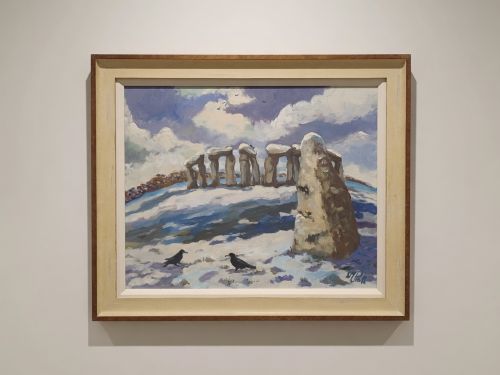
Artistic movements represented in these pieces include British Impressionism, Victorian styles, and early twentieth-century British fine art. Painters document specific locations such as Whitby, Wharfedale, Stonehenge, and Lakeland settings.
Materials and Construction
These works utilise traditional mediums including oil on canvas and watercolour paint applied to paper. Canvases are stretched over wooden supports and protected behind glass within framed mountings.
Artists apply oil and watercolour techniques to capture natural light and texture across rural scenes. The physical materials reflect the standard studio practices of British painters working during the nineteenth and twentieth centuries.
Retail Price Guide 2026
Typical UK retail prices for english countryside wall art, calculated from the Sellingantiques database of over a million retail prices indexed since 2003. This retail price guide relies exclusively on Sellingantiques data; no external sources or auction records are used, so the figures do not describe the wider market.
Several artists captured the exact moment hounds joined a hunt, preserving a fleeting burst of rural commotion in frozen pigment.
Assessing Quality and Execution
Quality rests upon the artist's ability to render light, atmosphere, and topographical detail within the chosen medium. Stronger pieces display confident brushwork and balanced composition that bring depth to rural vistas.
Works by established painters with documented exhibition histories command greater attention from collectors. The preservation of the original pigments and the integrity of the period framing contribute to the overall standing of each piece.
Alfred George Morgan·Olive Higginbottom·G A Short·Robert Thorne Waite·John Wright Oakes·Herbert Royle·Charles Henry Harrison Burleigh·Percy Lancaster
The English Countryside Wall Art Glossary
- Watercolour
- A painting method where fine pigment is suspended in a water-soluble binder on paper. This technique allows for translucent washes that capture subtle shifts in light and weather.
- Oil on Canvas
- Pigments mixed with drying oils applied to a woven fabric stretched across a wooden frame. This method permits rich texture and layered colour work.
- British Impressionism
- An artistic approach developed in the late nineteenth and early twentieth centuries focusing on loose brushwork and natural outdoor lighting. Painters sought to record transient atmospheric effects.
- Victorian
- Pertaining to the reign of Queen Victoria, characterising works produced between eighteen thirty-seven and nineteen zero one. Pieces from this period often reflect romanticised views of nature.
Frequently Asked Questions
What periods do these paintings cover?
The listings span from the Victorian era and the nineteenth century through to the nineteen fifties.
Key periods represented include works from nineteen hundred, nineteen ten, nineteen twenty, and mid-century modern decades.
How should I hang these framed works?
Ensure paintings are positioned away from direct sunlight to protect watercolours and oils from fading over time.
Use appropriate wall fixings that match the weight of the wooden frames and glass panels.
What subjects appear in these scenes?
Artworks predominantly display rural British views including Yorkshire landscapes, river valleys, and coastal harbours.
Other common subjects feature agricultural life, farmsteads, historical monuments, and animal hunting scenes.
Are these paintings original works?
Every listed item is an original painting rather than a modern reproduction or print.
Pieces are created by named artists using period pigments on canvas or paper.
What mediums were used by the artists?
Painters utilised oil on canvas and watercolour paint applied directly to paper substrates.
Works are typically presented behind protective glass within traditional wooden frames.