




English Country Oak Drawers
English country oak drawers bring vernacular warmth to a room, offering sturdy timber storage shaped by centuries of regional joinery.
English Country Oak Drawers
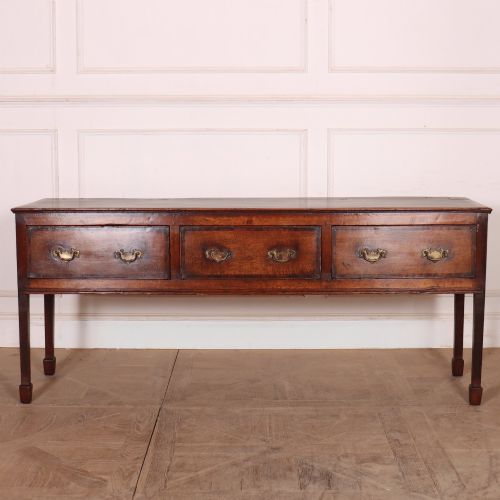
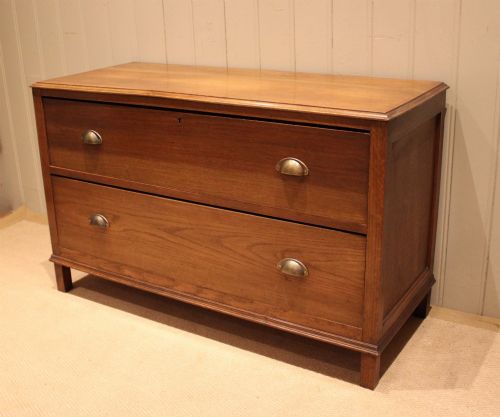
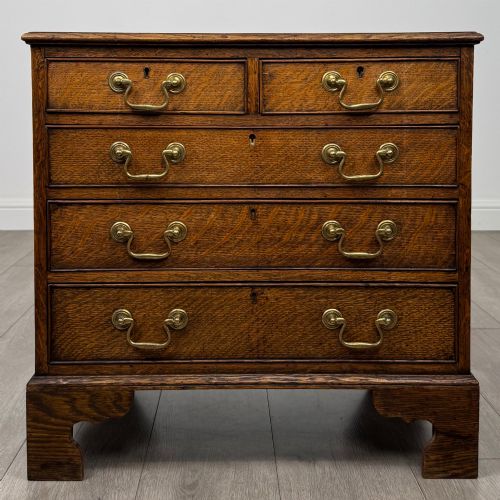
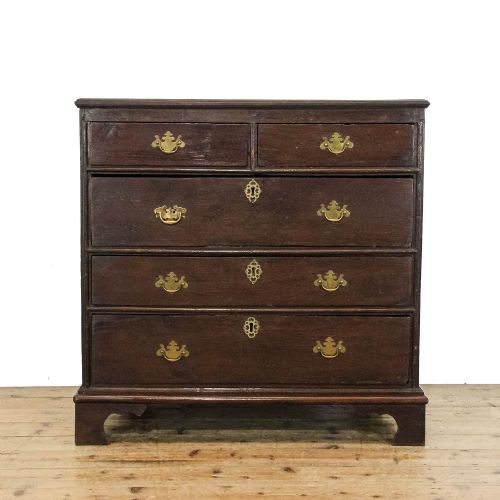
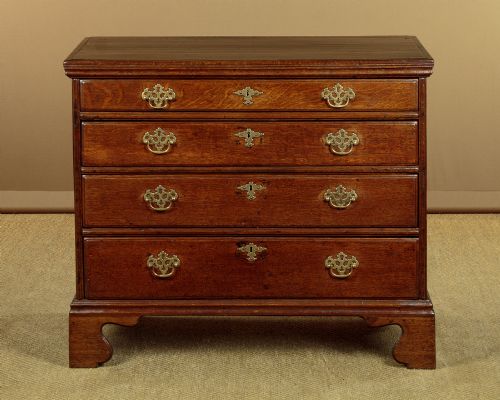
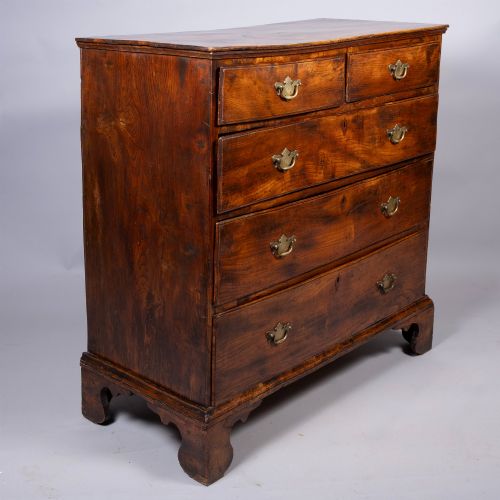
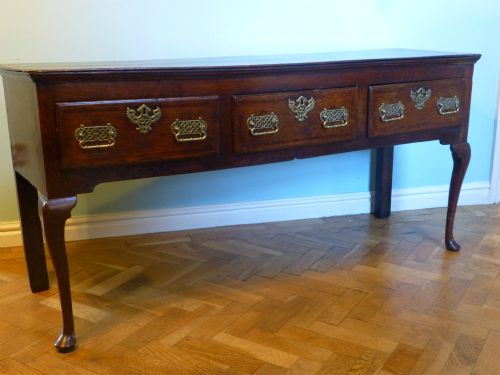
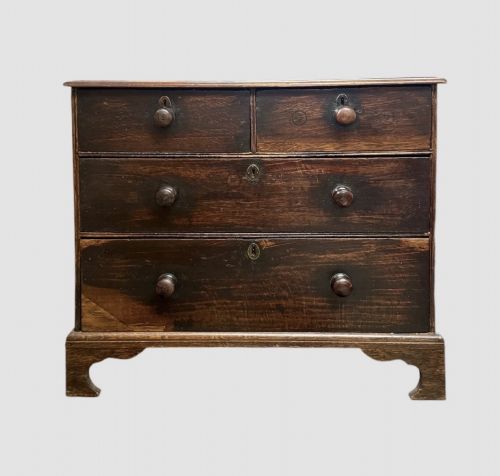
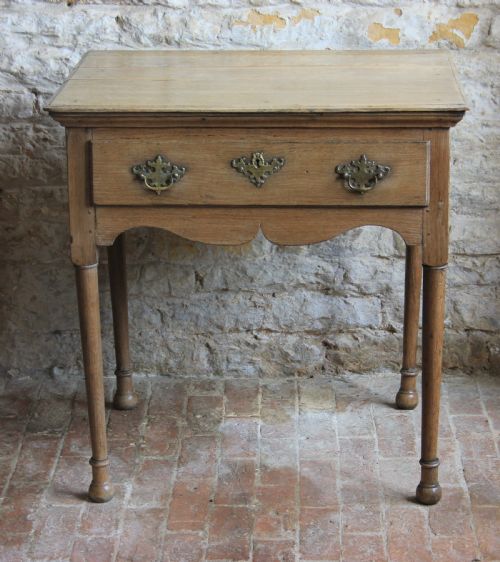
When you search for English country oak drawers, you are looking at utilitarian furniture built for everyday use in provincial homes rather than grand urban parlours. The pieces on this page span several centuries, reaching from the seventeenth century through the Georgian and Victorian eras, with eighteenth-century examples appearing frequently. Forms range widely across chests of drawers, dresser bases, side tables, mule chests, and sideboards, reflecting the versatile joinery traditions of the English countryside.
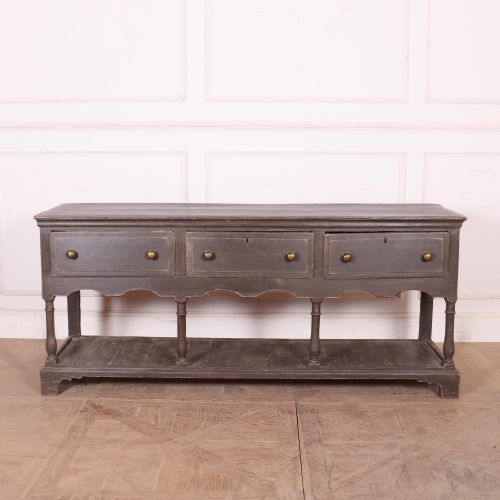
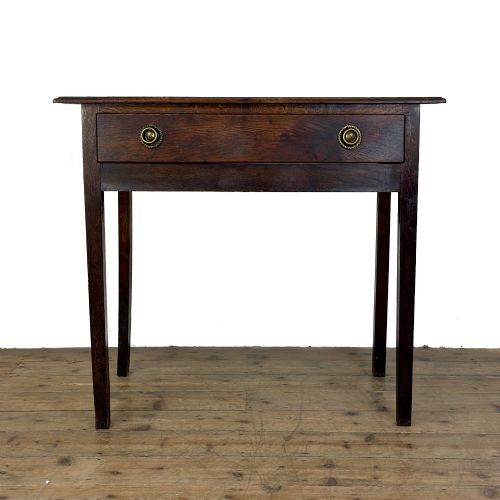
Chest of drawers formats dominate the selection, often appearing as low or small configurations alongside larger dresser bases fitted with potboards. Side tables and lowboys provide compact alternatives with single or multiple drawers beneath plain timber tops. Mule chests combine drawer storage with hinged blanket compartments, while occasional pieces like lamp tables and coffee tables adapt older materials to later domestic functions.
Materials and construction
Solid oak provides the primary structural timber for these pieces, selected for its density and durability. Secondary woods such as elm, pine, and yew occasionally appear in drawer linings or structural panels, while brass drop handles and escutcheons supply the principal metal hardware.
Surface finishes vary from raw, pale, or bleached timber to traditional paint layers and simulated wood effects. Joinery techniques rely on pegged mortise and tenon joints, hand-cut dovetails on drawer boxes, and heavily moulded panels that give depth to facades.
Judging quality in country oak
Quality in these pieces rests upon the integrity of the timber selection and the restraint of subsequent restoration. Grain figure, particularly in elm and oak surfaces, distinguishes finer examples from utilitarian boards, while the survival of original brass hardware and untouched surface patination elevates a piece above heavily scrubbed or stripped alternatives.
Structural honesty separates skilled provincial joinery from later adaptation. The crispness of hand-cut mouldings, the snug fit of dovetailed drawer boxes within their apertures, and the undisturbed wear on feet and lower rails indicate how thoroughly a piece has maintained its original form.
The English Country Oak Drawers Glossary
- Potboard
- An open slatted lower shelf fitted beneath a dresser base, traditionally used for storing earthenware and heavy kitchen pots. It sits just above the floor on plain stile feet.
- Lowboy
- A small side table featuring one or more rows of drawers beneath a rectangular top, typically raised on slender cabriole or turned legs. These versatile pieces served as dressing tables or serving surfaces.
- Mule chest
- A storage chest with one or more drawers built into the base beneath a deep, hinged blanket compartment. This hybrid form bridges the gap between traditional coffer storage and the modern chest of drawers.
- Dovetail
- A joinery technique utilising interlocking wedge-shaped fingers to secure drawer corners. Hand-cut versions display irregular widths that help date early pieces.
- Patina
- The surface sheen and colour developed by timber over centuries of handling, polishing, and exposure to light. It serves as a key indicator of age and undisturbed finish.
English Country Oak Drawers: Frequently Asked Questions
How do I date an oak chest?
Dating relies on examining construction methods, timber preparation, and hardware styles. Hand-sawn boards, pegged joints, and primitive dovetails point to earlier periods.
Secondary woods and machine-cut elements typically indicate nineteenth-century production or later alterations.
Where were these pieces used?
These items originated in rural houses, farmhouses, and provincial dwellings across England. They furnished kitchens, parlours, and bedrooms for practical domestic storage.
Their robust construction suited demanding daily environments rather than formal reception rooms.
How should I care for oak?
Keep oak furniture away from direct heat sources and rapid temperature fluctuations to prevent timber splitting. Maintain stable indoor humidity levels.
Apply occasional traditional beeswax and buff gently with a soft cloth to preserve the surface sheen.
What is a dresser base?
A dresser base is a long, low storage unit featuring a flat top surface and multiple working drawers. Many examples include open potboard shelves underneath.
Unlike tall kitchen dressers, these units omit upper plate racks and function well as sideboards.