




English Country Garden Painting
An english country garden painting brings domestic flora and pastoral calm into a room through watercolours and oils.
English Country Garden Painting
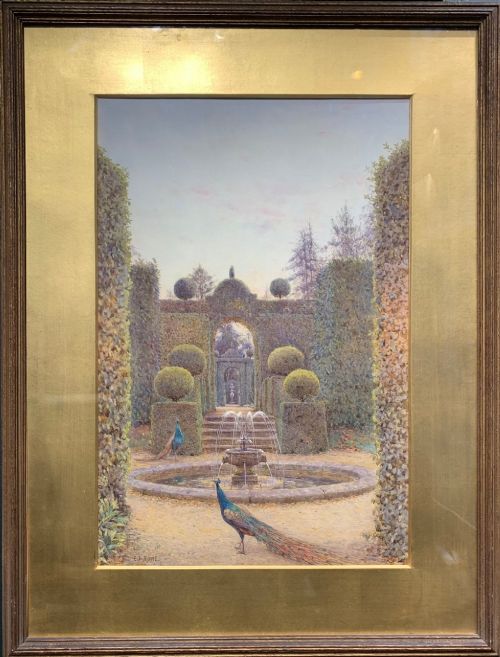
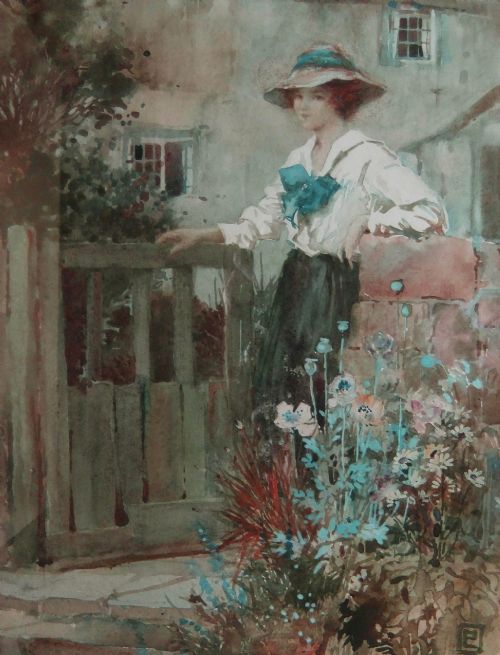
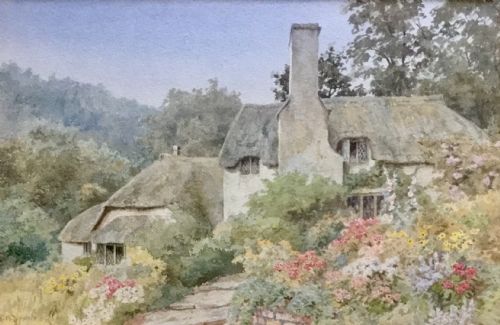
An english country garden painting captures rural landscapes, floral plots, and cottage exteriors from the Victorian era through the mid-twentieth century. Buyers encounter works executed in oil or watercolour, depicting subjects from herbaceous borders to domestic gardens.
The most common examples on this page date from the Edwardian period and the early twentieth century, reflecting a sustained interest in pastoral scenes. These works range from intimate watercolours of thatched cottages to broader canvases of country house gardens.
How they were made
Painters applied oil paint or watercolour pigment onto prepared canvas or paper supports. Canvases are stretched over wood frames, sometimes mounted to board, while watercolours utilise paper preserved beneath glass.
Artists worked within British Impressionist, Edwardian pastoral, and Victorian rural genres. Brushwork varies from the blended passages of traditional watercolours to the heavier impasto of oil paintings.
A persistent terrier occasionally supervises the gardening from the herbaceous border.
What varies in quality
Quality rests upon the handling of light, botanical detail, and spatial depth within the composition. Stronger works render foliage and architecture with confident, deliberate brushstrokes that establish atmosphere.
Condition plays a role in overall merit, particularly regarding the preservation of paper against foxing and the stability of pigment on canvas. Works retaining their original wooden framing and unblemished surfaces stand higher in the range.
Ernest Arthur Rowe·Percy Lancaster·Theresa Stannard·Owen Bowen·Ernest Higgins Rigg·William Hatherell·David Woodlock·Herbert Royle·Arthur Claude Strachan·Thomas Nicholson Tyndale·John Emms·Henry John Sylvester Stannard·Beatrice Parsons·George Frederick Nicholls·William Greaves·Ralph Hedley RBA·Lilian Stannard·Fred Merriman·John F. Pasmore·Amy Antill·Daniel Sherrin
The English Country Garden Painting Glossary
- Watercolour
- A paint consisting of water-soluble pigment suspended in a gum binder. It is traditionally applied to paper to create luminous, transparent washes.
- Impressionism
- A style of painting that focuses on the visual impression of a moment, especially the shifting effects of light and colour. British practitioners adapted this approach to rural and domestic subjects.
- Impasto
- The process of laying paint thickly on a canvas so that it stands out from the surface. This technique imparts a palpable texture to oil paintings.
- Foxing
- Brown spots or discoloration that develop on old paper due to chemical reactions over time. It is commonly observed in antique watercolours.
English Country Garden Painting: Frequently Asked Questions
What periods do these paintings cover?
The selections span the nineteenth and twentieth centuries, encompassing Victorian, Edwardian, and later periods.
Most examples date from the early decades of the twentieth century, reflecting the popularity of pastoral subjects during that era.
How are watercolours protected?
Works on paper are typically set behind glass within wooden frames to shield the pigment from dust and moisture.
Proper framing prevents direct contact between the paper surface and the glass.
What subjects appear in these scenes?
Compositions frequently feature cottage gardens, floral borders, rural workers, and domestic animals.
Artists also recorded specific architectural settings, including country houses, churches, and parklands.
Are these works painted on canvas?
Support mediums include both stretched canvas and heavy paper. Oil paintings generally utilise canvas or board.
Watercolour works rely on absorbent paper supports suited to translucent pigments.