


English Country Cottage Artwork
English country cottage artwork captures rural tranquility through period watercolours and oils depicting thatched roofs, gardens, and pastoral village life.
English Country Cottage Artwork
When considering English country cottage artwork, buyers encounter painted depictions of rural life spanning the nineteenth and twentieth centuries. These pieces record pastoral scenes, village dwellings, and garden settings through the eyes of artists working in Victorian, Edwardian, and British Impressionist traditions.
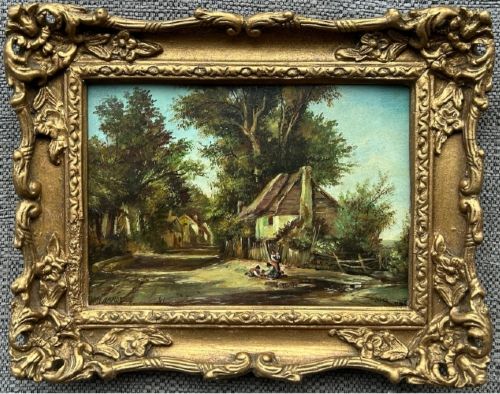
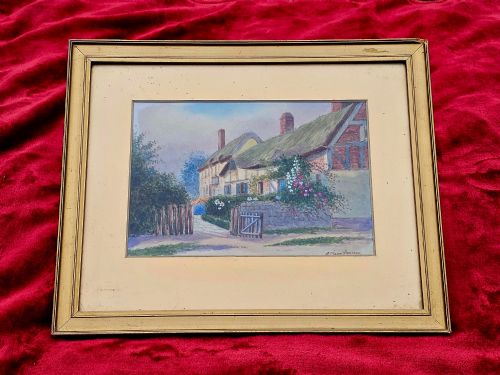
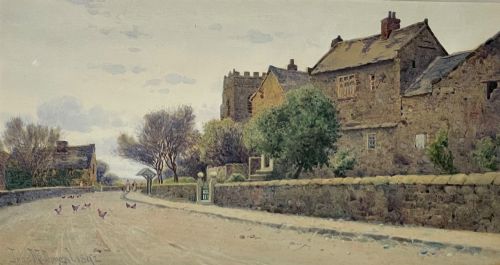
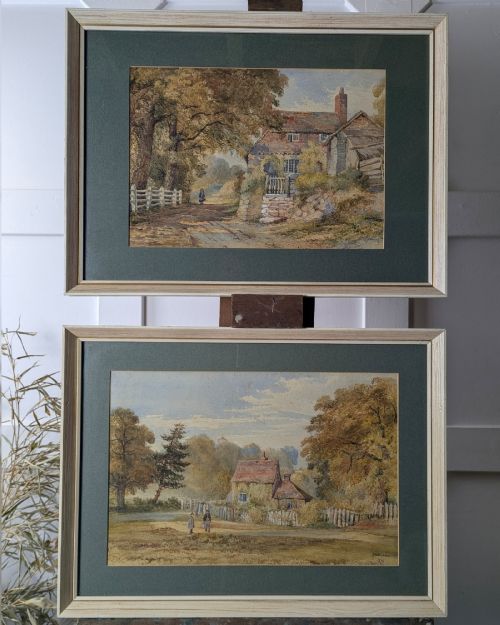
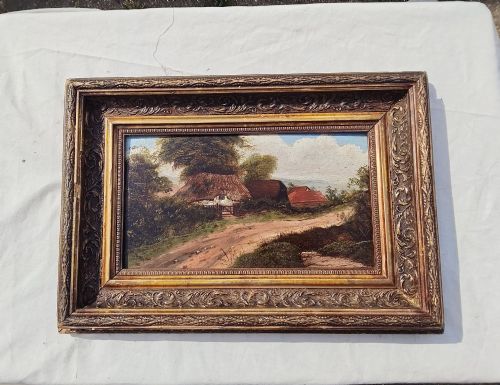
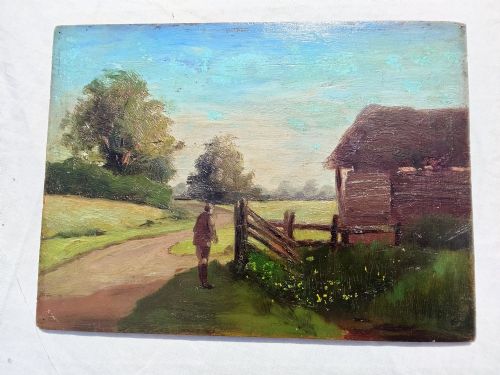
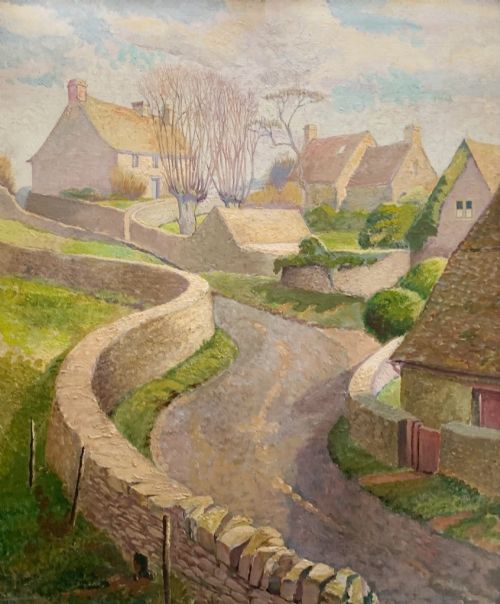
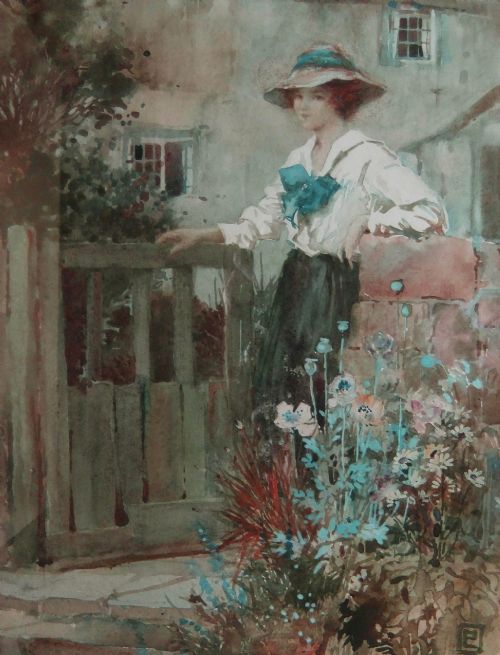
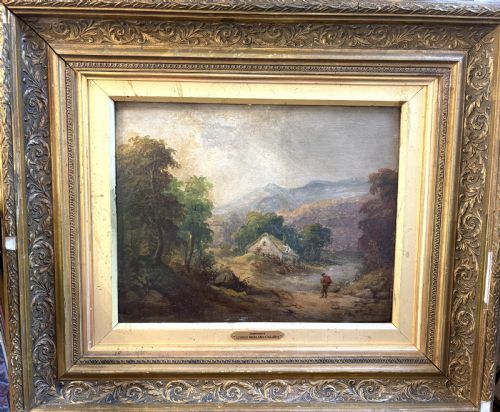
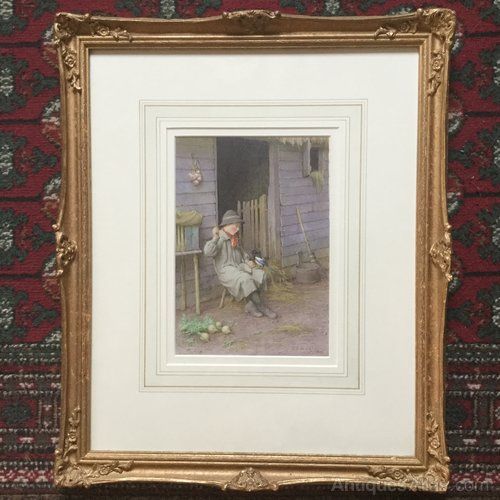
The most common examples on this page are watercolours on paper and oil paintings on canvas, panel, or board. Subjects frequently feature thatched cottages, domestic animals, and figures beside gardens, rivers, or woodland paths.
Origins trace directly to regional English schools and named painters who documented the countryside from the late Victorian era through the mid-twentieth century. Works range in scope from intimate village studies to larger framed landscape compositions.
Materials and Technique
Paintings of this subject rely primarily on watercolour pigments applied to paper or oil media laid upon canvas, wood, panel, or card. Artists also utilised mixed media and lithographic reproduction methods to capture rural textures and light.
Framing forms an integral part of the physical object, utilising gilt wood and glass to protect delicate paper surfaces and watercolours. Support structures vary from traditional wooden stretchers for canvas to solid wooden boards for oil sketches.
Ducks, geese, ponies, and cattle frequently wander into the foreground of these rural scenes, occasionally stealing the show from the thatched cottages.
Factors of Quality
Quality rests upon the artist's handling of light, atmosphere, and domestic detail within the rural setting. Stronger pieces display confident brushwork and balanced composition that bring depth to cottage gardens and village pathways.
The preservation of the paper, pigment, or canvas influences the standing of a piece. Original gilt wood frames and clean, stable surfaces elevate the visual presence of both watercolours and oil paintings.
William Howard Hardy·John McDougal·Percy Lancaster·Charles Edward Wilson·Theresa Stannard·Harry Sylvester Stannard·Henry Charles Fox·David Woodlock
The English Country Cottage Artwork Glossary
- Watercolour
- A painting method where fine pigment is suspended in water-soluble binders and applied to paper. This medium creates translucent washes suited to soft skies and pastoral village scenes.
- Oil on Canvas
- Pigment mixed with drying oil applied to a stretched woven fabric surface. This technique allows for rich colour layering and textured depiction of rural landscapes.
- English School
- A classification for artists trained or working within the British artistic tradition. The term groups regional painters who shared similar pastoral subjects and techniques.
- Gilt Wood
- Timber framing finished with a thin layer of gold leaf or metallic gilding. Such frames often accompany Victorian and Edwardian paintings.
- Pastoral
- Artistic style or subject matter concerning rural life and idealized country scenes. These works typically feature cottages, livestock, and agrarian workers.
English Country Cottage Artwork: Frequently Asked Questions
What periods do these cottage paintings span?
The available selection covers works primarily from the late nineteenth century through the mid-twentieth century, including Victorian and Edwardian periods. Earlier Georgian influences and later 1940s mixed media pieces also appear.
Dates reflect the active periods of the artists and the stylistic conventions of British landscape painting over several decades.
What materials were used to create these artworks?
Artists utilised watercolour pigments on paper alongside oil paint applied to canvas, wooden panels, cards, and boards. Protective glass and gilt wood framing frequently accompany the paper works.
Support materials vary depending on whether the artist worked outdoors with portable watercolours or in a studio with oil mediums.
How should I display watercolour cottage paintings?
Watercolour paintings require protection from direct sunlight to prevent the fading of delicate pigments on paper. Keeping them behind glass in stable indoor environments preserves the integrity of the work.
Proper framing helps shield the paper from humidity changes while maintaining the original presentation style.
How do I identify a Victorian cottage painting?
Victorian pieces often feature detailed brushwork depicting romanticized rural village life, thatched homesteads, and figures tending gardens or livestock. Signatures, framing styles, and artist records help confirm the era.
Many works from this period also carry labels or inscriptions noting specific English villages and regions.