

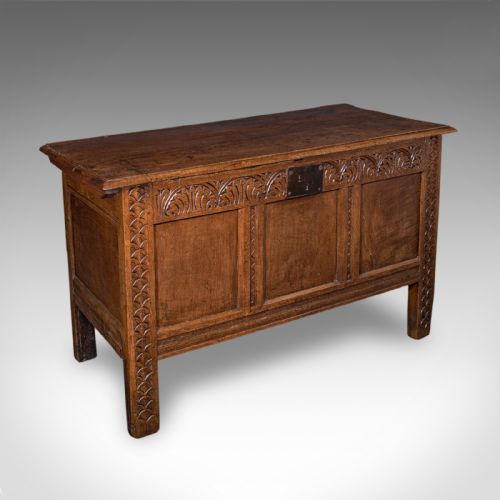
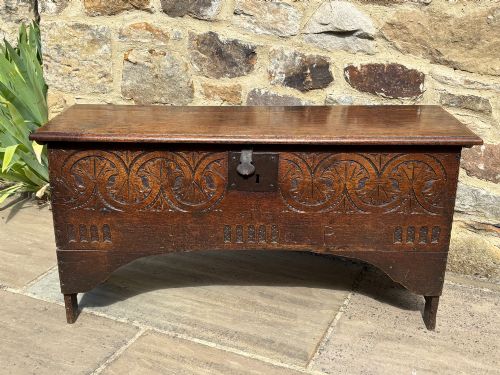
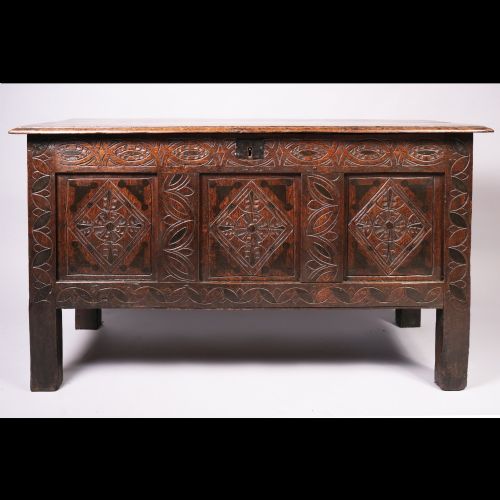
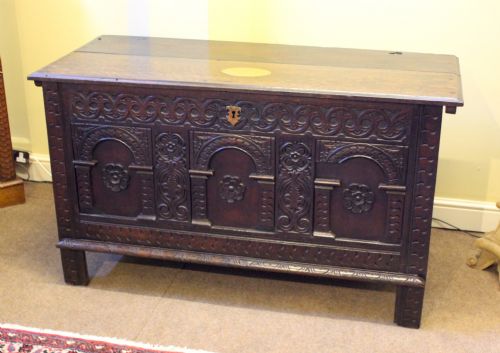
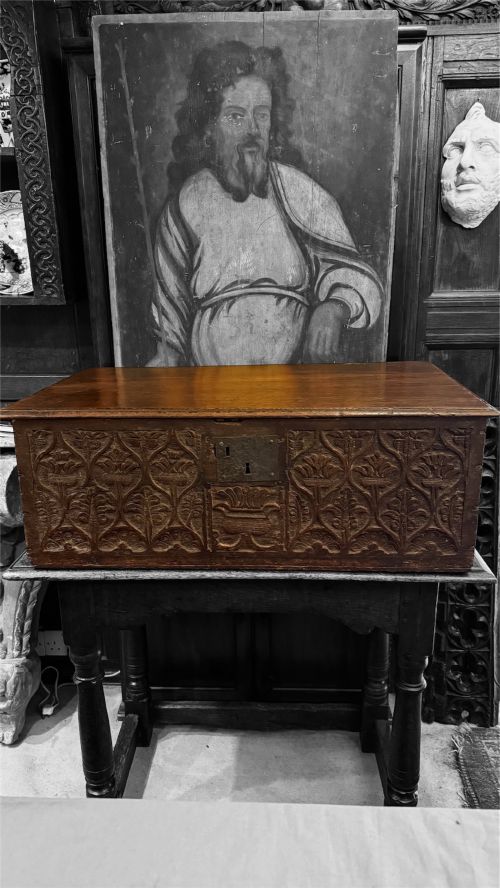
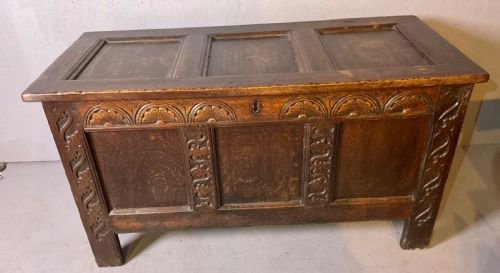


English Carved Oak Trunk
When you handle an english carved oak trunk, you hold centuries of domestic storage history in heavy timber.
English Carved Oak Trunk
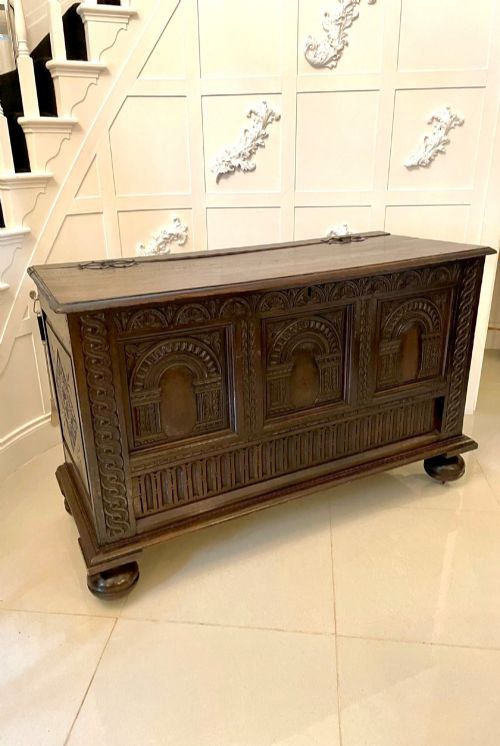
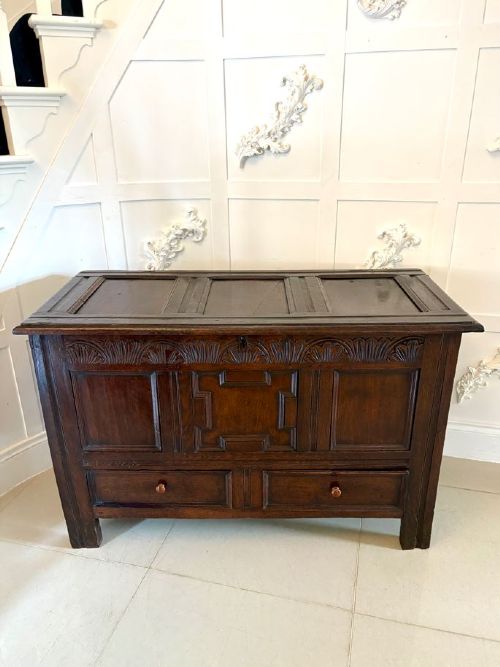
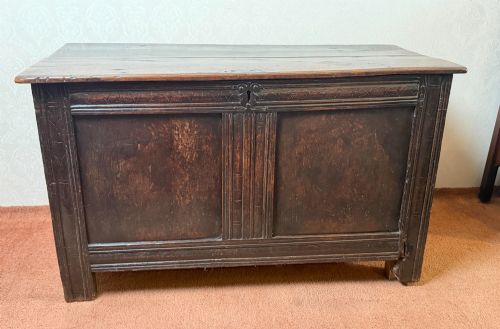
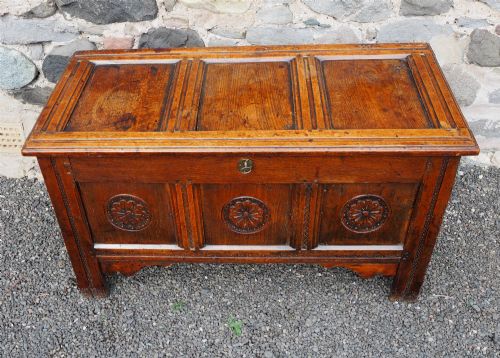
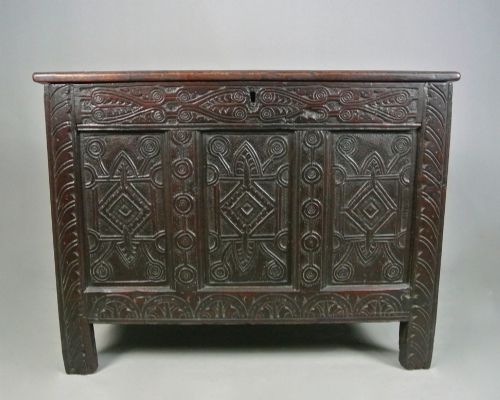
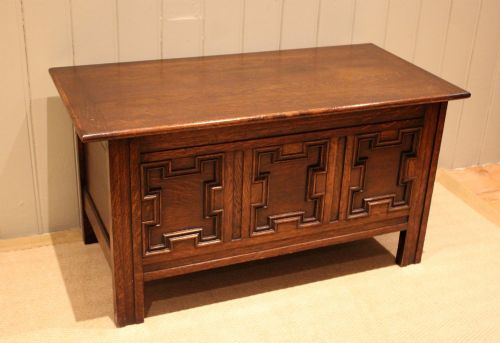
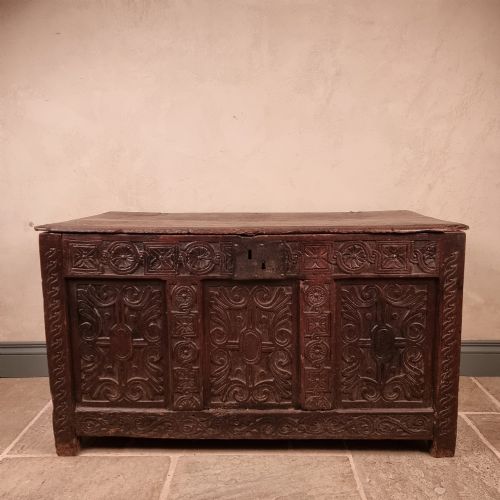
An english carved oak trunk serves as a durable receptacle for household goods, blankets, and documents, surviving from periods including the sixteenth, seventeenth, and eighteenth centuries. These pieces appear primarily as coffers, blanket chests, and mule chests with hinged lids and robust panel construction.
Most examples originate from the seventeenth and eighteenth centuries, reflecting Jacobean, William III, and Georgian aesthetic influences. Buyers frequently encounter smaller formats such as document boxes alongside substantial triple-panel storage trunks.
Mule chests introduce an integrated lower drawer beneath the main compartment, offering a hybrid of coffer and chest-of-drawers utility. These forms evolved to meet domestic demands for accessible storage in English country houses and town residences alike.
Materials and Construction
Joiners built these trunks using solid English oak, frequently supplemented by internal framing in elm or secondary timbers. Wrought iron and brass hardware, including hinges, cotter pins, and lock plates, secure the heavy lids and panels.
Carving techniques involve chip-carving, arcading, and linenfold motifs executed directly into the face panels. Ebonised wood and subtle wood inlay occasionally accent the primary oak structure on specific regional variants.
English Carved Oak Trunk Retail Price Guide 2026
Typical asking prices for english carved oak trunk among the pieces listed under this phrase on Sellingantiques today, from the lower quarter to the upper quarter. They describe what is for sale here now, not the wider market.
Listings feature oak trunks spanning from the sixteenth century through the Georgian era, incorporating iron and brass hardware.
Factors of Quality
Quality rests upon the depth and precision of the carved decoration on the front panels, ranging from simple channel moulding to intricate arcading and figural motifs. Crisp execution by the original joiner distinguishes superior items from utilitarian boxes.
The integrity of the timber, the retention of original brass or iron hardware, and the survival of the floorboards and till boxes determine the desirability of an english carved oak trunk. Alterations to feet, lids, or hinges diminish the historical standing of the piece.
The English Carved Oak Trunk Glossary
- Coffer
- A heavy wooden chest traditionally used for storing valuables, textiles, or documents. These storage items feature hinged lids and sturdy paneled construction.
- Mule chest
- A storage chest fitted with one or more drawers at the base beneath the primary lift-top compartment. This form bridges the traditional coffer and the modern chest of drawers.
- Arcading
- A decorative row of arches carved in relief upon the wooden panels of seventeenth-century furniture. This architectural motif echoes contemporary stone building styles.
- Linenfold
- A style of carved wooden panelling that resembles folded fabric, popular during the Tudor period. Craftspeople achieved this texture using specialised gouges and planes on oak boards.
- Till box
- A small internal compartment built into the upper corner of a chest for holding coins or small trinkets. This secure section typically possesses its own tiny lid.
English Carved Oak Trunk: Frequently Asked Questions
What is the difference between a coffer and a mule chest?
A traditional coffer consists of a simple chest with a lid opening from the top for general storage.
A mule chest incorporates one or more drawers at the base, combining top-loading space with easier access to frequently used items.
How do I date a carved oak trunk?
Dating relies on stylistic clues like arcaded panels, linenfold carving, and hardware styles that align with specific reigns from the sixteenth century onward.
Construction methods, such as joined frame-and-panel techniques and hand-forged iron hinges, also provide clear chronological markers.
Were these trunks used as window seats?
Their flat lids and sturdy proportions made them suitable for placement beneath windows to serve as casual seating.
Many period examples show wear patterns indicating dual usage for storage and sitting within domestic parlours.
What woods besides oak appear in these trunks?
While oak forms the primary structural timber, makers occasionally utilised elm for internal elements and floors.
Accents of walnut, ebonised wood, and wood inlay sometimes appear on specific Georgian and late seventeenth-century variants.