
English Carved Oak Table
When you search for an english carved oak table, you enter a lineage of heavy timber craftsmanship stretching from the seventeenth century through to the Edwardian era.
English Carved Oak Table
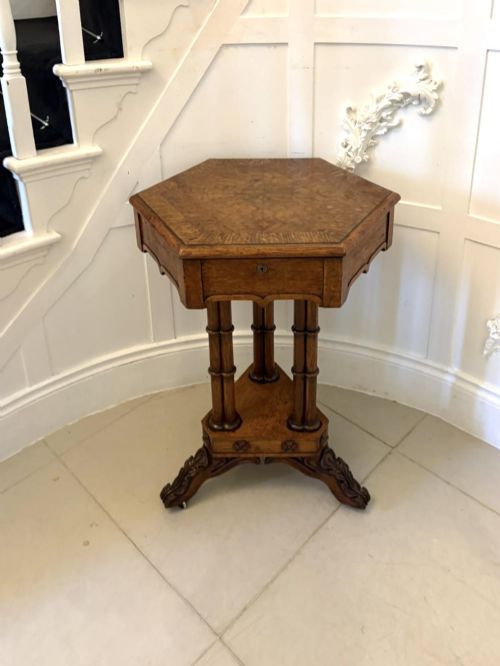
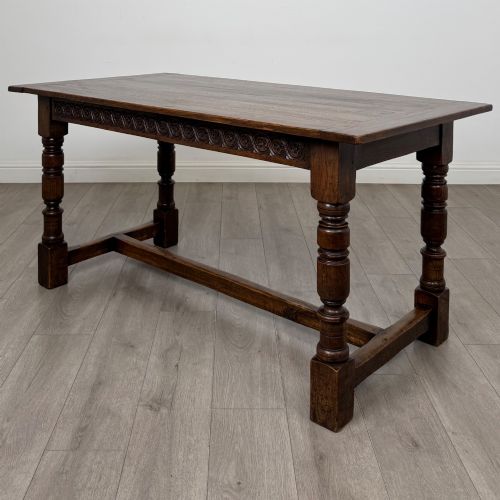
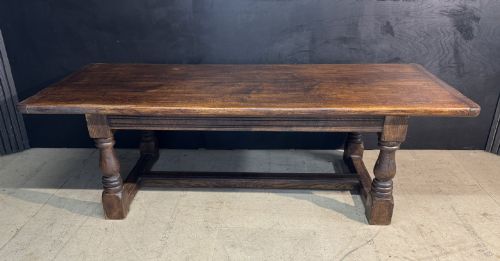
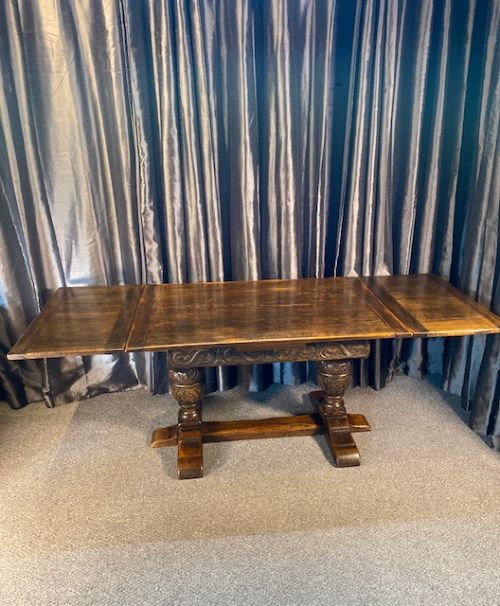
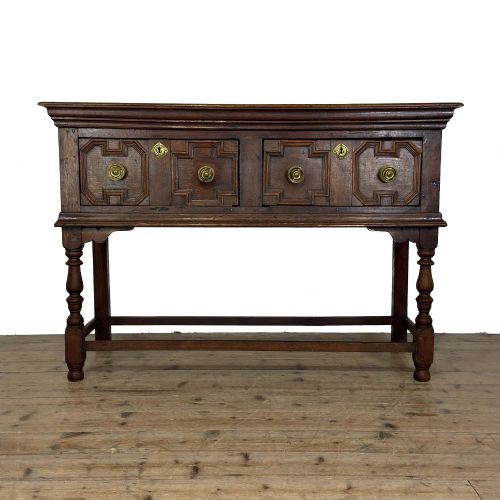
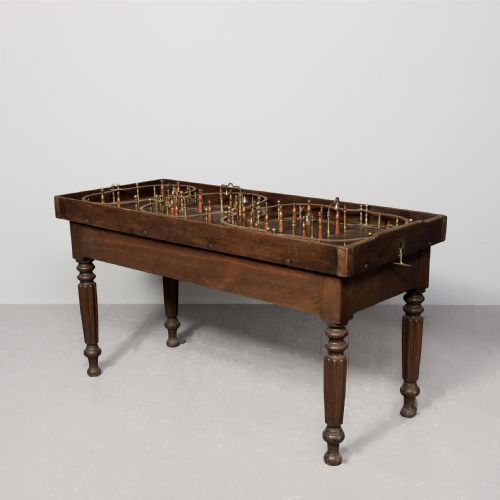
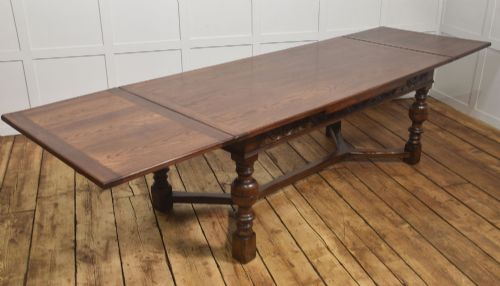
An english carved oak table encompasses forms ranging from seventeenth-century side tables and lowboys to twentieth-century refectory and draw-leaf dining tables. Buyers searching this phrase meet dining tables, occasional tables, and side tables shaped by centuries of stylistic revival and domestic utility.
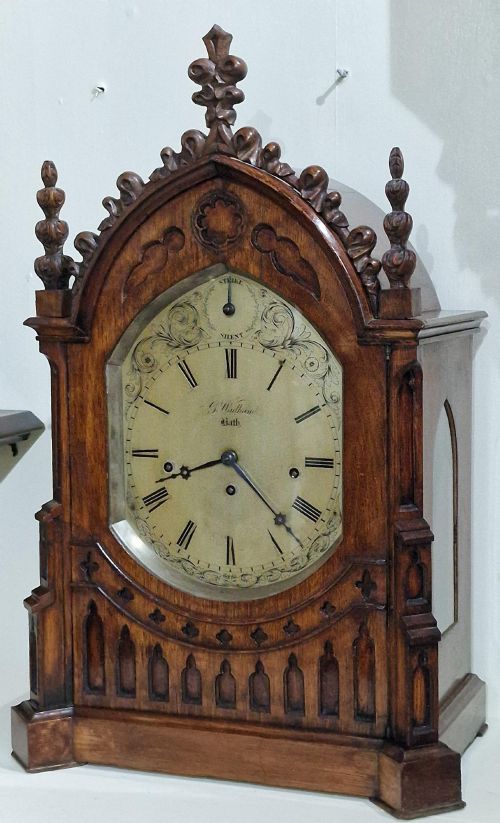
The selection on this page draws heavily from seventeenth-century originals, eighteenth-century lowboys, and later Victorian and Edwardian interpretations employing Jacobean and Gothic Revival motifs. Alongside large dining formats, smaller formats such as cricket tables, gateleg tables, and tripod tables appear frequently.
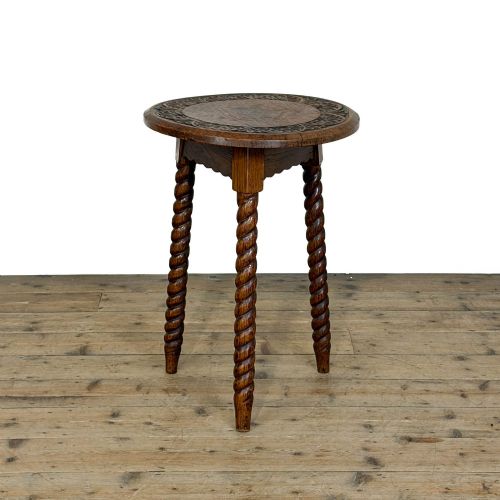
Makers and craftsmen across the nineteenth and twentieth centuries revisited these older forms, producing substantial farmhouse dining tables alongside occasional pieces embellished with barley twist legs and carved panels.
Materials and technique
Construction relies primarily on solid oak, frequently augmented by Pollard oak variants, alongside structural additions of brass, iron, and leather inserts for writing surfaces. Pegged joints and robust plank construction define the assembly methods visible across these pieces.
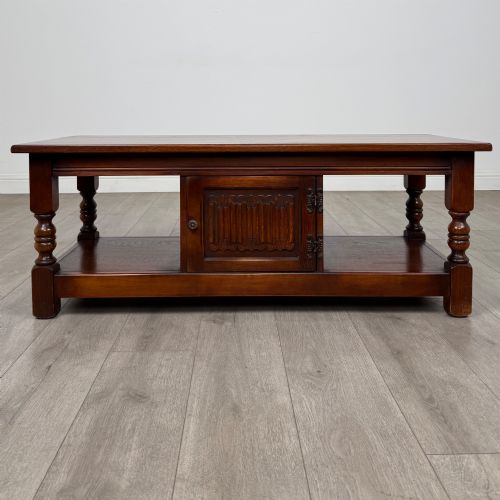
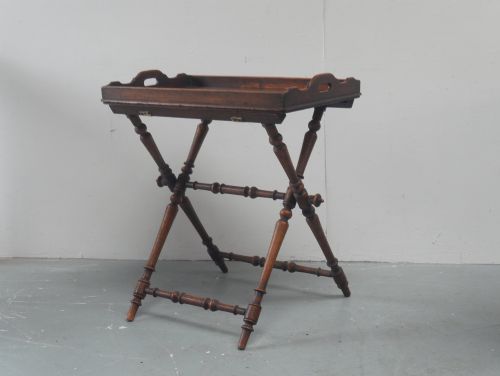
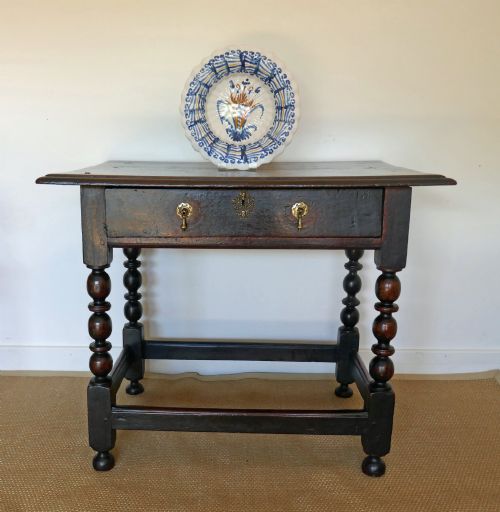
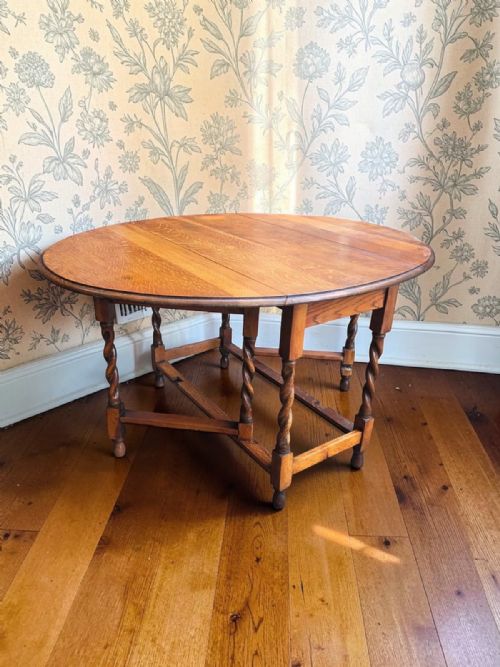
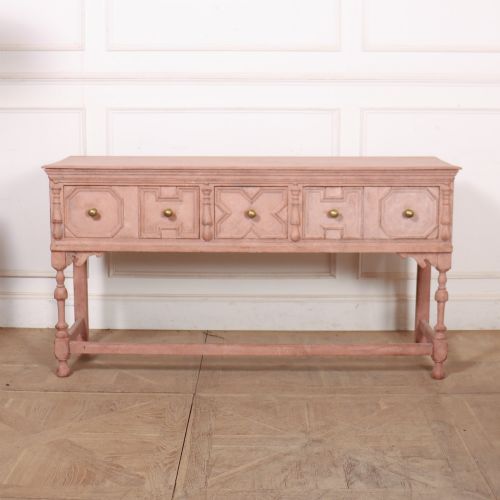
Carving serves as the primary decorative vocabulary, taking the form of geometric strapwork, linenfold panels, and botanical motifs executed directly into the timber. Turning techniques produce the distinctive barley twist legs and structural stretchers found on gateleg and side tables.
Listings feature oak tables spanning from the 17th century through the Edwardian period, alongside occasional pieces in iron, brass, and leather.
The spectrum of quality
Quality reveals itself in the depth and crispness of the hand-carving and the integrity of the timber selection, distinguishing finely figured quarter-sawn oak from plain utility boards. The weight of the timber and the honesty of the pegged joinery indicate the original maker's intent and skill.
Proportion and the survival of an appealing surface colour separate standard revival pieces from those of exceptional character. Balance in the turned legs and the retention of original hardware complete the distinction between ordinary and superior examples.
Gillows
The English Carved Oak Table Glossary
- Lowboy
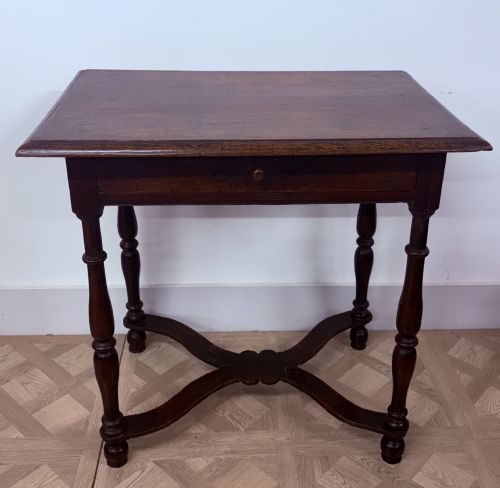
- A small seventeenth or eighteenth-century dressing or side table featuring one or more drawers and slender legs. These domestic tables typically stood in bedrooms or parlours.
- Gateleg table
- A table with hinged drop leaves supported by legs that swing outward like a gate. This form allowed tables to expand for dining and fold down against walls when not in use.
- Joint stool
- A sturdy wooden stool built with pegged mortise and tenon joinery rather than turned legs. They served versatile seating and occasional table functions in early households.
- Draw-leaf table
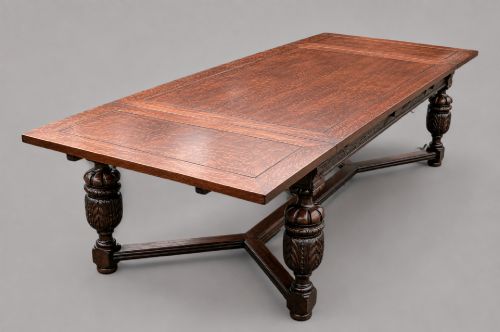
- A dining table with leaves hidden beneath the main top that pull out to extend the surface length. This clever mechanism became popular for accommodating larger gatherings.
- Barley twist
- A cylindrical wooden component turned in a spiral helix resembling twisted barley sugar. It became a hallmark of seventeenth-century joinery and later Victorian revival styles.
English Carved Oak Table: Frequently Asked Questions
How do I date an oak table?
Dating relies on examining the construction methods, tool marks, and hardware used in the piece. Pegged joints, hand-sawn timber boards, and style specific carving patterns point directly to particular centuries of production.
Later revival pieces from the Victorian and Edwardian periods often mimic earlier seventeenth-century forms but feature machine assistance and modern fixings. Comparing the timber grain and patination helps clarify the age of the table.
Are these tables suitable for daily dining?
Many solid oak tables on this page, particularly farmhouse and refectory formats, are built for robust daily use. Their sturdy timber construction handles family life and frequent gatherings with ease.
Care should be taken with antique surfaces regarding heat and moisture, utilising placemats and coasters. Regular waxing preserves the finish against everyday wear.
What is a lowboy used for?
A lowboy functions historically as a small dressing table or a compact side table with drawers. In modern homes, they serve brilliantly as hallway console tables or compact writing desks.
Their shallow depth allows them to fit into narrow spaces while providing practical surface area and concealed storage.
How do I care for antique oak?
Maintaining antique oak involves keeping the timber nourished with traditional beeswax to prevent the wood from drying out. Avoid placing tables near direct heat sources or strong sunlight to protect the finish.
Cleaning requires only a soft, dry cloth to remove dust without stripping the historic patina built up over generations.