



English Brown Jug
When you search for an english brown jug, you encounter centuries of utilitarian earthenware and salt-glazed stoneware shaped for daily tavern and domestic use.
English Brown Jug
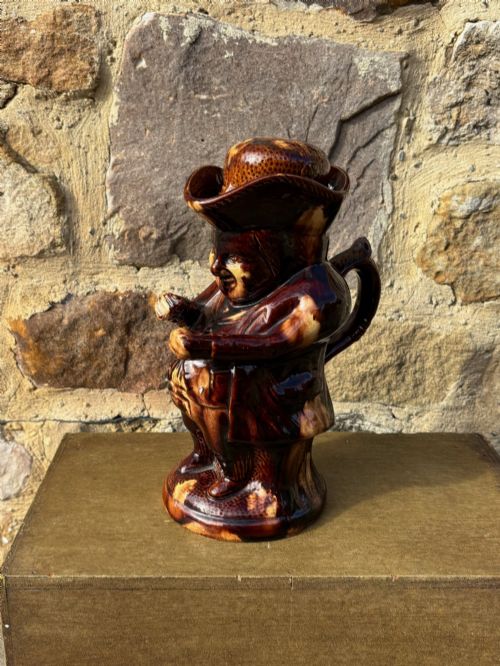
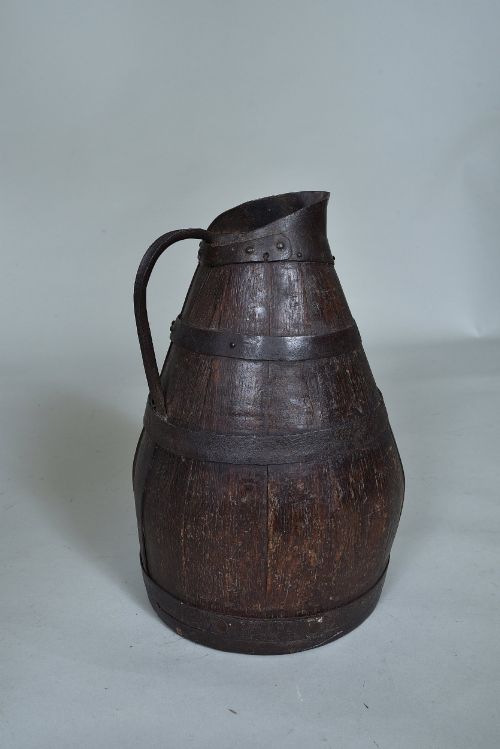
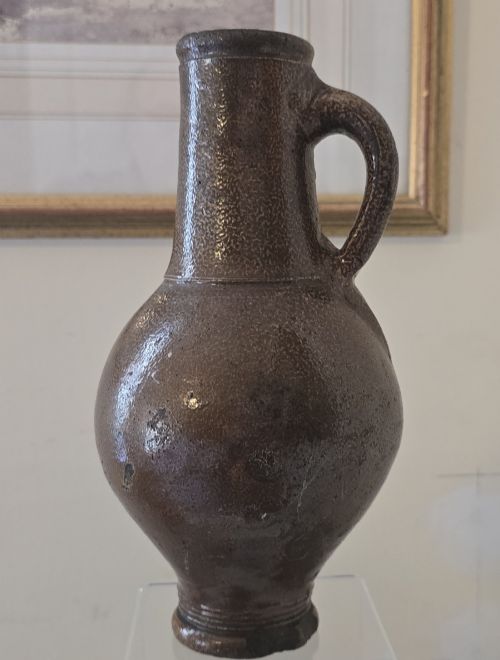
An english brown jug encompasses a broad range of vessels, from early seventeenth-century slipware and salt-glazed tavern jugs to Victorian Doulton Lambeth harvest pieces and Staffordshire Toby figures. The most frequent encounters on this page are nineteenth-century salt-glazed stoneware vessels, often accented with silver rims or moulded relief decoration.
The functional forms extend from large ale pitchers and puzzle jugs to decorative ewers and tavern containers. Alongside three-dimensional pottery, the selection incorporates wartime watercolour paintings depicting still lifes of flowers alongside ceramic vessels.
Origins span London potteries, West Country kilns, and Staffordshire workshops, connecting centuries of domestic service with studio ceramics and folk art expressions.
How they were made
Makers shaped these vessels primarily from heavy clay, earthenware, and robust stoneware, applying lead glazes, salt glazes, or simple slip to seal the porous body. Stoneware pieces required high-firing temperatures in kilns, during which salt thrown into the flames produced a distinctive textured, pitted glaze.
Decoration relied on incised folk art patterns, moulded relief scenes depicting figures or harvest motifs, and occasionally applied brass bands or silver mounts to reinforce rims and handles. Watercolour paintings on paper represent a visual counterpart, executed with pigment during wartime periods.
English Brown Jug Retail Price Guide 2026
Typical asking prices for english brown jug among the pieces listed under this phrase on Sellingantiques today, from the lower quarter to the upper quarter. They describe what is for sale here now, not the wider market.
Listings span multiple centuries, uniting seventeenth-century slipware and salt-glazed tavern jugs with nineteenth-century Doulton Lambeth stoneware and twentieth-century watercolours.
What varies in quality
Quality rests upon the crispness of the moulded relief work and the evenness of the salt or lead glaze across the heavy clay body. Early seventeenth-century slipware and fine nineteenth-century Doulton Lambeth productions display superior control over kiln temperatures and decorative depth compared to standard utility wares.
The presence of hallmarked silver rims or fitted metal mounts elevates specific harvest jugs and pitchers. Conversely, surface wear, kiln fractures, and poorly executed repairs diminish the integrity of domestic vessels.
John Dwight Fulham Pottery·James Tower·Doulton Lambeth·Emma Shute·Copeland Spode
The English Brown Jug Glossary
- Stoneware
- A dense, vitreous ceramic fired at high temperatures until non-porous. It resists liquids naturally without requiring heavy interior glazing.
- Salt glaze
- A glossy, textured finish created by throwing common salt into the kiln during high-temperature firing. The sodium reacts with the clay body to form a durable, orange-peel texture.
- Slipware
- Pottery decorated with slip, a liquid clay mixture trailed or brushed onto the unfired body. It produces contrasting linear patterns under a clear lead glaze.
- Puzzle jug
- A vessel featuring a pierced neck and deceptive spouts that challenge the drinker to imbibe without spilling. It relies on internal channels connected to the handle.
- Toby jug
- A pottery pitcher modelled as a stout, jovial person holding a mug and a pipe, typically wearing eighteenth-century attire. Staffordshire potteries produced numerous variations of this form.
English Brown Jug: Frequently Asked Questions
What is an english brown jug?
An english brown jug is a ceramic vessel made from stoneware or earthenware, typically finished with a salt or lead glaze in earthy tones.
These pieces range from early tavern pitchers to Victorian harvest jugs designed for ale and water.
How were old jugs used?
Historical jugs served primarily to store, carry, and pour liquids like ale, cider, and water in homes and taverns.
Some specialised forms, such as puzzle jugs, functioned as novelty items for drinking games.
How do I date a stoneware jug?
Dating relies on stylistic markers, such as Victorian salt-glaze reliefs, Georgian shapes, or seventeenth-century slipware techniques.
Maker marks, stamped registry numbers, and metal mounts also help narrow the period of production.
Are these jugs waterproof?
Most stoneware and glazed earthenware jugs remain completely waterproof due to the vitrification of the clay and the sealed glaze surface.
Early porous earthenware or pieces with historic hairline cracks should be used with caution.