

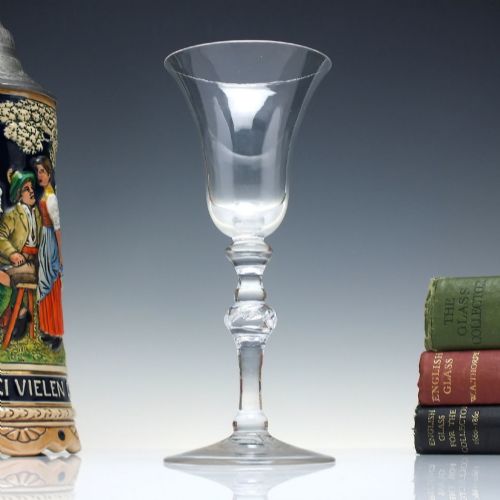
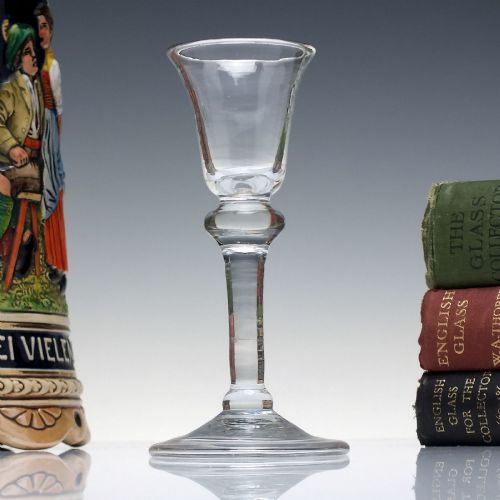
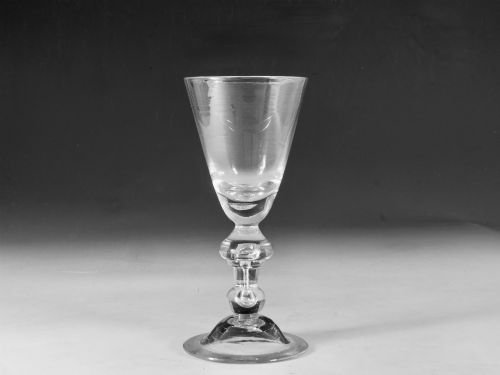
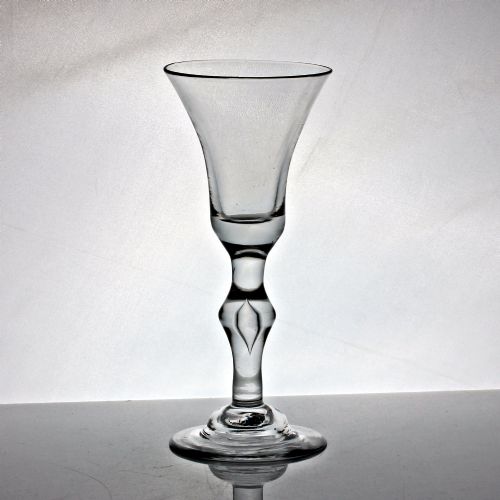



English Baluster Glass
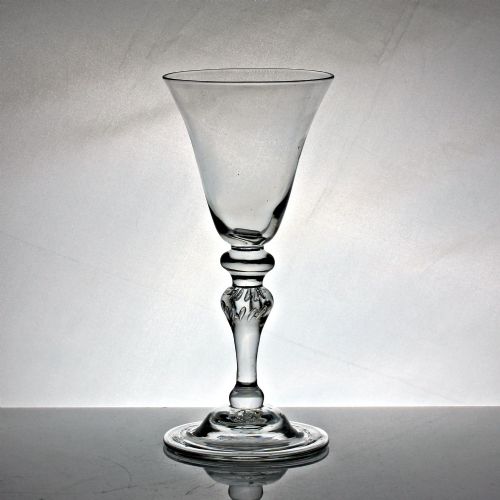
An English baluster glass brings tactile weight and historic form to a table, with heavy lead metal and distinct stem nodes characteristic of the eighteenth century.
English Baluster Glass
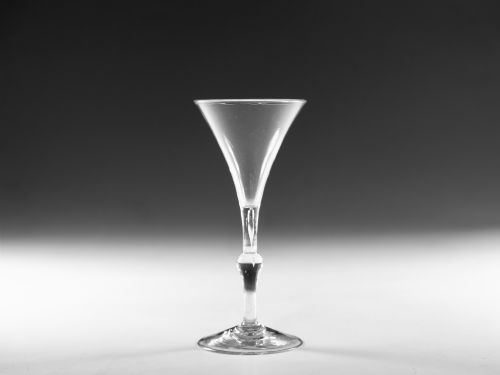
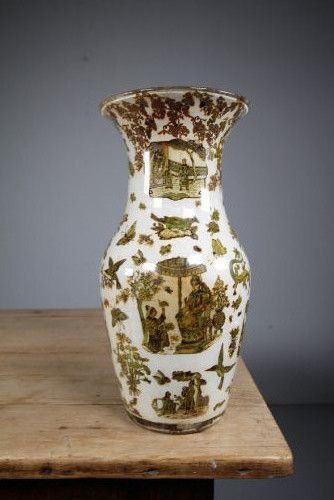
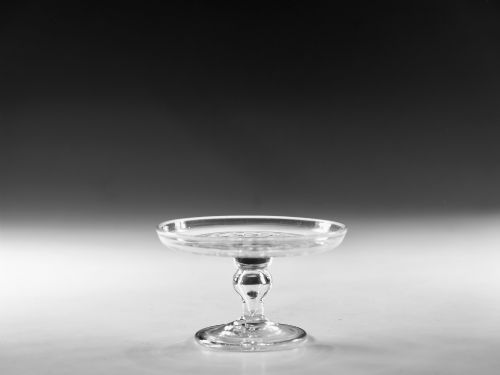
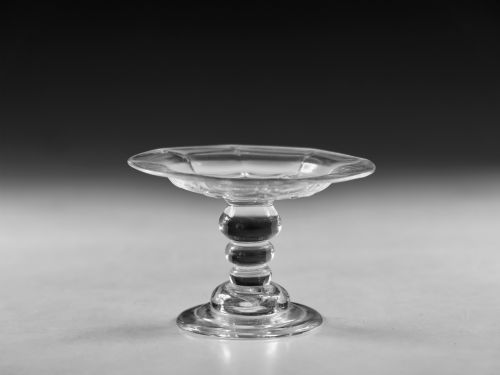
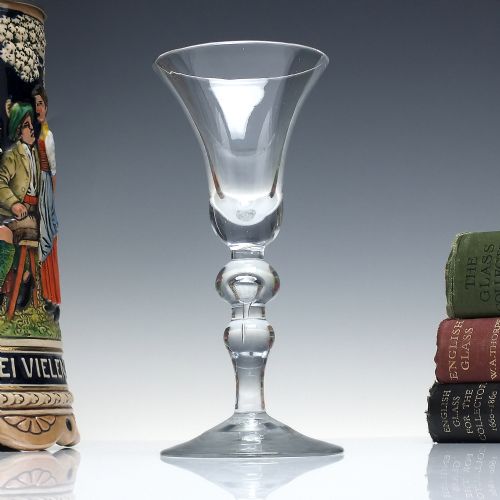
When you search for English baluster glass, you encounter drinking vessels, goblets, sweetmeat glasses, and patch stands primarily from the eighteenth century, alongside occasional nineteenth-century variants like rummers, vases, and candlesticks. The examples seen here span periods from Queen Anne and George II through the Georgian and Victorian eras, demonstrating forms like bell bowls, flared rims, and folded feet.
The dominant forms on this page are wine glasses and goblets featuring substantial baluster or balustroid stems, often enhanced by medial air tears or domed feet. Earlier pieces date from the early seventeen-hundreds, while later Victorian interpretations include heavy crystal rummers and Nailsea hollow-stem candlesticks.
Distinctions in quality
Quality in these drinking vessels rests upon the balance and heft of the lead metal, the symmetry of the bowl, and the crisp execution of the knopped stem. Superior specimens display profound clarity in the flint glass and proportional harmony between foot, stem, and rim.
The complexity of the stem formation, such as multi-nossed balusters and well-domed or folded feet, separates standard production from more ambitious examples. Handling wear and surface integrity further distinguish better-preserved historical specimens.
English Baluster Glass Retail Price Guide 2026
Typical asking prices for english baluster glass among the pieces listed under this phrase on Sellingantiques today, from the lower quarter to the upper quarter. They describe what is for sale here now, not the wider market.
The periods represented in these selections span from Queen Anne and George II through the broader Georgian and Victorian eras.
The English Baluster Glass Glossary
- Baluster
- A stout, swelling stem form derived from architectural pillars, prominent in eighteenth-century drinking vessels. It gives the glass its characteristic heavy weight and grip.
- Balustroid
- A slender variation of the traditional baluster stem, maintaining the knopped profile with reduced mass. This form bridges standard baluster and later lighter styles.
- Domed foot
- A foot raised centrally towards the junction with the stem, offering greater stability and visual height. This profile frequently appears on eighteenth-century goblets and wine glasses.
- Folded foot
- A rim turned under during manufacture to create a smooth, thickened edge that resists chipping. This technique provides durability to the base of early glassware.
English Baluster Glass: Frequently Asked Questions
What is an English baluster glass?
An English baluster glass is a drinking vessel or goblet made from heavy lead glass, distinguished by its thick, knopped stem resembling architectural balusters. These pieces originated primarily during the seventeenth and eighteenth centuries.
They were designed for consuming wine, beer, or sweetmeats, offering a substantial handfeel due to the high lead content used by British glasshouses of the period.
Were these glasses used daily?
During the eighteenth century, lead glass vessels of this weight served formal dining and tavern environments alike. Their robust lead crystal composition made them durable enough for regular service.
Today, collectors handle them with greater care, often displaying them as decorative objects or using them occasionally for formal dining.
What does balustroid mean on a glass?
A balustroid stem is a lighter, more slender version of the classic full baluster form. It retains the swelling knops and overall silhouette while reducing the heavy mass found in earlier drinking vessels.
This style represents a transitional phase in British glass manufacturing as techniques evolved toward thinner, more refined profiles.