
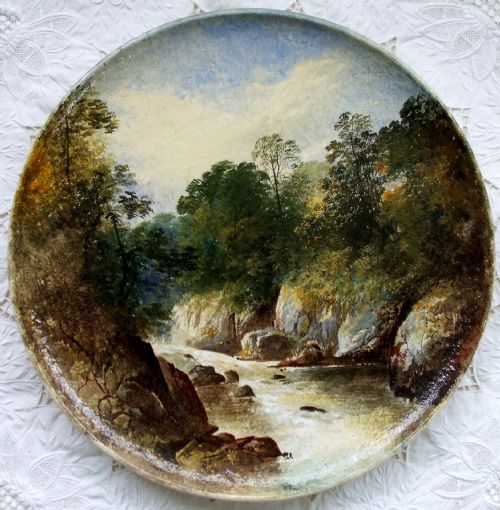


English Art Pottery Plate
An english art pottery plate brings vibrant glaze work and hand-painted scenes directly to a wall or table.
English Art Pottery Plate
An english art pottery plate encompasses decorative plaques, chargers, and dishes produced across the nineteenth and twentieth centuries. These forms reflect the shift from Victorian landscape painting on ceramic to the bold, geometric patterns of the Art Deco period.
The selection ranges from large painted Copeland earthenware plaques by William Yale to tubelined chargers by Charlotte Rhead and Clarice Cliff. Buyers typically encounter earthenware and ceramic surfaces decorated with vibrant enamel glazes.
While tea services and bowls occasionally appear under this grouping, flat plates and wall plaques remain the primary formats. Pieces span Victorian, Arts and Crafts, and Art Deco styles.
How they were made
Potters shaped earthenware, bone china, and porcelain bodies before applying liquid clay designs or hand-painted details. Tubelining involved trailing fine lines of slip onto the ceramic surface to create raised barriers for coloured glazes.
Enamel glaze and paint were applied by hand, often requiring multiple firings to fix the colours and achieve a glossy finish. Signed pieces frequently indicate individual artistry in the painting or decoration process.
Victorian potters painted Welsh beauty spots onto ceramic plaques so damp-weary travellers could admire waterfalls without leaving the parlour.
What varies in quality
Quality rests upon the crispness of the hand-painted brushwork and the precision of the tubelined borders. Pieces that retain rich, unblemished enamel glazes without firing faults command greater attention from collectors.
The presence of a clear artist signature, such as the work of William Yale or Charlotte Rhead, distinguishes standard factory production from individual studio achievement. Scale also alters value, with large chargers and detailed scenic plaques showing greater ambition.
William Yale·Charlotte Rhead·Clarice Cliff·Moorcroft·Gladstone potteries
The English Art Pottery Plate Glossary
- Tubelined
- A decorative technique where liquid clay is squeezed through a nozzle onto a ceramic body to form raised outlines before glazing. This creates distinct cells that hold bright enamel colours.
- Charger
- A large decorative plate intended for display on a wall or sideboard rather than for dining use. These often feature the most elaborate painted or tubelined designs.
- Earthenware
- Porous pottery fired at lower temperatures than porcelain and typically glazed to ensure it holds water. It forms the heavy base for much nineteenth and twentieth century decorative ceramics.
- Enamel glaze
- A glossy, glass-like coating coloured with metallic oxides and fused to the ceramic body during firing. It provides the vivid palette characteristic of Art Deco ceramics.
- Plaque
- A flat ceramic panel designed strictly for hanging or mounting rather than table use. Victorian examples frequently depict detailed British landscapes.
English Art Pottery Plate: Frequently Asked Questions
How do I hang a heavy charger?
Large decorative chargers require specialist wall brackets or spring-loaded wire hangers designed to distribute weight evenly across the rim. Ensure the fixture anchors securely into the wall rather than relying on plaster hooks.
Avoid hanging pieces in areas subject to vibration or direct sunlight to protect the enamel glaze over time.
Can I use these plates for dining?
Most pieces listed under this heading are decorative plaques or chargers intended strictly for display. Older earthenware bodies and delicate enamel glazes may not withstand daily use or cutlery.
Tea services and standard plates can be used carefully, but hand washing is essential to preserve the surface.
How do I date an art deco piece?
Look for characteristic geometric motifs, stylised floral patterns, and vibrant colour combinations typical of the nineteen-thirties. Maker marks, painted facsimile signatures, and specific pattern names stamped underneath often confirm the production era.
Tubelined designs by makers like Charlotte Rhead provide strong stylistic indicators of this decade.
What is the difference between a plaque and a plate?
Plaques are flat ceramic surfaces created specifically as pictorial art objects for wall display, frequently featuring detailed landscape scenes. Plates and chargers usually retain a functional circular form with a defined rim and well, even when used entirely for decoration.
Plaques from the nineteenth century often include titled locations on the reverse or front.