




English Arched Dial Clock
An english arched dial clock measures time through centuries of cabinet-making, bringing brass movement and wooden proportion to any interior.
English Arched Dial Clock
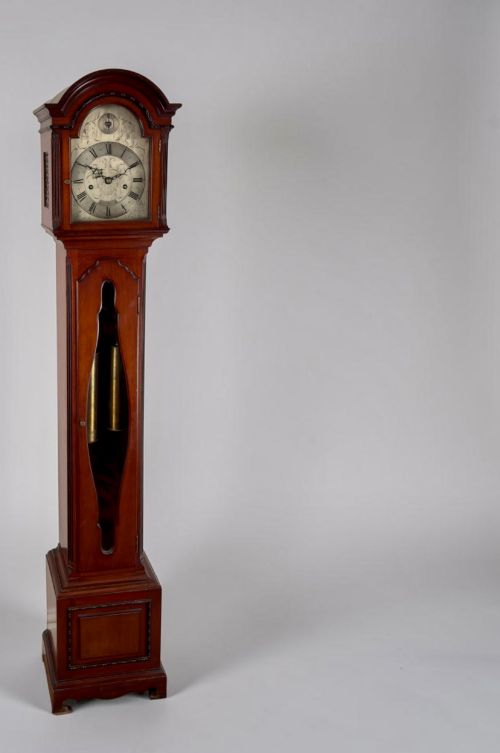
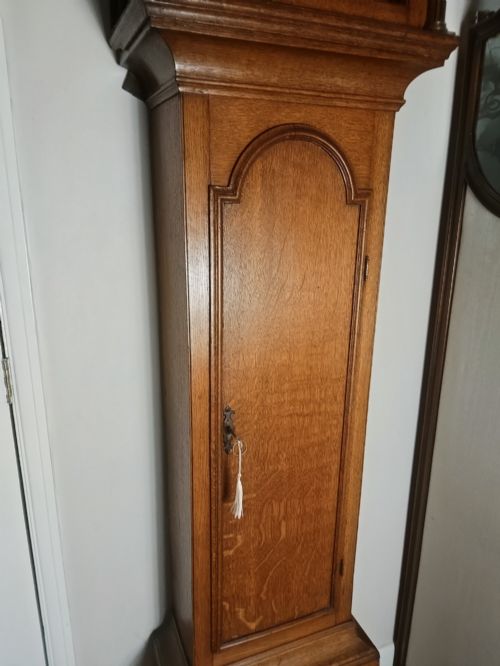
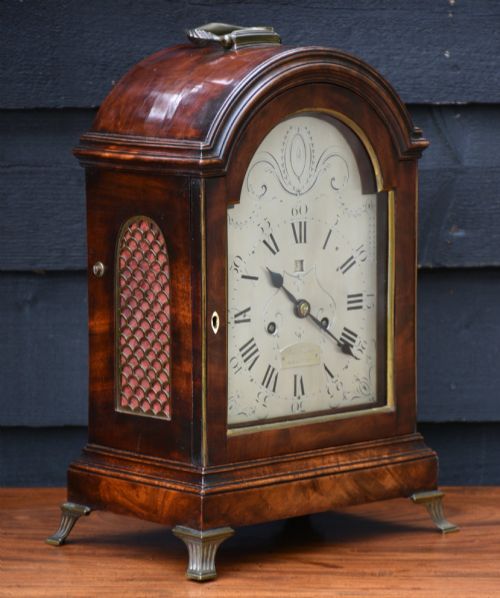
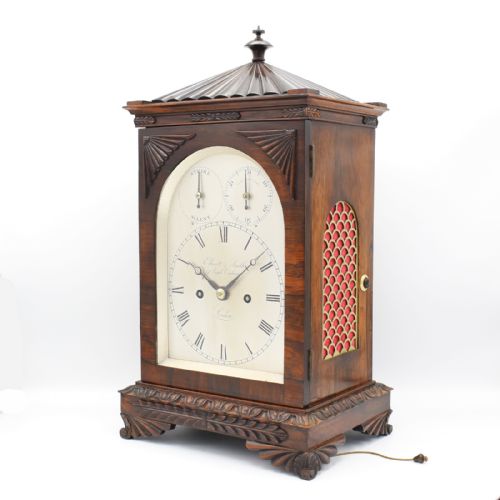
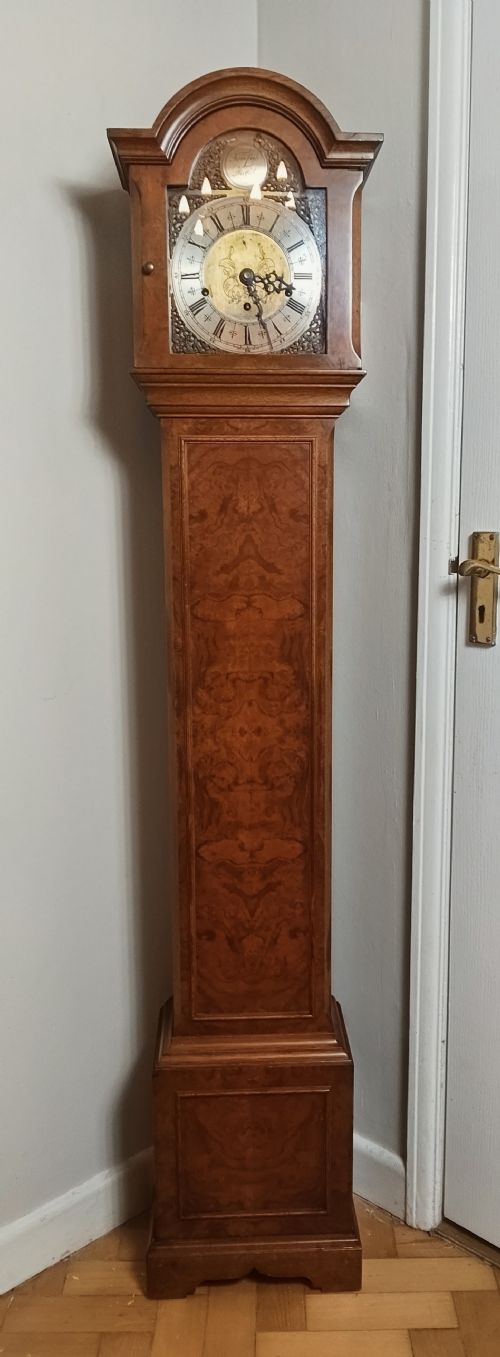
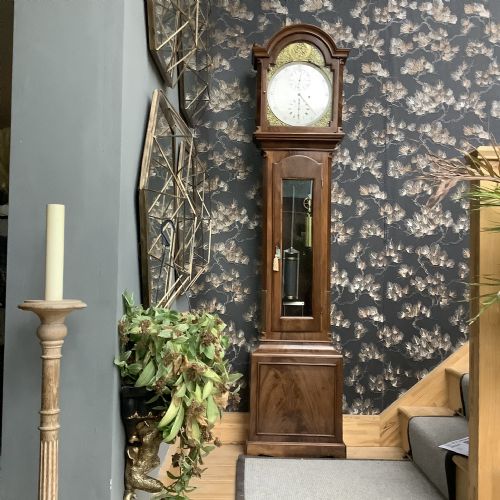
An english arched dial clock represents a traditional horological form spanning the Georgian, Victorian, and Edwardian eras. These timepieces take several structural shapes, appearing most frequently as tall longcase clocks housed in oak or mahogany cases, alongside smaller bracket and mantel formats.
The pieces on this page originate from diverse workshops and regions, ranging from London masters to provincial makers working in Henley, Exeter, and Reading. Buyers encounter floor-standing grandfather clocks, compact grandmother clocks, and wall-mounted timepieces featuring distinct arched faces.
Period examples display the stylistic shifts from early Georgian restraint through Regency refinement to later revivals. Cabinet woods vary from native oak to figured mahogany and burr walnut, enclosing brass movements designed for domestic or public spaces.
Materials and Construction
Cabinet-makers constructed the wooden housings using native timber such as oak and mahogany, frequently selecting burr walnut for decorative veneer. These woods were joined and polished to protect the delicate internal mechanisms from dust and atmospheric changes.
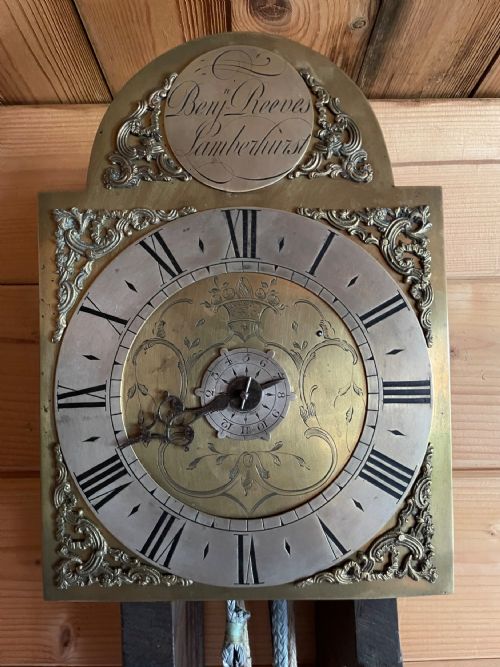
Clockmakers utilised brass and silvered brass for the arched dials, engraving numerals, maker signatures, and subsidiary chapters directly onto the metal plates. Steel components formed the gears, springs, and escapements that drove the eight-day or thirty-hour movements.
Listings feature oak, mahogany, and burr walnut alongside brass and silvered brass dials across Georgian, Regency, and Victorian periods.
Judging Quality and Craftsmanship
The distinction between standard and superior pieces rests on the precision of the movement and the integrity of the cabinet work. London makers often integrated complex multi-pillar movements with fine engraving, whereas provincial work prioritized sturdy local timber construction.
Originality defines the higher tier of these timepieces, where dials, hands, and movements retain their matching components from the period of manufacture. Altered dial arches or replaced cases alter the historical standing of the clock.
Proportion and cabinet finish separate ordinary examples from exceptional ones, with well-figured timber grains and balanced hood mouldings demonstrating superior workshop standards.
Gillett & Johnston of Croydon·Handley & Moore Of London·Dwerrihouse & Carter·Joseph Oxley Norwich·Phillips Brothers
The English Arched Dial Clock Glossary
- Arch
- The curved upper section of the dial plate, often housing a moon phase display or subsidiary regulation dial. This shape became prominent during the eighteenth century.
- Fusee
- A conical pulley used in spring-driven clocks to equalize the power of the mainspring as it unwinds. This ensures even tension and consistent timekeeping.
- Longcase
- A tall clock enclosed in a wooden case with a pendulum and weights suspended inside the trunk. These are commonly referred to as grandfather clocks.
- Bracket clock
- A portable spring-driven clock originally designed to sit on a wall bracket or table. Many feature arched wooden cases with carrying handles.
- Silvered brass
- A brass dial plate treated with a silver solution to create a matte white finish for engraved numerals. This technique enhances legibility against the polished brass background.
English Arched Dial Clock: Frequently Asked Questions
Where should I place a longcase clock?
Position the clock against a sturdy interior wall away from direct sunlight, heating vents, and damp exterior surfaces. Stable temperature and humidity preserve the wooden case and movement oil.
Ensure the floor beneath the base is level so the pendulum swings with an even beat.
What does a strike silent lever do?
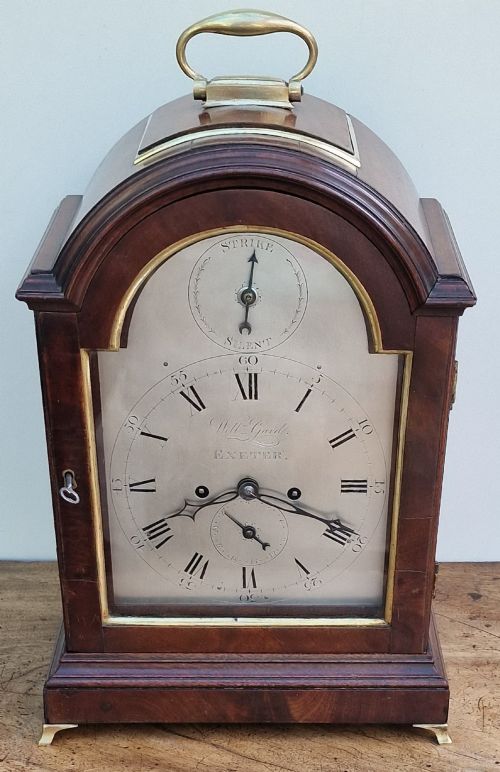
The strike silent feature allows the owner to manually disable the hourly bell chime during sleeping hours. A small lever on the dial arch lifts the rack mechanism to prevent the hammer from striking.
Moving the lever back to the active position restores the chiming sequence without altering the timekeeping.
How do I tell a Georgian clock from a Victorian one?
Georgian examples generally exhibit restrained cabinet proportions, flat or arched brass dials, and cabinet woods like figured mahogany or oak. Details reflect eighteenth-century design canons.
Victorian pieces often incorporate heavier proportions, darker ebonised finishes, or revivalist decorative motifs influenced by historical industrial output.