






English Secretaire
An english antique secretaire combines domestic storage with a concealed writing surface, offering a dual-purpose solution for period interiors.
English Secretaire
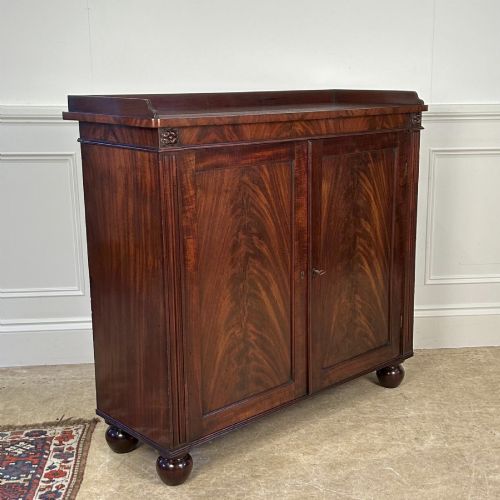
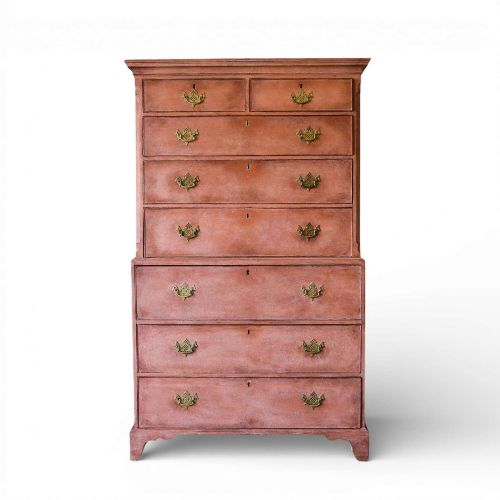
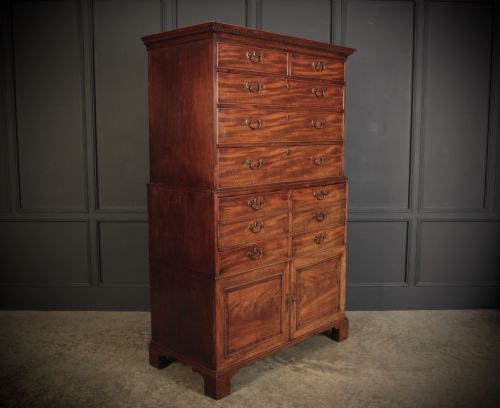
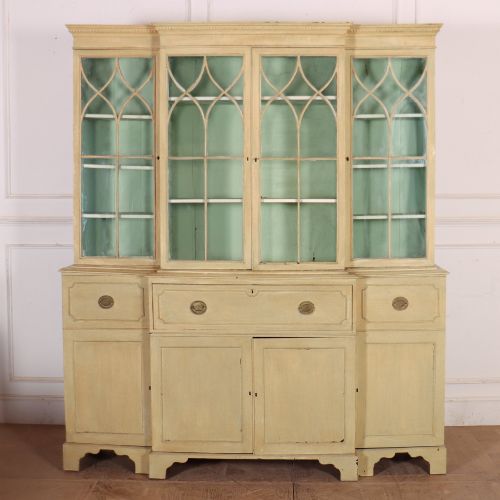
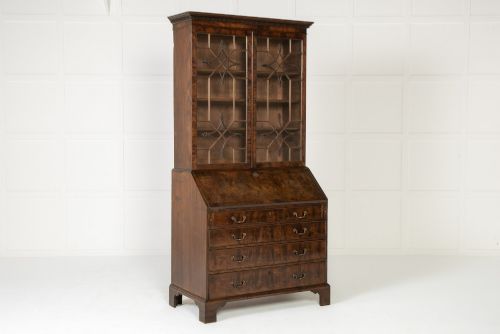
An english antique secretaire appears in various configurations, most commonly as tall bureau bookcases, chest on chest tallboys, and compact cabinets. These pieces span the eighteenth and nineteenth centuries, taking forms from the Georgian, Regency, and Victorian eras.
The primary forms found here include secretaire bookcases with glazed upper sections, tallboys incorporating a writing drawer, and dwarf cabinets. Walnut and mahogany dominate the structural designs across these periods.
Buyers encountering these items will discover pieces ranging from early eighteenth-century George I walnut examples to later nineteenth-century William IV and Victorian manifestations, each retaining the characteristic drop-down writing drawer.
Materials and construction
Cabinet makers utilised dense hardwoods, predominantly mahogany and walnut, frequently applying flame mahogany veneer or figured walnut to drawer fronts and primary surfaces to create dramatic grain patterns. Pollard oak and rosewood also feature among the timber selections.
Internal components incorporate brass hardware for handles and escutcheons, alongside leather writing inserts within the drop-down compartments. Glass panelling appears on the upper bookcase sections, while paint is found on specific decorated Georgian items.
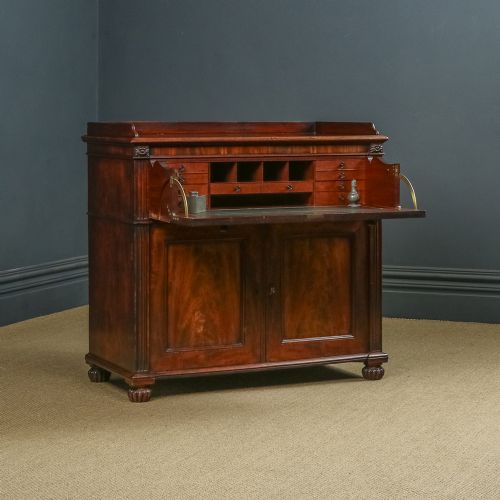
Certain secretaire drawers harbour hidden secondary compartments behind miniature pigeonholes, designed for keeping private correspondence safe from prying eyes.
Indicators of standard
The distinction between tiers of quality rests upon the selection of timber figures, such as highly figured walnut or flame mahogany veneer, and the crispness of cabinet-making execution. Proportions and the integration of the secretaire drawer into the broader carcass architecture determine the visual harmony of the piece.
Internal fitments within the writing compartment, including concealed pigeonholes, small drawers, and secret compartments, reveal the level of labour invested by the maker. Original brass fixtures and intact glass panels further separate standard production from finer workshop outputs.
Gillows of Lancaster
The English Secretaire Glossary
- Secretaire
- A desk or cabinet featuring a drawer that drops down to reveal a writing surface and small interior compartments. This form conceals paperwork while maintaining the external appearance of a chest of drawers or bookcase.
- Tallboy
- A tall chest of drawers consisting of one chest stacked upon another, often incorporating a secretaire drawer within the middle section. These pieces maximise vertical storage space in domestic settings.
- Escritoire
- An alternative term for a writing cabinet or desk, frequently applied to walnut pieces from the eighteenth century. The terminology derives from the French root for writing.
- Bureau bookcase
- A combination furniture form featuring a sloping or drop-front desk base beneath a glazed or panelled bookcase. This dual-purpose item serves for both library storage and correspondence.
- Flame mahogany veneer
- A thin layer of timber sliced from mahogany logs where the grain creates a flickering, flame-like pattern. Makers applied this to prominent exterior surfaces for decorative effect.
English Secretaire: Frequently Asked Questions
What rooms suit an antique secretaire?
These pieces function well in studies, living rooms, and bedrooms due to their compact footprint and enclosed storage capacity.
The upper bookcase or cabinet sections provide display space, while the lower drawers conceal household items.
How do I date an English secretaire?
Dating relies on timber selection, handle styles, construction methods, and prevailing architectural motifs of periods like Georgian or Regency.
Walnut pieces often point to the early eighteenth century, whilst flame mahogany and rosewood indicate late eighteenth or nineteenth-century production.
Were these used for writing letters?
Yes, the drop-down drawer served as a dedicated writing station for correspondence before the widespread use of freestanding desks.
The internal compartments held stationery, inkwells, and letters securely out of sight.