

English Chest Drawers
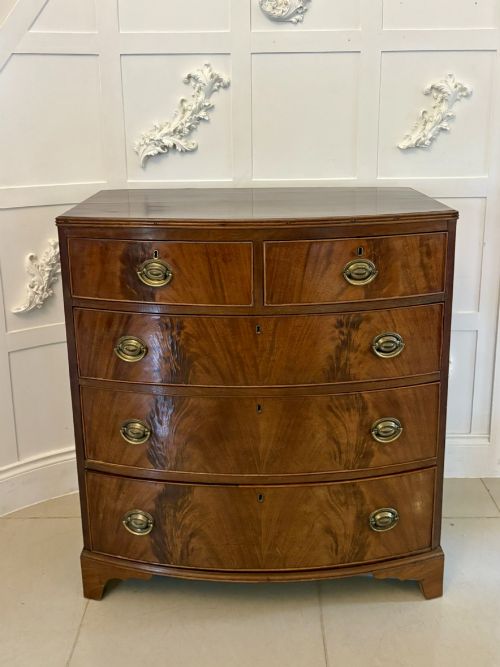
These english antique chest drawers bring timeless storage to a room, offering sturdy mahogany and oak builds shaped through Georgian and later periods.
Forms and periods
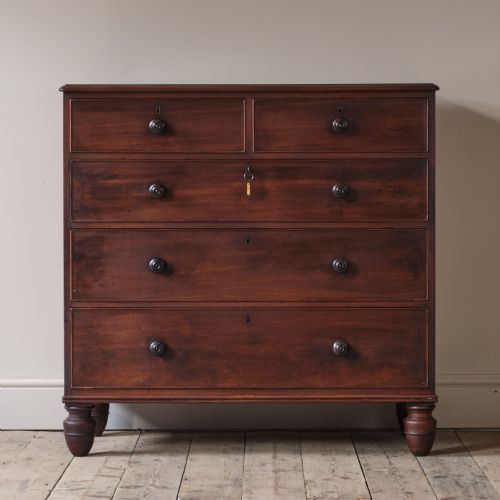
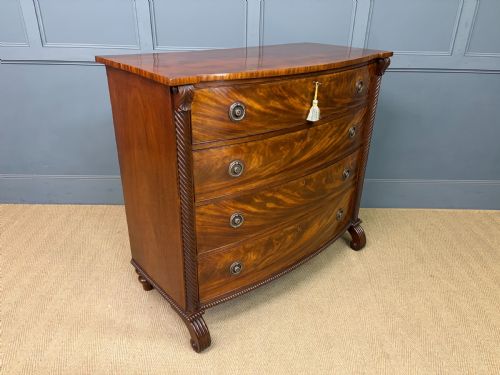
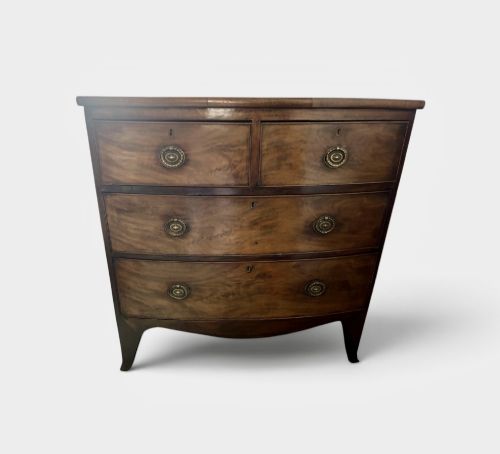
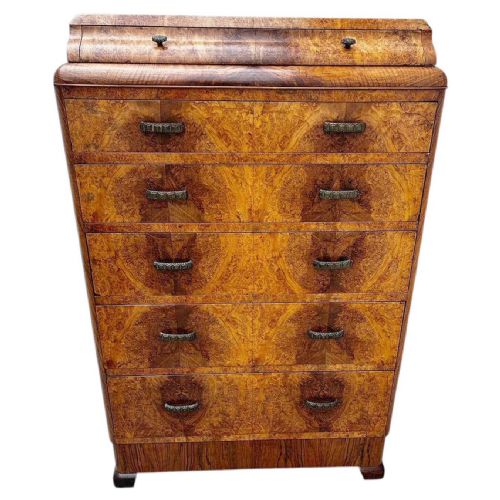
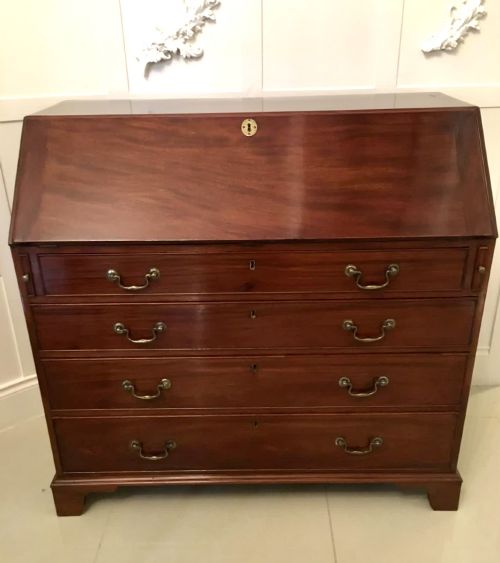
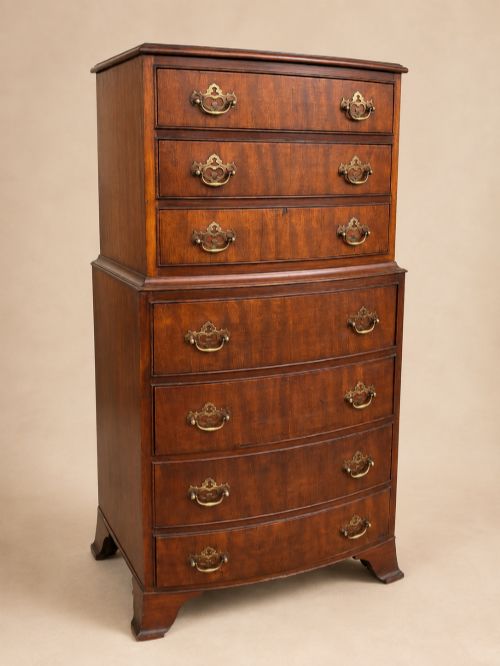
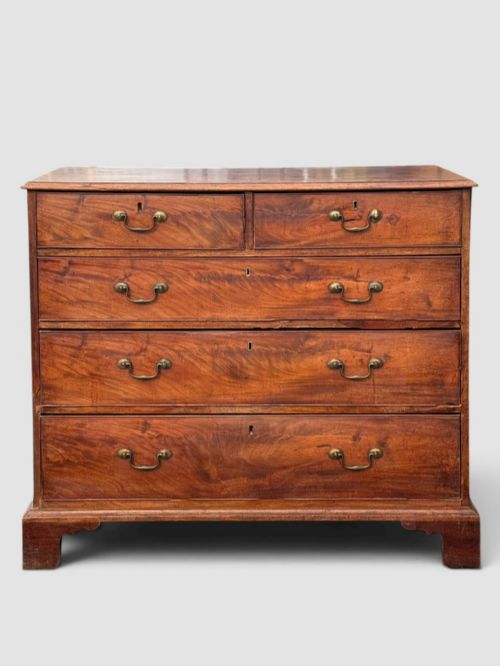
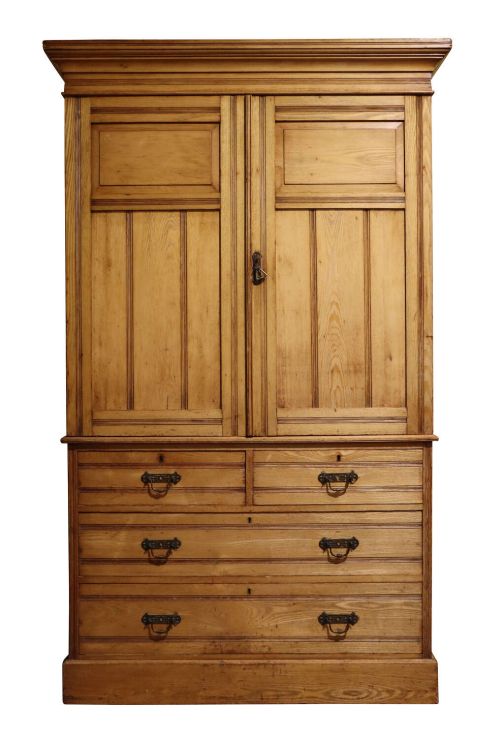
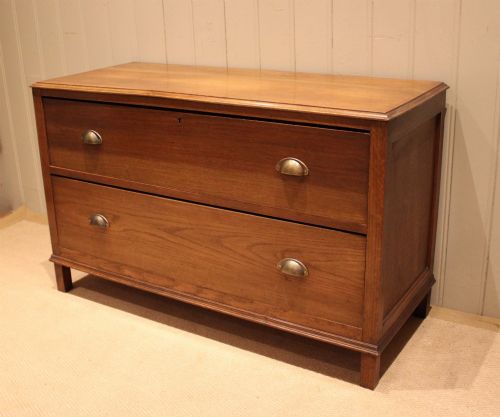
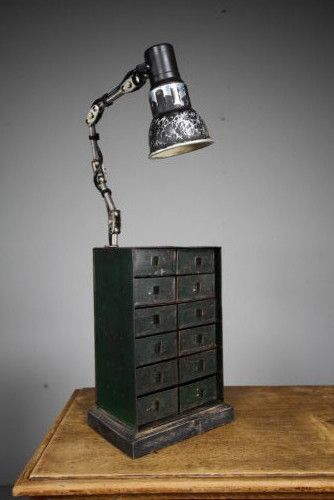
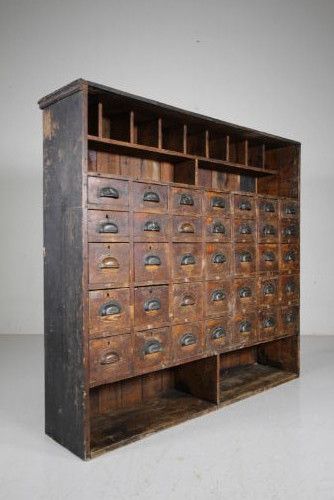
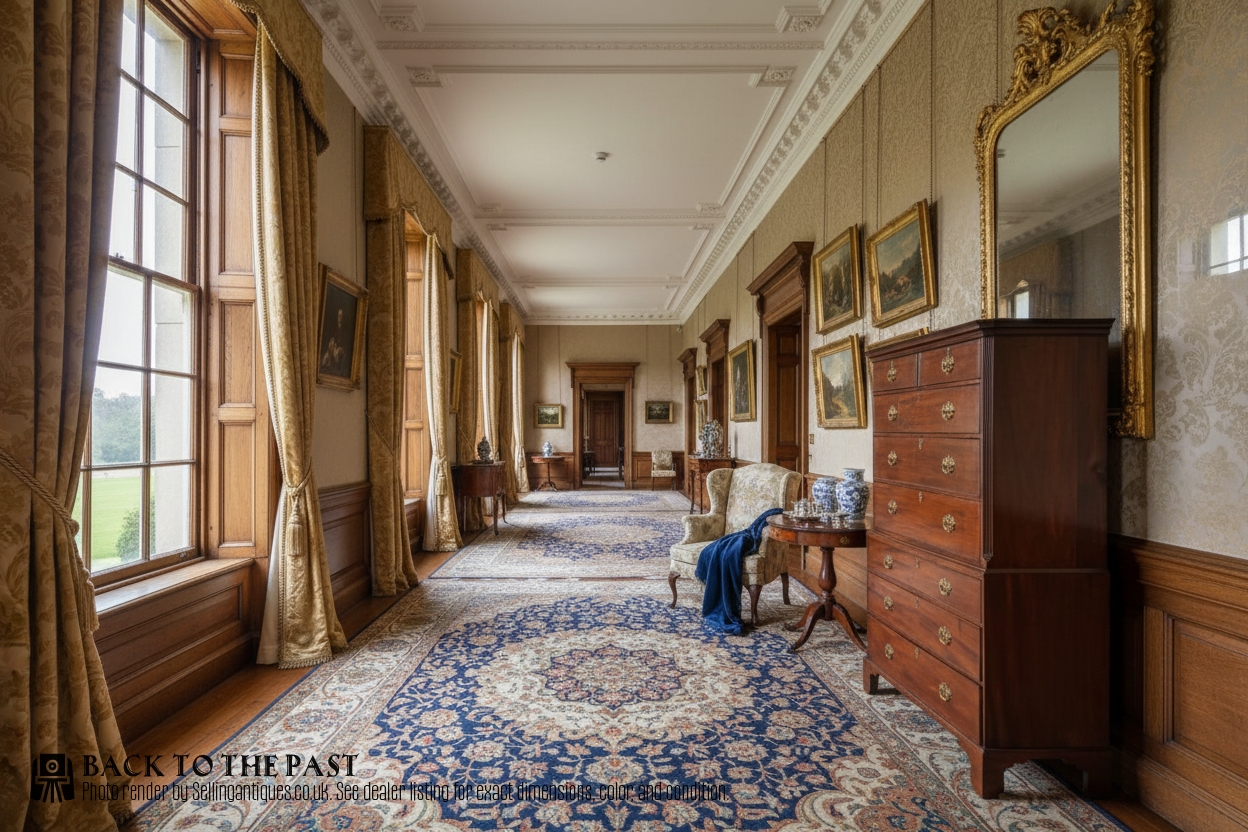
An english antique chest drawers search reveals standard bedroom furniture, tallboys, chests on chests, bow fronts, and specialised pieces like apothecary, military, and bachelor designs. The pieces span from the late seventeenth century through the Georgian era, Regency, William IV, and Edwardian periods.
Mahogany and oak dominate the offerings, often complemented by burr oak, walnut, or painted pine surfaces. Most examples follow Georgian and William IV styles, ranging from compact bedside units to large multi-drawer storage cases.
Materials and construction
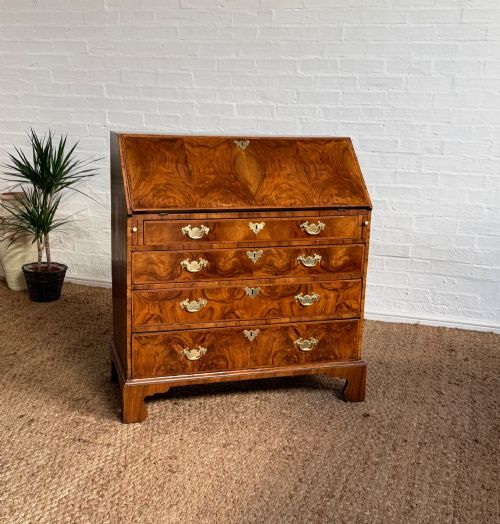
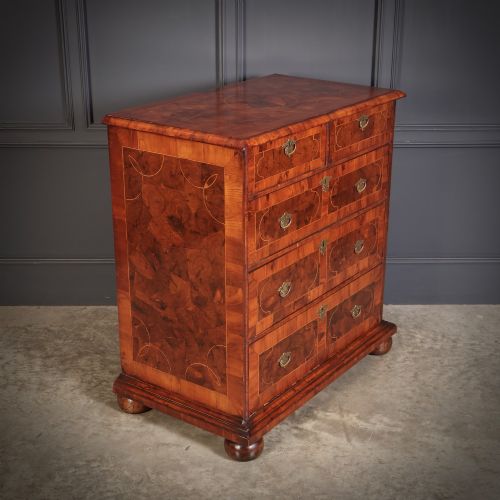
Cabinet makers utilised solid mahogany, oak, and pine timbers, sometimes adding figured veneers like burr walnut or flame mahogany to drawer fronts and surfaces. Brass fittings appear widely as handles, key escutcheons, and corner brackets on military style pieces.
Joinery methods include traditional dovetailed drawer construction and geometric mouldings. Painted finishes on pine variants show historical surface treatments applied directly to the softwood bases.
Retail Price Guide 2026
Typical UK retail prices for english chest drawers, calculated from the Sellingantiques database of over a million retail prices indexed since 2003. This retail price guide relies exclusively on Sellingantiques data; no external sources or auction records are used, so the figures do not describe the wider market.
Some chests hide secret compartments behind false drawer fronts, designed to keep valuables safe from sticky fingers.
Distinctions in craftsmanship
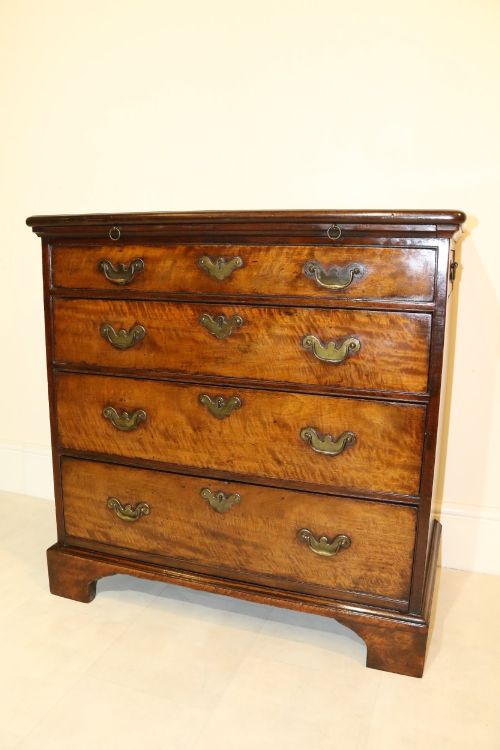
Superior examples display careful timber selection, featuring matched grain patterns across successive drawer fronts and harmonious proportions in tallboys or bow front chests. The integration of secondary woods and the crispness of brass hardware indicate higher workshop standards.
The sophistication of internal framing and the retention of original surface patination separate standard utility pieces from exceptional collector examples.
The English Chest Drawers Glossary
- Bow front
- A cabinet front curved outward in a convex shape, popular during the Georgian and Regency periods. This curvature requires skilled woodworking to shape the drawers and frame.
- Tallboy
- A tall chest of drawers, often built as a chest on chest or a single high carcase. It maximises vertical storage space in bedrooms.
- Military chest
- A portable storage chest built in two sections with brass corners and recessed handles for transport by officers. These pieces separate cleanly for travel.
- Bachelor's chest
- A compact chest of drawers featuring a pull-out slide used as a writing surface. These versatile items served multifunctional roles in private chambers.
- Chest on chest
- A large storage form stacking one chest directly upon a larger lower base, also known as a tallboy. This arrangement provides extensive drawer capacity.
Frequently Asked Questions
How do I identify a military chest?
Military chests feature two separate stacking sections equipped with brass corner brackets and flush-fitting recessed handles. These additions protected the wood and aided transport during campaigns.
Made largely in nineteenth-century workshops, they utilise durable hardwoods like mahogany or camphor.
What distinguishes a bow front chest?
A bow front chest has a gently curved convex front facade that softens the rectangular profile of standard storage cases. This design gained popularity through the Georgian and Regency eras.
The curved drawer fronts demand precise joinery from the cabinet maker to ensure smooth operation within the frame.
Are painted pine chests antique?
Painted pine chests include nineteenth-century and Edwardian utility items finished with historic painted surfaces. These pieces served domestic and institutional settings.
The original paint layers provide a distinct matte texture that separates them from later reproductions.