

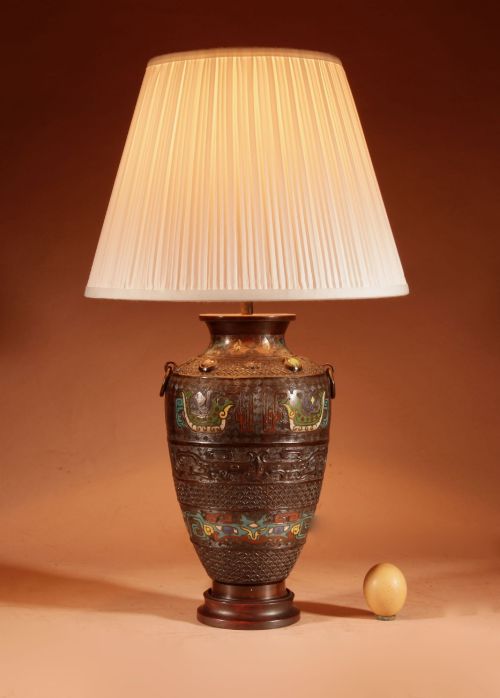
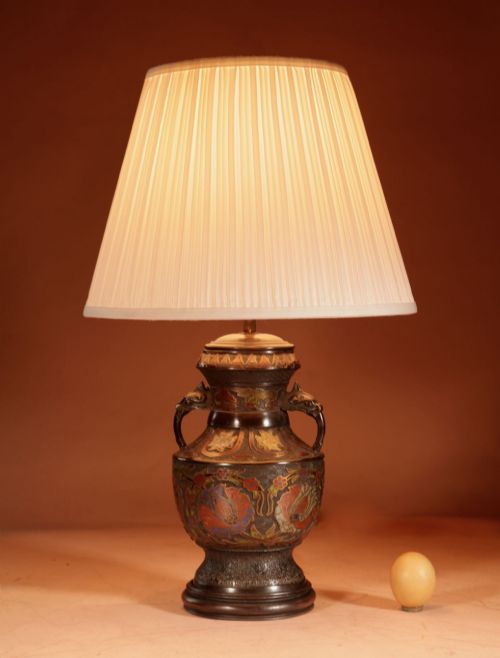
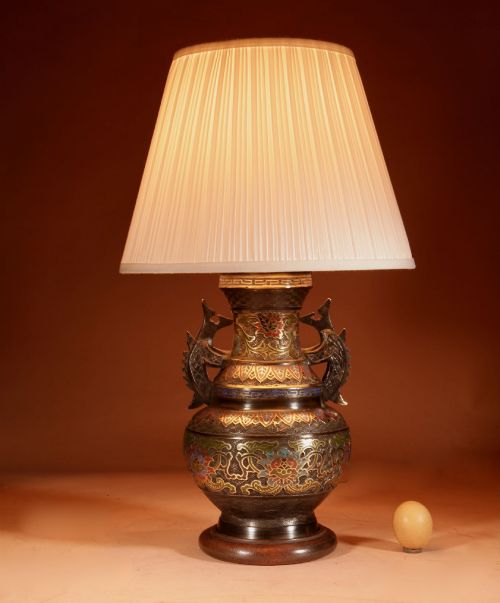
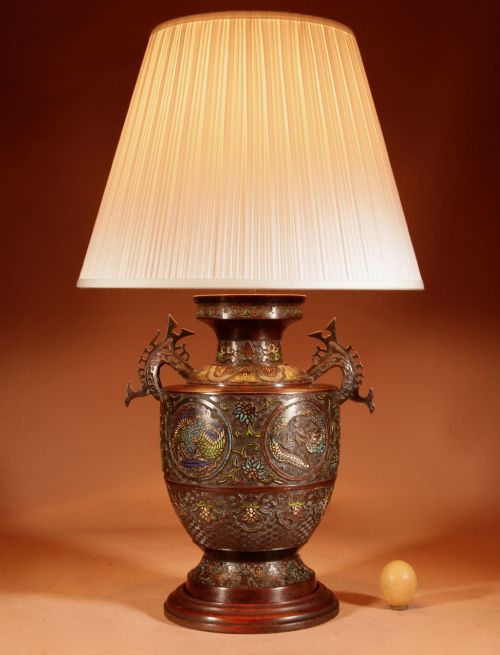





Enamelled Vase Lamp
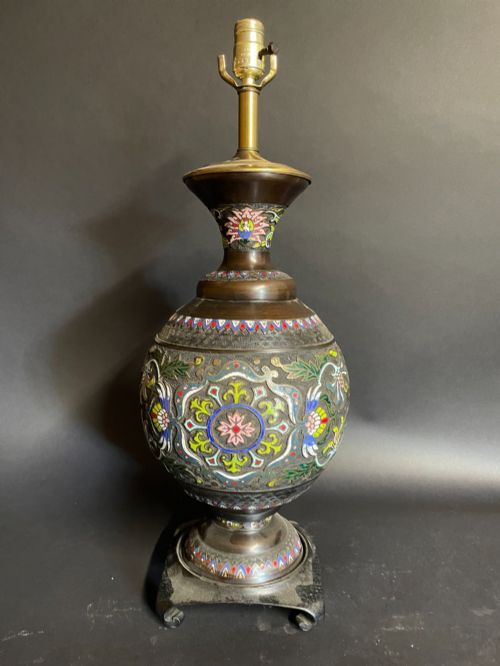
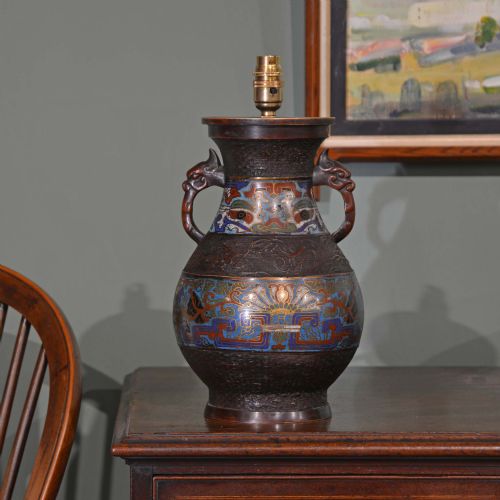
An enamelled vase lamp brings a rich burst of colour and intricate metalwork to a room, combining decorative Far Eastern vessels with functional lighting.
Enamelled Vase Lamp
When you search for an enamelled vase lamp, you are looking at decorative vessels that have been adapted for illumination. These pieces bridge the gap between traditional interior ornaments and practical light sources.
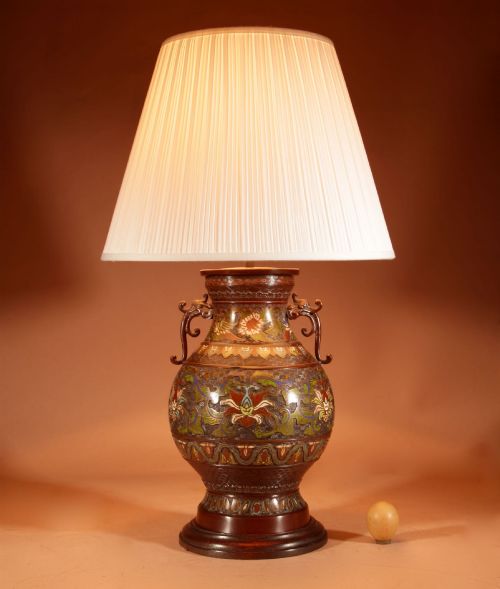
The versions you are most likely to meet on this page originate from Chinese and Japanese workshops during the nineteenth and early twentieth centuries. Many began life as vases before being mounted with electrical or oil fittings.
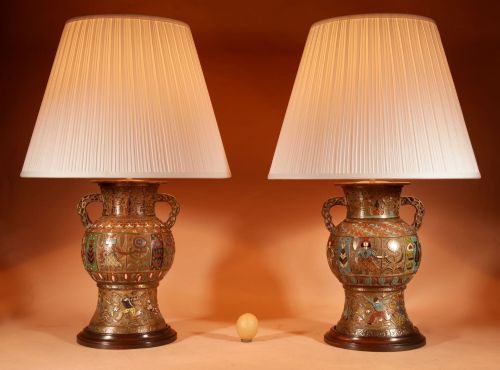
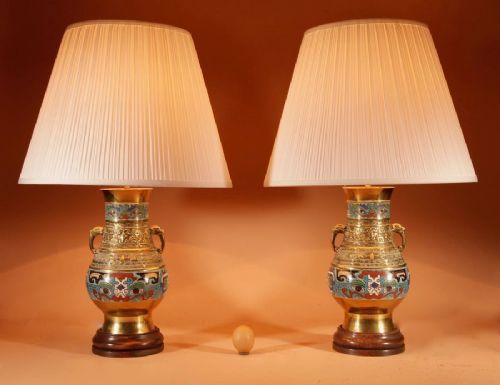
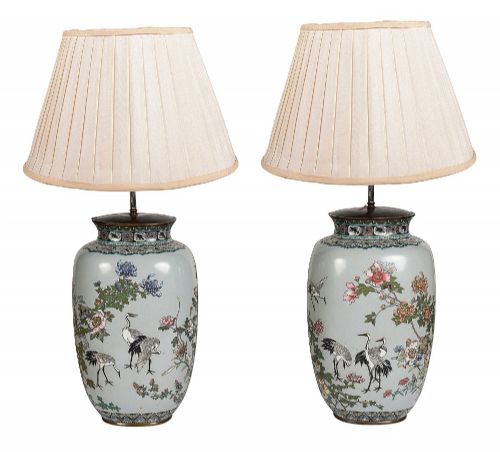
Styles range from Chinese export wares and Famille Rose palettes to Japanese Meiji period cloisonné. They frequently appear as matched pairs, making them suitable for flanking a fireplace or placing on twin side tables.
Materials and construction
These lamps rely on a rigid metal or ceramic core formed from bronze, brass, or porcelain. Artisans then applied colourful enamel decoration across the surface using specialised partitioning or painting techniques.
Cloisonné and champlevé methods involve soldering thin wire onto a bronze or brass body to create cells, which are subsequently filled with coloured enamel paste and fired. Once cooled, the surface is ground and polished to a smooth finish.
Mounts in gilt bronze or standard brass often secure the base and top fittings where the electrical components sit. Fabric shades frequently complete the structure, resting above the decorated body.
Enamelled Vase Lamp Retail Price Guide 2026
Typical asking prices for enamelled vase lamp among the pieces listed under this phrase on Sellingantiques today, from the lower quarter to the upper quarter. They describe what is for sale here now, not the wider market.
Listings feature pieces spanning the 1870s to the 1920s, utilising materials such as cloisonne enamel, bronze, porcelain, and brass.
Assessing quality and craftsmanship
The refinement of the enamel work dictates the tier of the piece. Superior examples display dense, evenly distributed colour within tightly soldered wire cells, whereas simpler versions show irregular thickness or pitting in the fired paste.
The weight and detail of the underlying bronze or brass casting also separate standard production from exceptional work. Finely chased mounts and substantial metal bodies indicate a higher grade of manufacture from the outset.
The harmony between the original vase and its later lamp conversion influences the overall success of the object. Cohesive mounting that respects the proportions of the ceramic or metal vessel preserves the visual balance of the piece.
The Enamelled Vase Lamp Glossary
- Cloisonné enamel
- A metalwork technique where fine wires are soldered to a base to form compartments filled with enamel paste. This method creates intricate patterns of separated colours across the body of the vessel.
- Champlevé
- A technique where troughs or fields are scooped out of a thick metal plate and filled with enamel before firing. It yields bold linear designs distinct from soldered wirework.
- Famille Rose
- A palette of opaque enamels dominated by pink or rose colours, introduced in Chinese porcelain production during the eighteenth century. Pieces in this style continued to be made and exported through the nineteenth century.
- Famille Verte
- A porcelain decoration style relying predominantly on green enamel tones combined with other colours. It appears frequently on nineteenth-century vases adapted as lamps.
- Mantle lustre
- A decorative glass or ceramic ornament hung with glass prisms designed for display on a fireplace mantelpiece. They occasionally share the decorative characteristics found on period mantel lamps.
- Meiji period
- The era of Japanese history lasting from eighteen sixty-eight to nineteen twelve, noted for exceptional metalwork and cloisonne production destined for export.
Enamelled Vase Lamp: Frequently Asked Questions
What is an enamelled vase lamp?
An enamelled vase lamp is a decorative vessel, usually originating from China or Japan, that has been converted to hold a lamp fitting.
These pieces combine traditional Far Eastern craftsmanship with functional domestic lighting, often featuring detailed bronze or porcelain bodies.
How do I date an enamelled vase lamp?
Dating relies on identifying the style of the enamelwork, the ceramic palette, and the materials used in the construction of the vessel. Nineteenth-century and early twentieth-century examples often display specific regional motifs such as Famille Rose or Meiji period cloisonné.
The hardware and mounting styles can also offer clues, though many vases were adapted long after their original manufacturing date.
Were these made as lamps originally?
Most of these pieces started life as decorative vases, ginger jars, or mantle lustres rather than functional lamps. Artisans or later owners subsequently mounted them with electrical or oil hardware.
This conversion process allows antique vessels to find a practical purpose in modern interiors while retaining their decorative appeal.
How should I clean my enamelled vase lamp?
Dust the surface gently with a soft, dry cloth to prevent the accumulation of dirt within the enamel cells or bronze mounts. Avoid using chemical cleaners or abrasive cloths that might damage the polished metal or delicate enamel work.
If the lamp has a fabric shade, clean it according to the specific textile requirements away from the main body of the vase.