





Enamelled Trinket Box
An enamelled trinket box brings vibrant colour and meticulous miniature craft to a dressing table or desk.
Enamelled Trinket Box
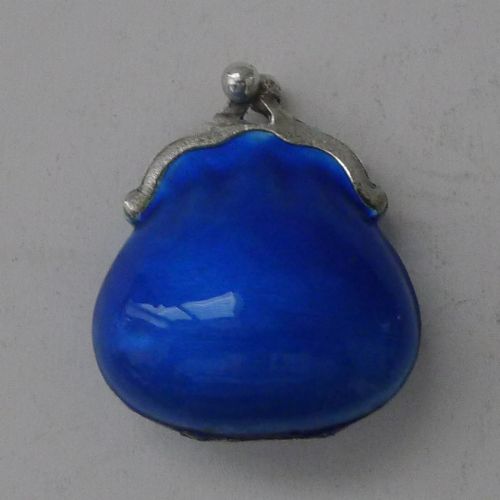
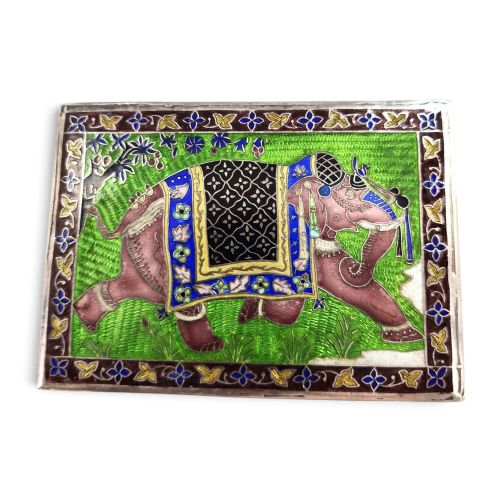
When you search for an enamelled trinket box, you encounter small receptacles designed to hold pins, pills, or cosmetics across several centuries of production. The selection spans Georgian patch boxes from Staffordshire to geometric Art Deco dressing table jars made in Birmingham.
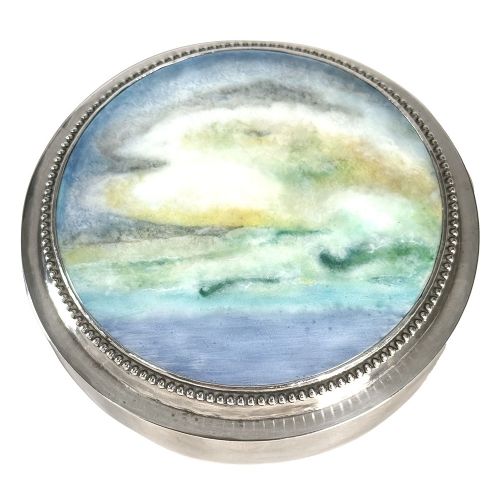
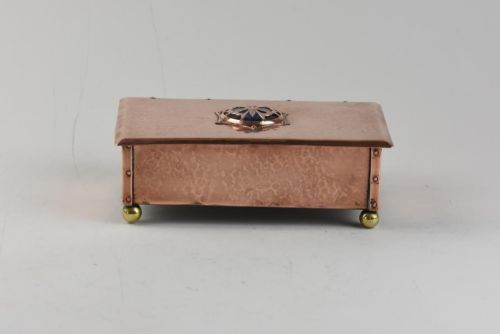
Many examples combine fused vitreous glass surfaces with sterling silver, copper, or brass frameworks. You find small receptacles intended for the pocket alongside larger lidded pots meant for a vanity surface.
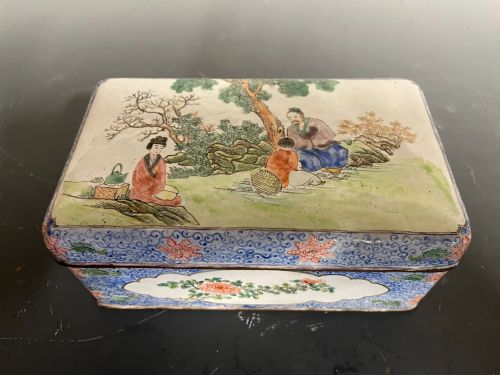
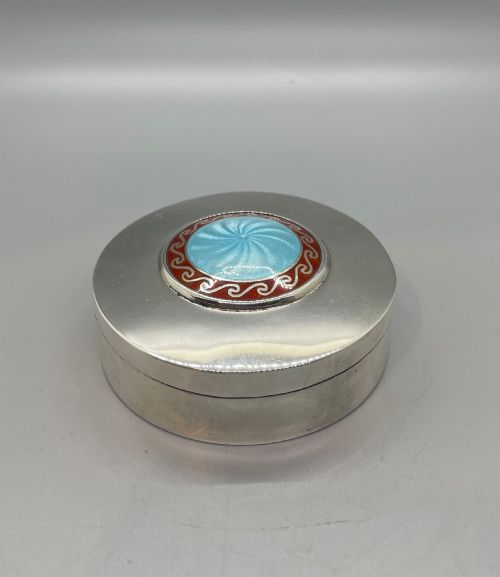
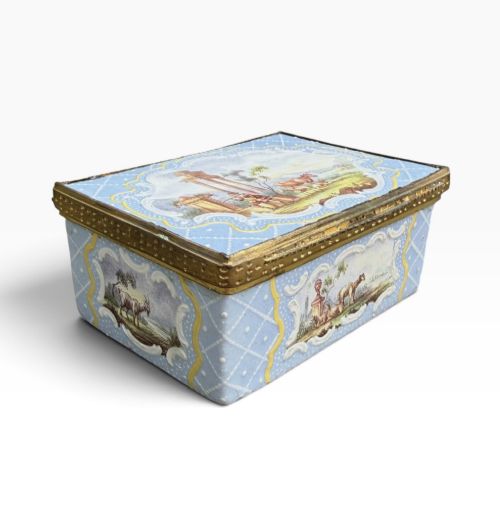
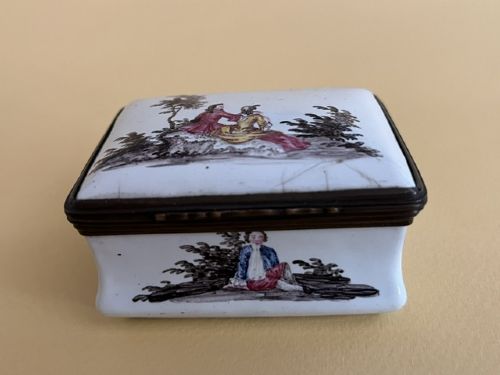
The aesthetic shifts from hand-painted 18th-century parkland scenes to precise machine-turned guilloche patterns from the Edwardian and 1930s periods. Regional variations include Chinese Beijing pieces and French champleve work.
Materials and construction methods
Makers applied powdered glass pastes to metal bases made of copper, sterling silver, or brass before firing them in a kiln to create a durable, glossy surface. Artisans often hammered or cast the metal mounts to hold delicate plaques and hinged lids.
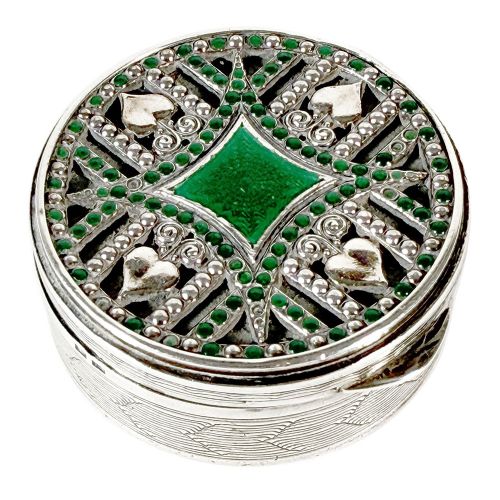
Techniques such as guilloche involved engraving precise geometric patterns onto metal underneath translucent enamel layers, while cloisonne utilised thin wire partitions to contain different colour compartments. Hand-painting added pictorial detail directly onto fired white enamel surfaces.
Enamelled Trinket Box Retail Price Guide 2026
Typical asking prices for enamelled trinket box among the pieces listed under this phrase on Sellingantiques today, from the lower quarter to the upper quarter. They describe what is for sale here now, not the wider market.
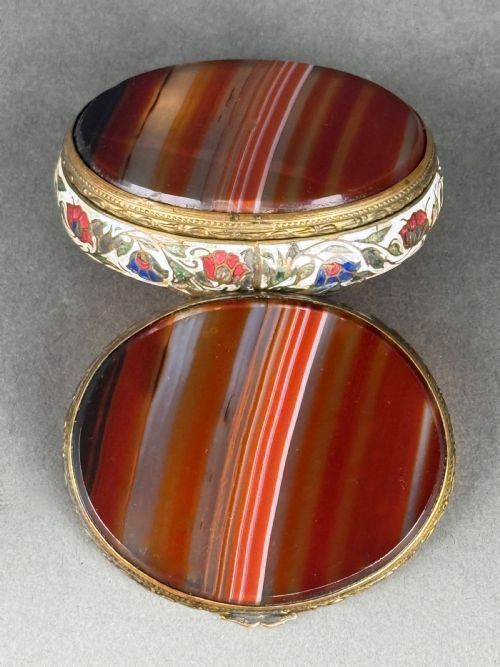
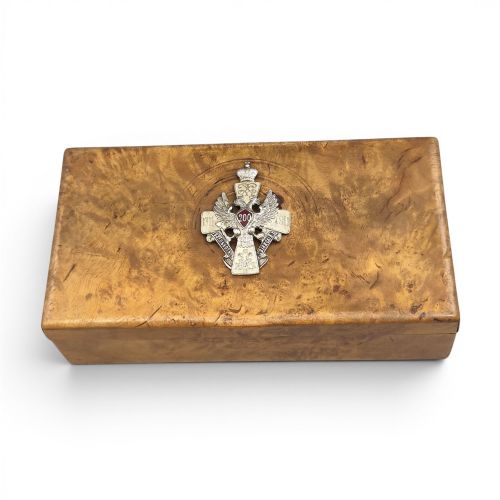
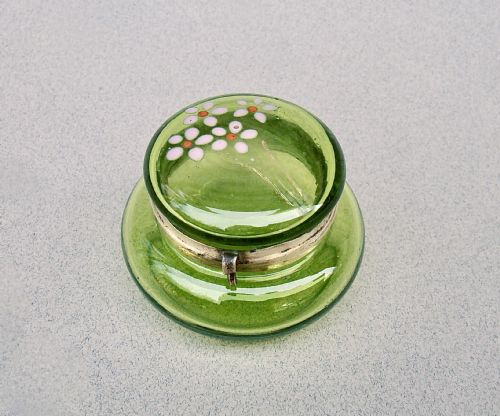
Listings include materials ranging from sterling silver and copper to banded agate, cranberry glass, and Karelian birch.
Distinctions in execution and material
The standard of an enamelled trinket box depends upon the precision of the metalwork and the clarity of the fired glass paste. Hand-painted pictorial scenes with fine brushwork and detailed figurative elements denote high workshop skill.
Structural integrity matters in the fit of the hinged lid and the weight of the silver or copper chassis. Pieces featuring intact translucent guilloche layers without chipping show superior preservation of the original technique.
Guild of Handicrafts·Henry Clifford Davis·George Adam Scheid
The Enamelled Trinket Box Glossary
- Guilloche
- A decorative mechanical technique where a metal surface is engraved with repetitive geometric patterns before translucent enamel is applied.
- Bilston enamel
- A type of small decorative box produced in the Staffordshire town during the 18th century, typically featuring copper bases and hand-painted lids.
- Champleve
- An enamelling process where troughs or cells are hollowed out of a metal plate and filled with vitreous paste prior to firing.
- Patch box
- A small receptacle originally used in the 18th century to store small pieces of adhesive fabric worn on the face to conceal blemishes.
- Cloisonne
- A technique involving soldered metal wires that form partitions to hold separate areas of coloured enamel powder before kiln firing.
Enamelled Trinket Box: Frequently Asked Questions
What were small patch boxes used for?
Eighteenth-century society members used small receptacles to carry silk or velvet patches applied to the face. These cosmetic accessories disguised smallpox scars and blemishes under artificial light.
Over time, the form evolved into a general container for pins, small trinkets, and pills as fashion tastes shifted.
How do I date a guilloche enamel jar?
Assay office hallmarks stamped on the sterling silver mounts provide the most reliable date for British pieces. Birmingham and London hallmarks indicate the exact year of manufacture.
Stylistic cues such as streamlined geometric motifs point toward 1930s production, while softer floral garlands align with Edwardian tastes.
What is the difference between cloisonne and champleve?
Cloisonne involves soldering thin flat metal wires onto a metal base to create raised walls that separate different coloured glass pastes. The resulting grid pattern holds the enamel before firing.
Champleve carves the design directly into the thick metal plate itself, leaving recessed channels that are subsequently filled with enamel powder.
Where were Bilston enamel boxes made?
Production centred on Bilston and South Staffordshire during the Georgian period, where specialised workshops manufactured copper trinket and snuff containers. These items featured white enamel coatings painted with pastoral scenes or sentimental inscriptions.
Their portable size made them popular gifts and travel souvenirs during the late 18th century.