



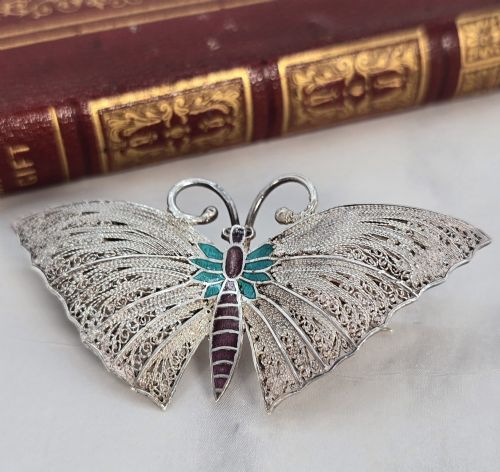
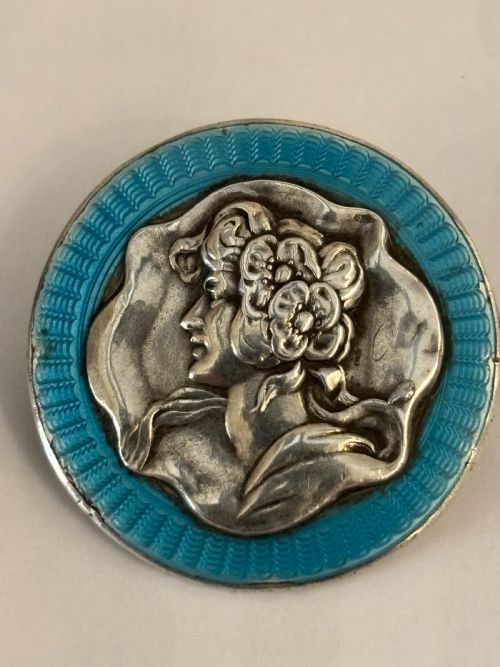
Enamelled Silver Badge
An enamelled silver badge brings together bright coloured glass or vitreous work and polished precious metal, catching the eye as a wearable piece of history.
Enamelled Silver Badge
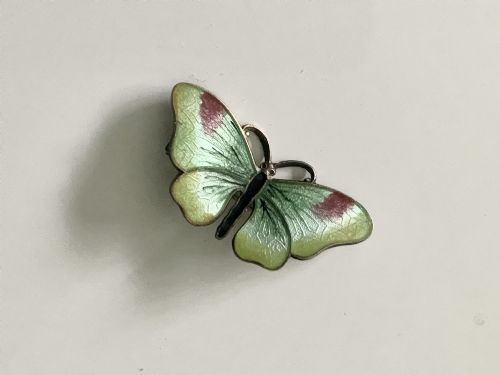
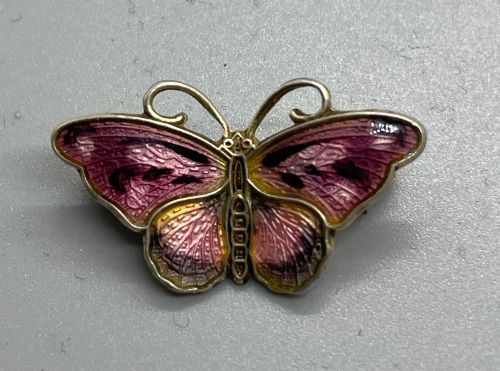
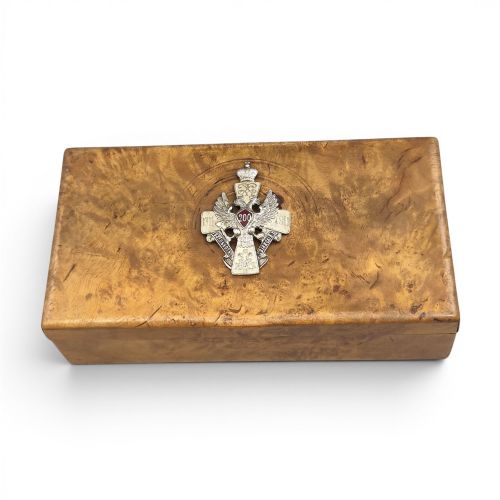
An enamelled silver badge most often appears here in the form of brooches and pins, alongside pocket watches, decorative boxes, and visitor badges. These items span periods from the Victorian era through Edwardian, Art Nouveau, Art Deco, and Mid-Century Modern designs.
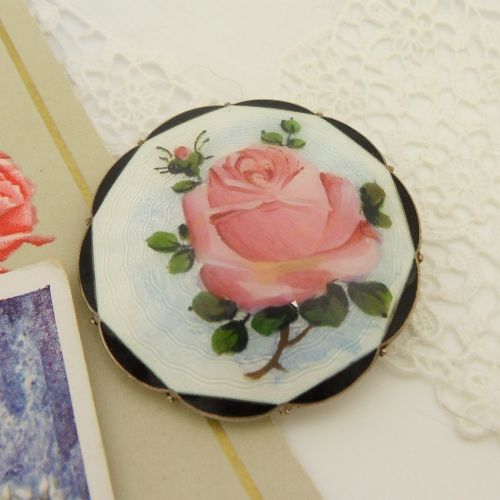
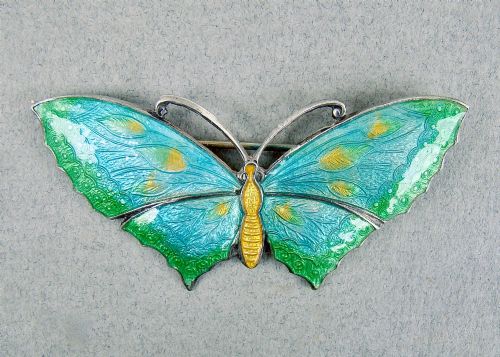
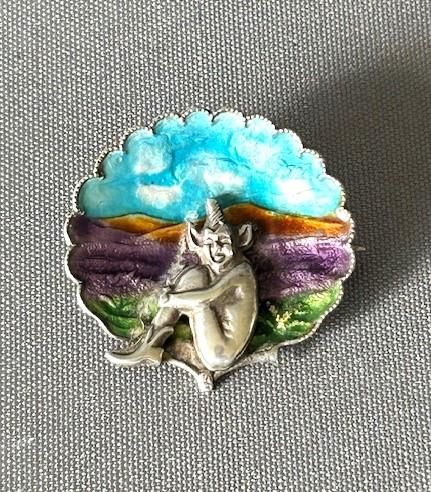
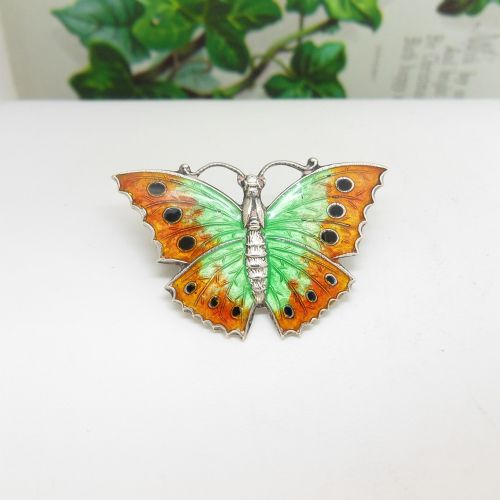
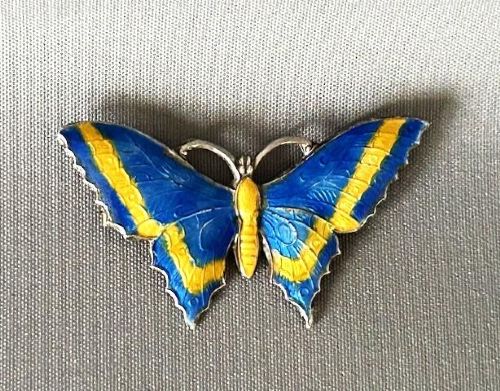
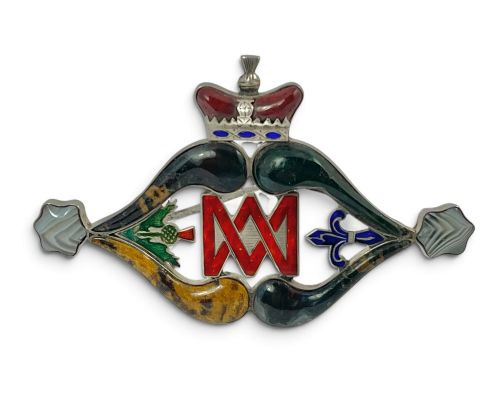
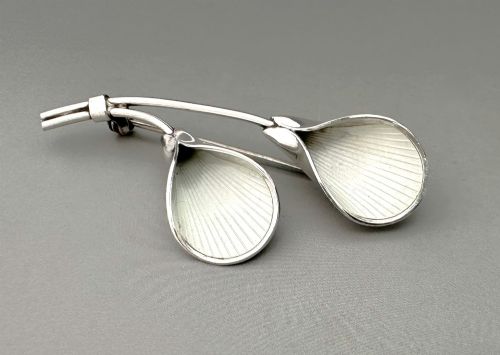
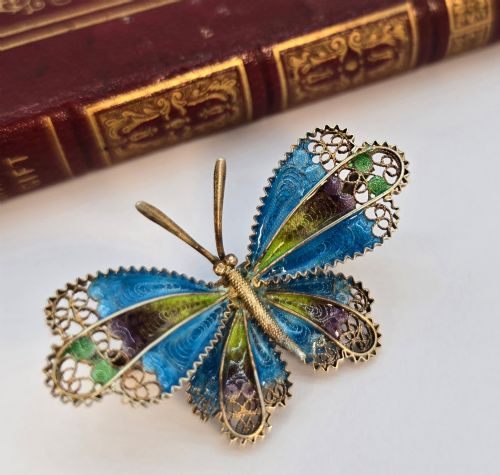
The most common discoveries on this page are Norwegian butterfly and floral brooches, alongside continental silver gilt pieces and Scottish agate designs. Makers from Scandinavian workshops and British firms feature prominently among the broader selection of wearable ornaments and military fobs.
Materials and construction
Makers utilised solid silver, sterling silver, and silver gilt as the base metal for these items, often applying guilloche engraving beneath translucent coloured enamel to create shimmering patterns. Vitreous enamel and glass provide the vibrant hues, while supplementary materials like agate and gold gilt appear in specific Scottish and Victorian examples.
Techniques range from delicate silver filigree work to articulated joints and detailed hand-painting, particularly on pieces originating from Norwegian workshops. Natural motifs such as butterflies, flowers, birds, and pansies required precise placement of metal cells to hold the molten glass powders during firing.
Enamelled Silver Badge Retail Price Guide 2026
Typical asking prices for enamelled silver badge among the pieces listed under this phrase on Sellingantiques today, from the lower quarter to the upper quarter. They describe what is for sale here now, not the wider market.
Materials recorded include vitreous enamel, silver gilt, agate, glass, and Karelian birch.
Assessing quality
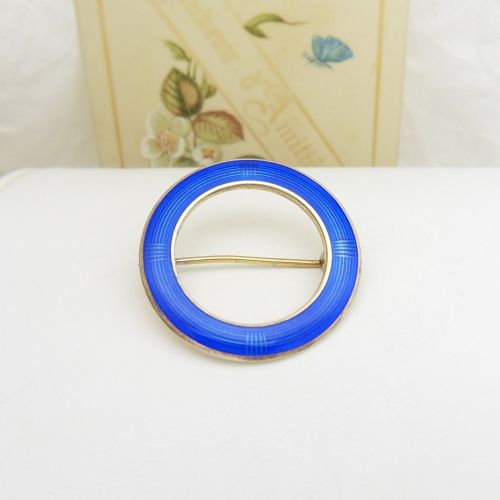
The finest examples display crisp guilloche engine-turning beneath the enamel surface, where light reflects evenly across the coloured glass without cloudiness or uneven thickness. Superior craftsmanship shows in the tightness of the silver filigree and the precision of the hand-painted details on floral and insect motifs.
Maker marks and silver hallmarks add distinction to the piece, separating unmarked continental work from documented studio output. The preservation of the original gilt layer and the crispness of the casting on regimental and Olympic badges also mark out superior items.
K A Rasmussen·Aksel Holmsen·A H Darby & Son·Gustav Gaudernack
The Enamelled Silver Badge Glossary
- Guilloche
- A decorative engraving technique that etches precise geometric patterns into the silver base before translucent enamel is applied.
- Vitreous enamel
- A material made by fusing powdered glass to a metallic substrate through firing at high temperatures.
- Silver gilt
- Silver that has been coated with a thin layer of gold, providing a warm yellow tone over the white metal.
- Filigree
- Delicate jewellery-making work consisting of twisted silver threads soldered together to form open-work patterns.
- Fob
- A small ornament attached to a pocket watch chain, often featuring enamel work or regimental insignia.
Enamelled Silver Badge: Frequently Asked Questions
What periods do these badges come from?
The pieces span from the Victorian era and the Edwardian period through Art Deco and Mid-Century Modern designs. You will find items dated across the late nineteenth century and well into the twentieth century.
Most examples lean towards mid-century Scandinavian output and 1920s or 1930s decorative work, alongside occasional Victorian and Edwardian items.
How were enamelled silver badges worn?
The majority functioned as brooches and dress pins, fastened to lapels, collars, or hats as personal adornments. Some items served as military fobs attached to pocket watch chains.
Others included visitor badges for specific events like the Olympic Games, or decorative boxes with inset insignia.
What materials are used in these items?
Makers constructed these pieces using silver, sterling silver, and silver gilt alongside glass and vitreous enamel. Certain regional pieces incorporate additional materials such as agate or Karelian birch.
Gold gilt also appears on specific silver bases to create a two-tone metallic effect beneath the coloured enamel.
Are these items marked by makers?
Several pieces bear distinct attribution to known Scandinavian designers and British workshops. These stamps and signatures help identify the origin and workshop of the silverwork.
Other items remain uncredited or simply carry continental silver standards without a specific maker's stamp.