

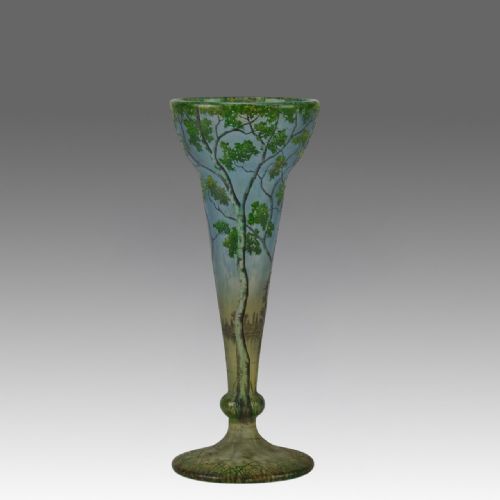



Enamelled Green Glass
Enamelled green glass brings together vibrant emerald shades and detailed painted decoration, offering collectors a rich variety of Victorian and Art Deco vessels.
Enamelled Green Glass
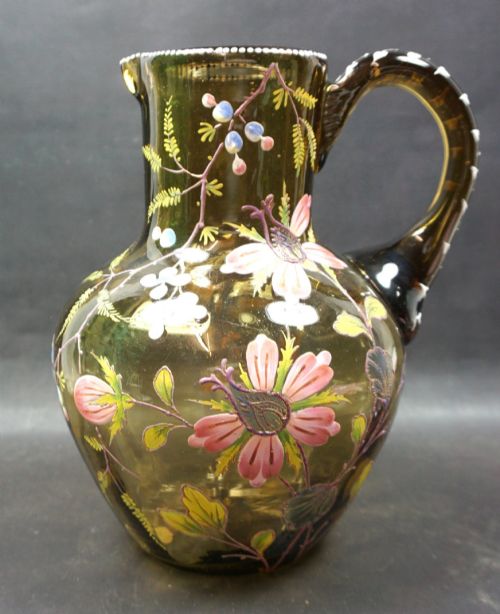
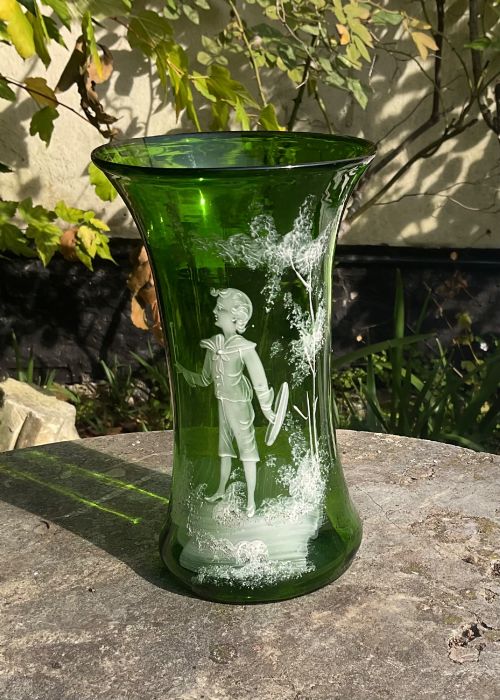
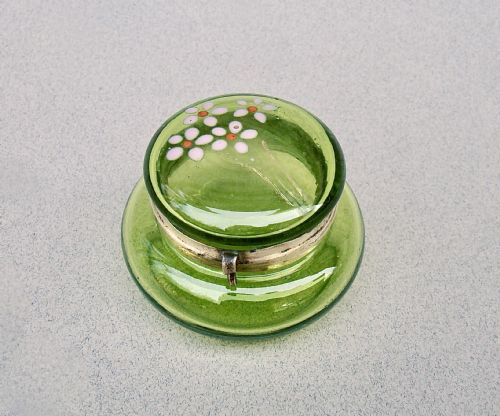
Enamelled green glass encompasses functional and decorative objects ranging from Victorian scent bottles and trinket boxes to Art Deco decanters and vases. Pieces from the nineteenth century frequently showcase floral motifs or armorial designs, while later twentieth-century examples lean towards geometric motifs and streamlined silhouettes.
The most common forms encountered within these selections are small containers such as hinged trinket boxes and perfume flasks, alongside tableware including wine glasses, jugs, and decanters. Many items combine the verdant green body with contrasting white, gilt, or polychrome enamel painted scenes.
Origins span across British, French, and Bohemian makers, reflecting shifting European tastes from ornate Victorian Historicism through to Art Nouveau and the clean lines of the 1930s. Buyers frequently discover tableware sets complete with matching trays and cordial glasses alongside individual vanity items.
Manufacturing and Decoration
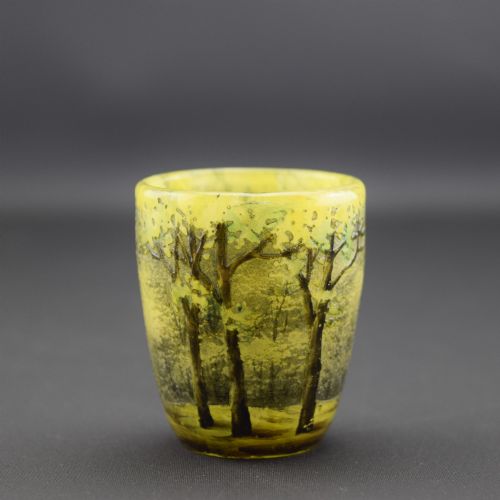
Vessels are typically formed from blown or moulded green glass, occasionally utilising cameo glass techniques or cased layers to achieve depth of colour. Artisans then applied opaque or translucent enamels by hand, often incorporating gold leaf highlights or gilding to accentuate the painted scenes.
Mounts and hardware frequently involve sterling silver, brass, or chromium, fitted securely to jars, scent bottles, and trinket boxes by period silversmiths and metalworkers. Guilloché enamel and etched detailing further augment the glass body on numerous twentieth-century decorative pieces.
Enamelled Green Glass Retail Price Guide 2026
Typical asking prices for enamelled green glass among the pieces listed under this phrase on Sellingantiques today, from the lower quarter to the upper quarter. They describe what is for sale here now, not the wider market.
A painted fox hunting scene brings British sporting tradition directly onto a fragile green glass vase.
Assessing Craftsmanship
Quality rests heavily on the precision and fineness of the enamel painting, where delicate brushwork and stable firing distinguish master workshops from commercial output. The weight and clarity of the underlying green glass, alongside the crispness of any cut facets or overlay work, dictate overall merit.
The integration of metal mounts, such as hallmarked sterling silver lids or ormolu collars, signals higher production standards. Pieces retaining intact gilding and undamaged enamel decoration command greater appreciation among collectors.
Daum Frères·Theresienthal·Karl Palda·Frits Hechert·Mappin & Webb·Richard Comyns·J Grinsell & Sons·Green & Cadbury
The Enamelled Green Glass Glossary
- Cameo glass
- A form of glassware produced by encasing one layer of glass over another of a contrasting colour, then carving the outer layer to form raised designs.
- Guilloché enamel
- A decorative technique where a metal surface is engraved with intricate geometric patterns under a translucent enamel layer.
- Historismus
- A nineteenth-century artistic style drawing inspiration from historical periods, frequently seen in Bohemian armorial glassware.
- Roemer
- A traditional European Germanic drinking vessel featuring a wide bowl atop a cylindrical stem adorned with applied prunts.
- Mantle lustre
- An ornamental glass or porcelain vase hung with cut glass prisms or droppers, designed for placement on a fireplace mantel.
Enamelled Green Glass: Frequently Asked Questions
What are enamelled green glass items used for?
These pieces served both practical and decorative functions in historical homes, acting as vanity accessories for perfumes and trinkets, or as dining ware for wine and cordials.
Today, collectors utilise them as striking window displays or mantel ornaments where the green glass catches the daylight.
How do I date an enamelled green glass bottle?
Dating relies heavily on the style of the metal mounts, manufacturer hallmarks, and the artistic movement reflected in the enamel work, ranging from Victorian floral motifs to Art Deco geometry.
Comparing the manufacturing technique, such as hand-blown versus moulded glass, also narrows down the period of origin.
Where were these glass pieces traditionally made?
Production centres were concentrated across Europe, with notable output originating from Bohemian glasshouses, French studios, and British manufacturers.
Each region imparted distinct stylistic traits, from the robust armorial designs of Bohemia to the refined silver mounts of London silversmiths.
How should I care for antique enamelled glass?
Maintenance requires gentle cleaning with a soft, dry cloth or lukewarm water, avoiding harsh chemical detergents that might degrade historical enamel or gilding.
Displaying pieces away from direct, prolonged sunlight helps preserve the vibrancy of both the green glass and the painted decoration.