



Enamelled Bronze Pot
An enamelled bronze pot brings dense colour and weight to a room, ranging from small Chinese tea caddies to large Japanese jardinieres.
Enamelled Bronze Pot
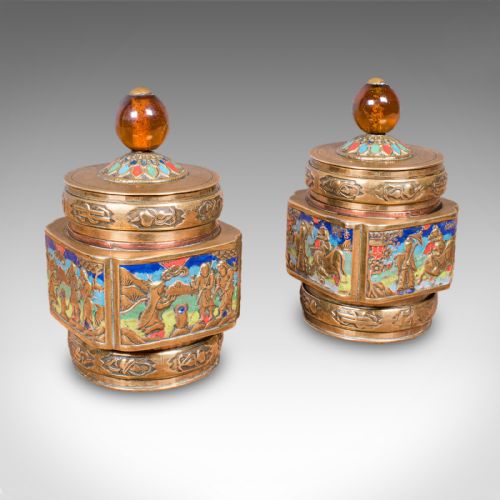
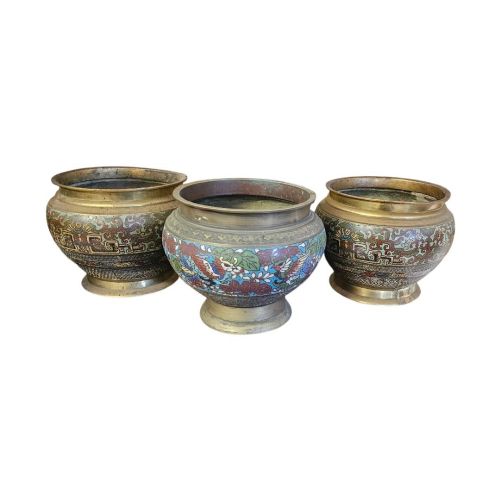
An enamelled bronze pot unites metal vessel work with vitreous decoration, taking forms such as jardinieres, cachepots, tea caddies, ashtrays, sake kettles, vases and bowls. When searching for an enamelled bronze pot, buyers encounter diverse oriental origins including Chinese Qing period pieces, Japanese Meiji and Edo examples, and Siamese planter bowls.
The selection on this page spans the nineteenth century, the Edwardian era, and mid twentieth century production. Forms vary from lidded koros and spice pots to large planters designed for botanical display.
Objects range from small desktop accessories to substantial cachepots and floor vases. Each piece reflects distinct regional manufacturing traditions across Asia and early twentieth century export markets.
How they were made
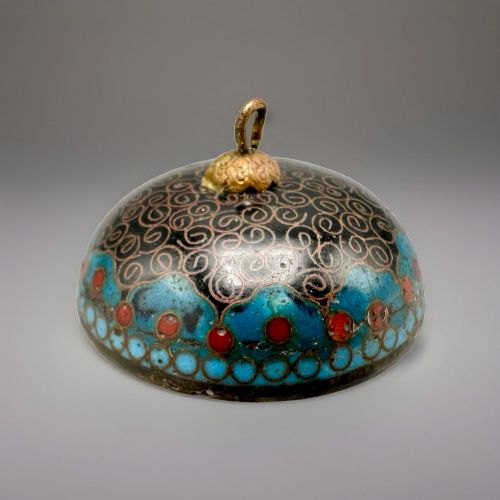
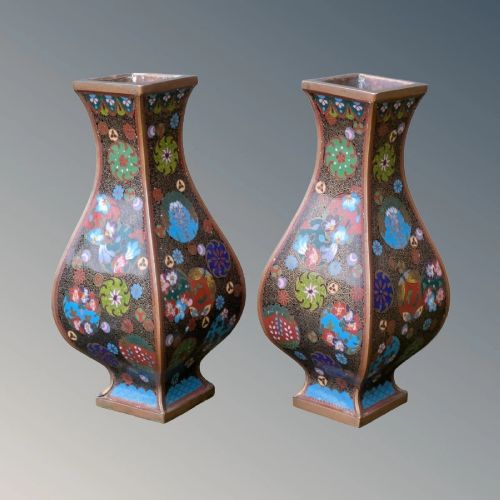
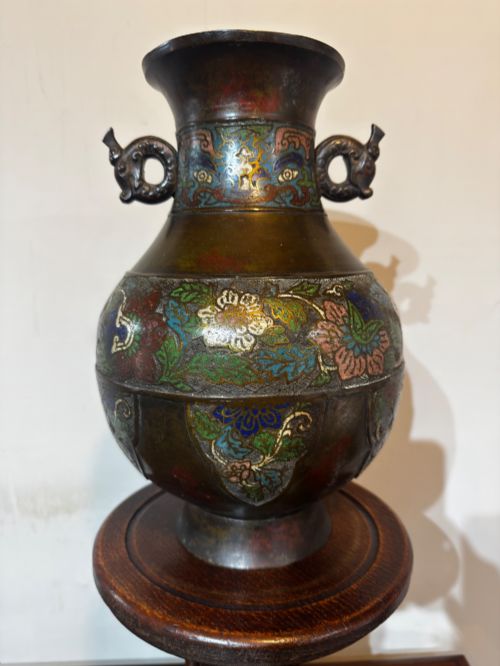
Makers formed the primary body in bronze, copper or brass, utilising casting techniques to shape vessels, bowls and kettles. Surface decoration relies on enamel applied through methods such as cloisonne, where thin metal wires create cells for coloured pastes, or champleve, where recessed channels hold the vitreous material before firing.
Additional components include glass elements, cast iron bases, and fitted lids. Pieces combine metalworking with controlled kiln firing to fuse the enamel to the metallic substrate.
Enamelled Bronze Pot Retail Price Guide 2026
Typical asking prices for enamelled bronze pot among the pieces listed under this phrase on Sellingantiques today, from the lower quarter to the upper quarter. They describe what is for sale here now, not the wider market.
Smoke still hides in the corners of nineteenth century lidded koros.
What varies in quality
Quality shows in the precision of the metal casting and the complexity of the wirework or cell cutting. Crisp execution of champleve channels or fine cloisonne wire outlines distinguishes finer vessels from simpler commercial output.
The depth, consistency and palette of the enamel colours reveal the skill of the workshop. Heavier bronze gauge and more ambitious vessel forms, such as large jardinieres or detailed lidded koros, indicate higher production standards.
The Enamelled Bronze Pot Glossary
- Cloisonne Enamel
- A technique where metal wires are soldered to a metal base to create cells that are filled with enamel paste and fired. This method produces intricate geometric or floral patterns across the surface of the vessel.
- Champleve Enamel
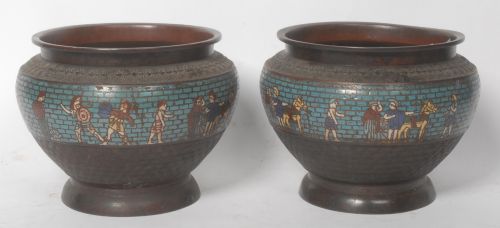
- A process in which troughs or cells are hollowed directly into the bronze surface and filled with enamel before firing. The surrounding metal remains visible as raised lines defining the design.
- Jardiniere
- A large ornamental pot or planter designed to hold growing plants or flower arrangements. These vessels often sit on interior tables or pedestals.
- Koro
- A traditional eastern incense burner featuring a bowl body and a pierced lid for releasing smoke. Many examples incorporate bronze bodies with enamelled detailing.
- Cachepot
- An ornamental flowerpot cover used to conceal a plain inner plant container. These items appear in various historical styles including Greco-Roman revival forms.
Enamelled Bronze Pot: Frequently Asked Questions
What is an enamelled bronze pot used for?
These vessels serve diverse decorative and functional purposes in an interior. Many larger examples function as jardinieres or cachepots for holding plants, whilst smaller items act as tea caddies, ashtrays, or decorative vases.
Historically, specific forms such as sake kettles and lidded koros had domestic or ritual uses in East Asian households. Today, they add weight and rich colour to domestic displays.
How do I date an enamelled bronze pot?
Dating relies on examining the manufacturing style, the characteristics of the bronze substrate, and the type of enamel work. Pieces span periods from the Edo and Meiji eras in Japan to the Qing dynasty in China.
Later Edwardian and mid twentieth century export pieces often display different standardisation in their casting and brighter, more uniform enamel palettes compared to earlier works.
Where were these pots made?
The pieces originate primarily from East Asian manufacturing centres, including China and Japan. Evidence also includes Siamese or Thai production for export and regional markets.
Workshops in these regions produced various vessel types for both local use and Western export markets during the nineteenth and early twentieth centuries.
How should I clean my pot?
Maintenance requires gentle dusting with a soft cloth to protect the delicate enamel surfaces and the underlying bronze or brass metal. Avoid using harsh chemical polishes or abrasive cleaners that can scratch the vitreous enamel or damage the patinated metal.
Keep the vessels in stable indoor environments away from excessive moisture to preserve both the metal and the fired glass decoration.