
Enamelled Brass Clock
An enamelled brass clock brings together heavy cast metal and colourful fired decoration, offering timepieces built to dominate a mantel or travel in a leather case.
Enamelled Brass Clock
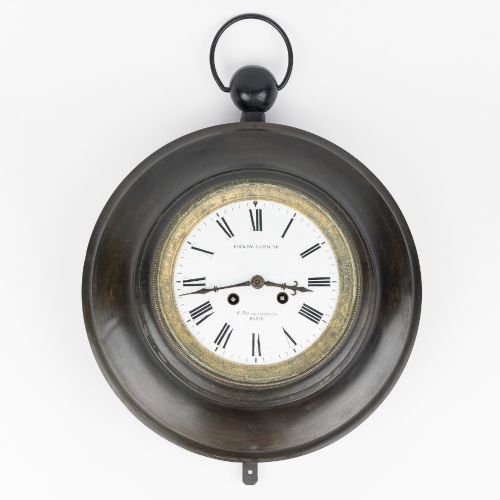
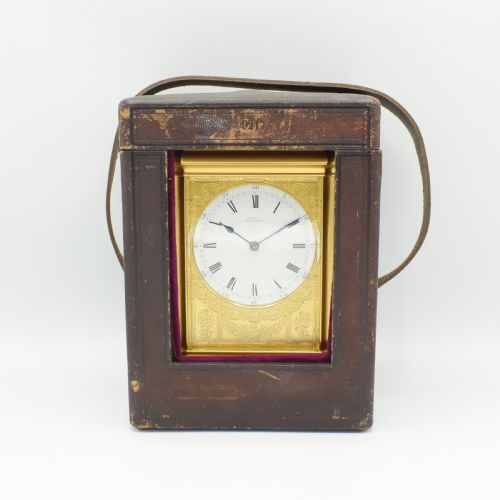
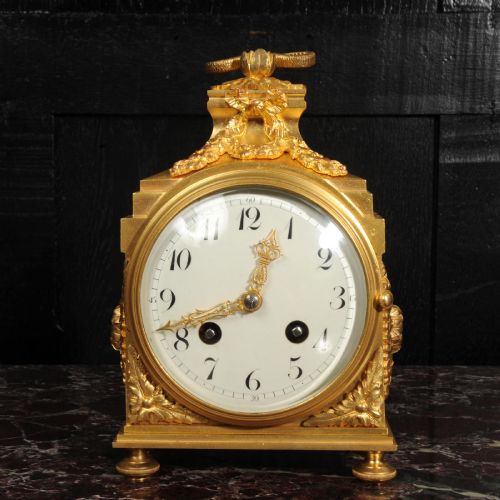
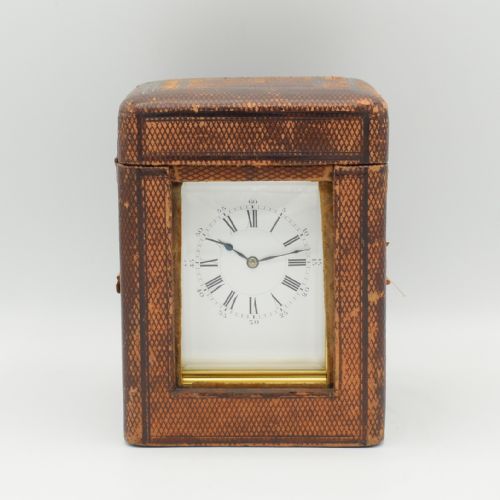
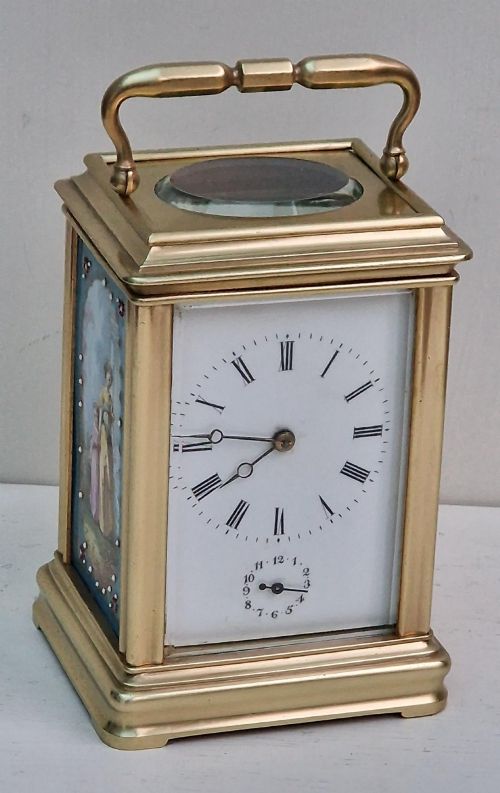
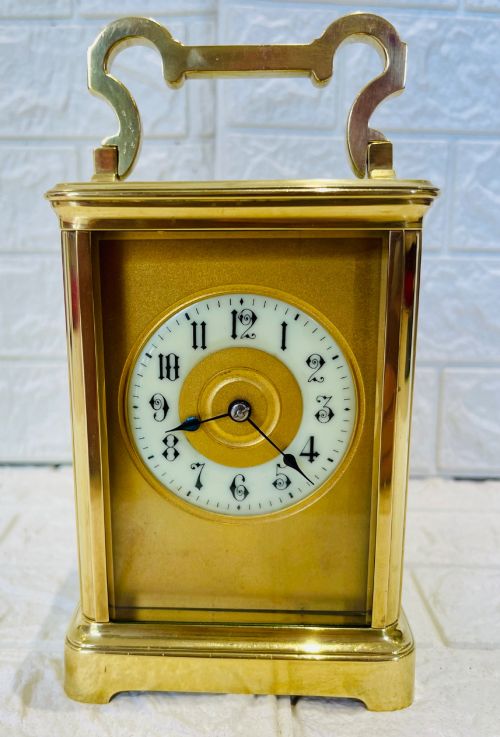
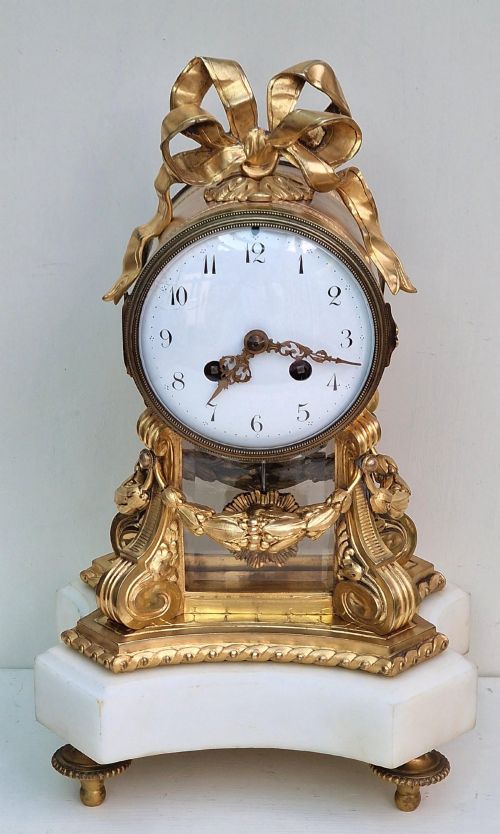
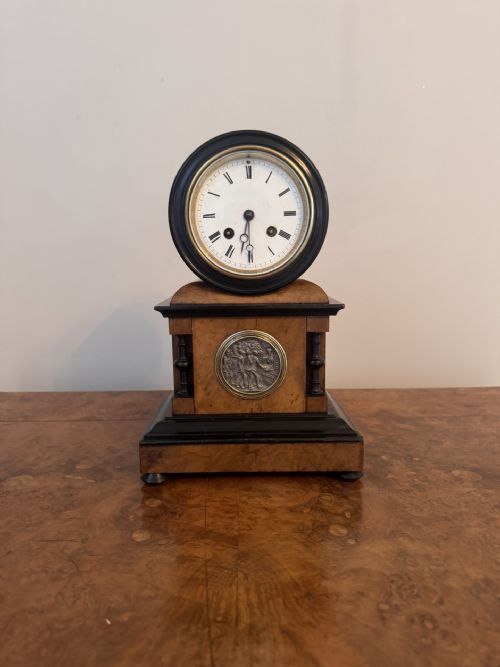
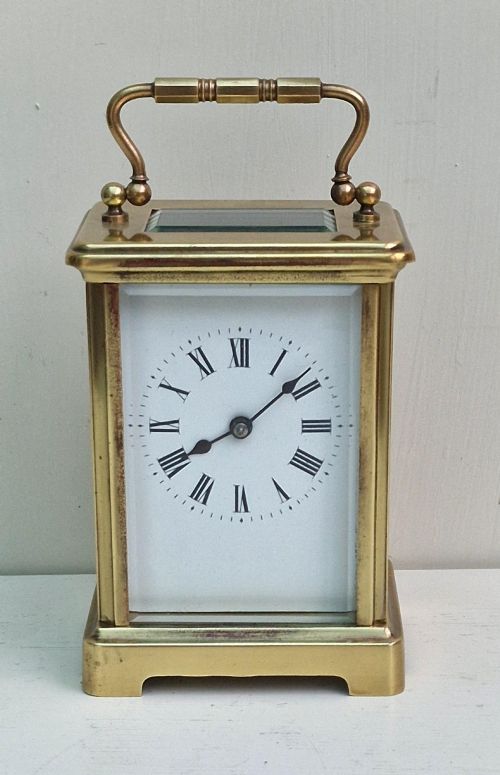
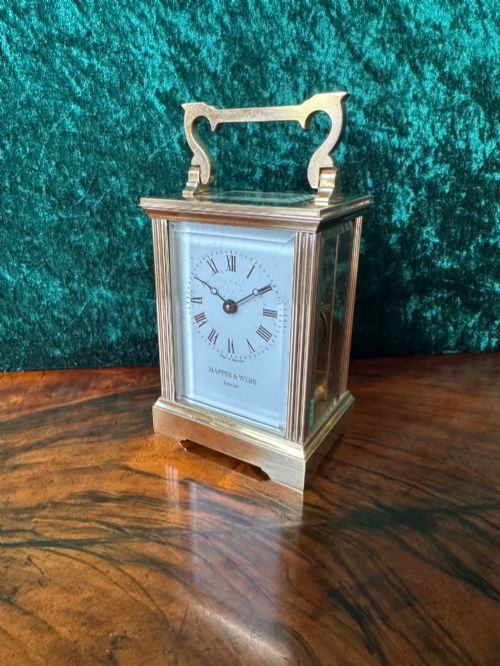
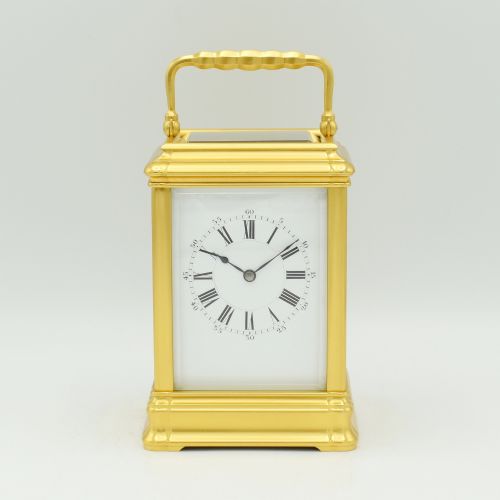
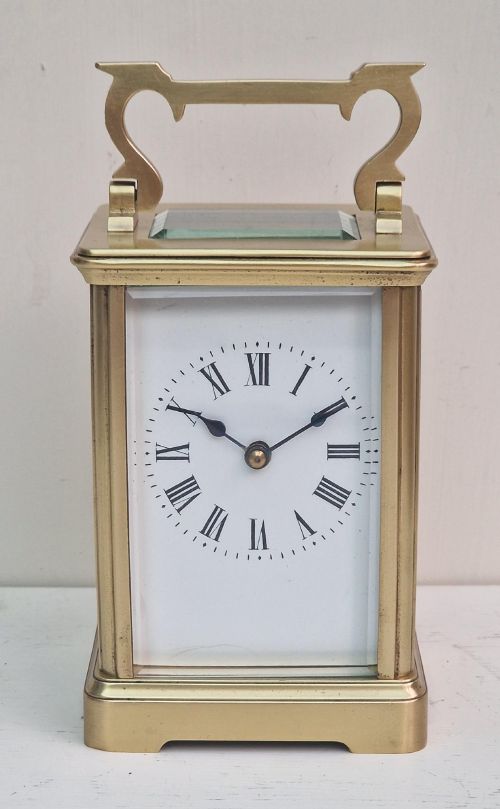
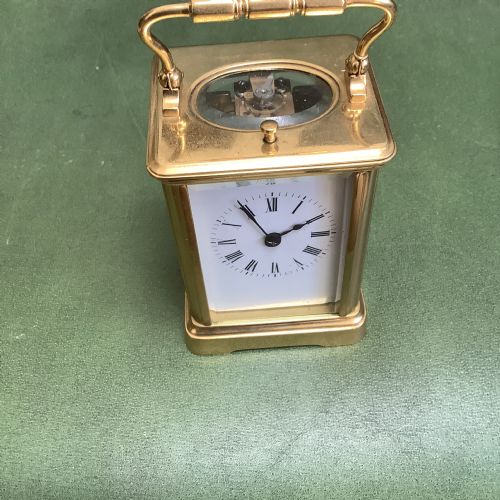
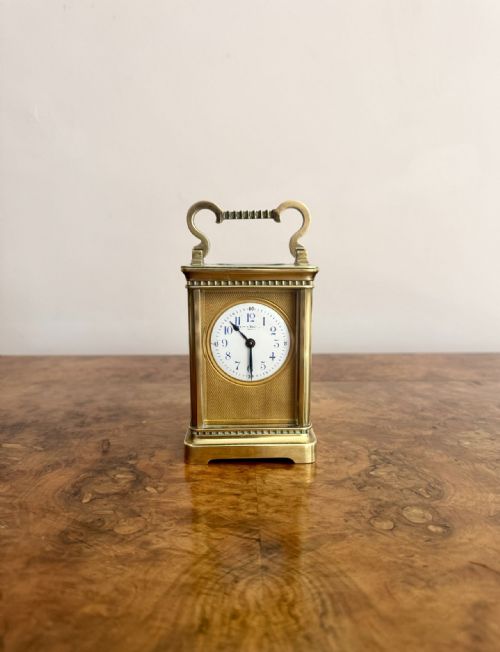
An enamelled brass clock is primarily found in the form of carriage clocks, mantel clocks, and wall clocks spanning the Victorian era and the late nineteenth century. These pieces originate largely from French workshops and English makers, utilising brass, gilt bronze, and glass housings.
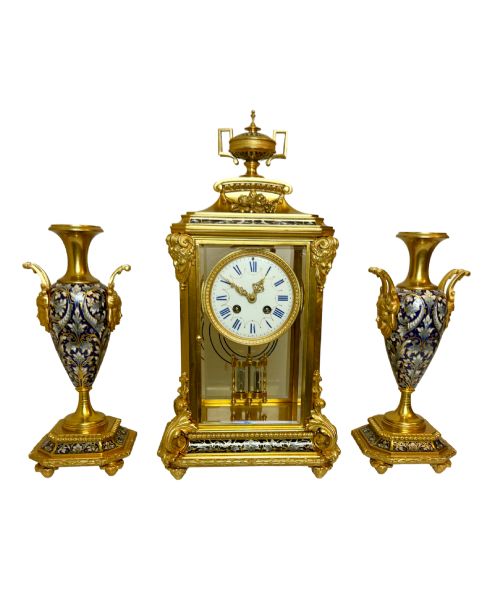
Carriage clocks dominate the selection, often featuring champleve enamel panels, porcelain dials, and gorge cases designed for portability. Alongside these, larger mantel clocks combine gilt brass with white marble, ebonised wood, and detailed enamel work to create striking architectural desk ornaments.
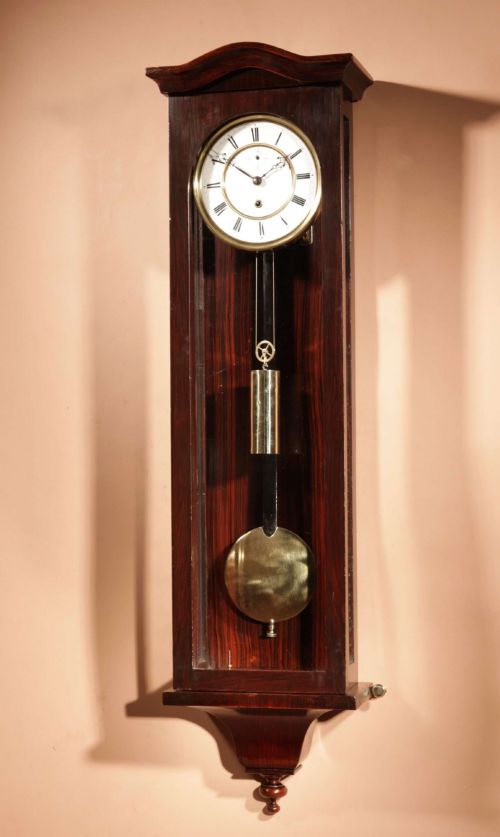
Wall clocks and clock garniture sets appear less frequently, offering alternative formats such as Black Forest regulators and picture frame wall clocks. Buyers encounter miniature versions as well as exceptionally large, ornate pieces housing eight-day movements.
Materials and construction
The primary construction relies on heavy brass, gilt bronze, and gilt brass, cast and finished to form structural gorge cases, drumhead frames, and bevelled glass housings. Enamel and porcelain provide the contrasting white dials and colourful decorative panels set into the metalwork.
Movements are mechanical, typically driven by eight-day mechanisms that incorporate striking functions, repeat bell strikes, and lever escapements. Workshops combined glass panels with engraved brass framing so that the interior escapement remains visible from multiple angles.
Distinctions in craftsmanship
Quality separates simple timepieces from exceptional works through the depth of engraving on the brass case and the complexity of the enamel work. Hand-engraved gilt brass and crisp champleve enamel panels indicate superior maker output compared to plain, unadorned brass housings.
The integration of travel cases, fully engraved miniature cases, and signed movements by known makers elevates a piece. Superior examples maintain crisp casting details, original glass panels, and robust mechanical strikes.
Henry Lepaute·Henri Jacot·Mappin and Webb·Drocourt Paris·C Detouche·T Martin and Co·Pickford of London·Margaine
The Enamelled Brass Clock Glossary
- Champleve enamel
- A technique where troughs are dug into the brass surface and filled with vitreous enamel before firing and polishing. This colourful decoration defines the aesthetic of many late nineteenth-century French carriage clocks.
- Gorge case
- A stepped, architectural brass carriage clock case design with distinct mouldings at the top and base. It provides a sturdy housing for the glass panels and mechanical movement.
- Pendule d'Officier
- A traditional style of French officer timepiece featuring a robust portable brass case often fitted with a carrying handle. These clocks were originally designed for travel during the nineteenth century.
- Clock garniture set
- A central clock accompanied by matching side ornaments such as urns or vases. They form a coordinated decorative arrangement for a mantelpiece.
- Regulator wall clock
- A precision-timed wall-mounted clock designed for accuracy. These pieces utilise pendulum regulation and are associated with Black Forest and Vienna styles.
Enamelled Brass Clock: Frequently Asked Questions
What is a carriage clock?
A carriage clock is a portable spring-driven timepiece enclosed in a brass and glass case, originally designed for travellers during the nineteenth century. These clocks typically feature a folding handle on top and a lever escapement.
Most examples run for eight days on a single wind and often include striking mechanisms that chime the hours or repeat the last hour on demand.
How do I wind an antique clock?
Antique mechanical clocks require a matching winding key inserted into the dial or rear movement plate to tension the mainspring. Care must be taken not to overwind the mechanism.
Many nineteenth-century pieces utilise separate arbours for the timekeeping train and the striking train, meaning both sides need attention to keep the clock functional.
What is champleve enamel?
Champleve enamel is a decorative technique where cells or troughs are hollowed out directly into the brass or bronze metal surface. These recessed areas are then filled with coloured glass powder and fired.
Once cooled, the surface is ground flush and polished, creating vibrant geometric or floral patterns that contrast against the surrounding metal frame.
Where were these clocks made?
The majority of these timepieces originate from Parisian workshops and London makers active throughout the Victorian period and the late nineteenth century. French firms specialised heavily in portable brass and enamel carriage clocks.
English retailers and makers also retailed and produced similar brass timepieces, sometimes incorporating local carriage case designs or specific striking trains.