




Enamel Vanity Jar
An enamel vanity jar sits on the dressing table to hold powders, pins and scents while catching the light with its coloured surface.
Enamel Vanity Jar
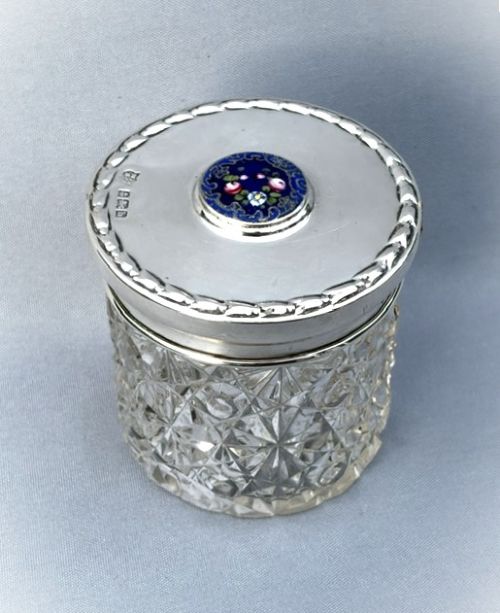
An enamel vanity jar is a dressing table accessory designed to hold small personal items, combining a glass, porcelain or metal body with a decorative decorated lid. These pieces appear in forms such as lidded trinket boxes, dressing table jars, lidded bowls and scent bottles.
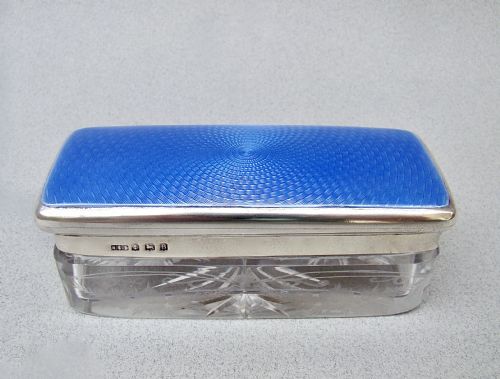
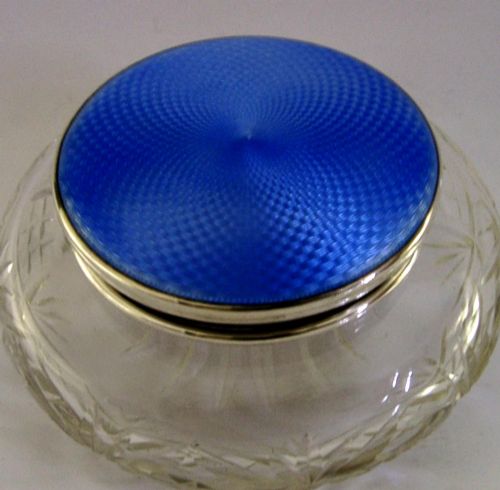
The pieces on this page span the Victorian, Edwardian and Art Deco periods, alongside 19th century French examples. The most common version met here pairs a cut glass or etched glass base with a sterling silver lid bearing coloured enamel or guilloche enamel.
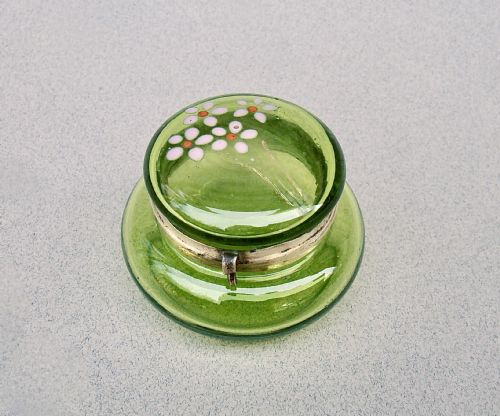
Earlier nineteenth century examples often utilise coloured glass bodies, including green glass, cranberry glass and Bristol blue glass, sometimes featuring painted enamel details. Later twentieth century pieces lean into geometric Art Deco styles with engine turned silver tops.
How they were made
Makers combined glassblowing and cutting with silversmithing to create these jars, mounting sterling silver rims and lidded mounts onto heavy cut glass, etched glass or porcelain bodies. The glass bases were frequently moulded or hand cut to refract light through coloured layers.
Enamel work involved fusing powdered glass to metal surfaces under high heat, often applied over engine turned guilloche patterns that created shimmering geometric textures beneath translucent blue, pink or green coatings.
Enamel Vanity Jar Retail Price Guide 2026
Typical asking prices for enamel vanity jar among the pieces listed under this phrase on Sellingantiques today, from the lower quarter to the upper quarter. They describe what is for sale here now, not the wider market.
Some Edwardian dressing tables held entire matching sets of jars, ensuring your hairpins and face powder shared the exact same shade of pink enamel.
What varies in quality
Quality rests in the crispness of the glass cutting, the weight of the sterling silver mount and the precision of the enamel work. Finer examples display intact guilloche patterns beneath unblemished translucent enamel without chips or hairline fractures.
Maker marks and clear silver assay hallmarks stamped into the metal add distinction, indicating production by established silversmiths and workshops rather than uncredited makers.
Henry Clifford Davis·Henry Perkins·Goldsmith's and Silversmith's Co.
The Enamel Vanity Jar Glossary
- Guilloche enamel
- A decorative technique where a metal surface is mechanically engraved with intricate geometric patterns before being coated in translucent enamel. This lets the underlying pattern show through the coloured glass layer.
- Sterling silver
- An alloy of silver containing 92.5 percent silver and 7.5 percent other metals, usually copper. It forms the durable lids and mounts found on most dressing table jars.
- Bristol blue glass
- A distinct deep blue glass produced in Bristol during the eighteenth and nineteenth centuries. It often serves as the vibrant coloured body for Victorian trinket boxes.
- Assay hallmark
- A series of official marks stamped onto precious metals indicating the purity of the metal, the maker and the year of testing. These marks help date silver lidded jars accurately.
- Cranberry glass
- A rich red glass created by adding gold chloride to the molten glass batch. It provides a striking translucent body for Victorian and Edwardian lidded pots.
Enamel Vanity Jar: Frequently Asked Questions
What were vanity jars used for?
These jars held small cosmetics, hairpins, trinkets and perfumes on nineteenth and twentieth century dressing tables. They kept everyday personal items neat while adding colour to the room.
Lidded pots protected delicate items from dust, while scent bottles kept perfumes sealed until needed for the evening.
How do I date an enamel jar?
Silver assay marks on the metal lid or collar provide the most precise date, showing the assay office and year letter. Stylistic clues like geometric Art Deco lines or ornate Victorian motifs also point to specific eras.
Examining the manufacturing techniques of the glass base helps narrow down whether a piece originates from the nineteenth century or the interwar decades.
Are the lids and bases always original?
Most pieces maintain their original matched components, as the silver mounts were custom fitted to the specific glass or porcelain bodies during manufacture. Hallmarks on the silver often correspond directly to the period of the glass body.
Close inspection of the fit between the silver collar and the glass rim reveals whether the elements belong together from their original production.
How do I care for antique enamel?
Enamel requires gentle handling because the glass coating can chip or scratch if dropped against hard surfaces. Cleaning should involve only a soft, dry cloth rather than harsh chemical dips.
Keeping these jars away from direct sunlight and excessive moisture preserves the vibrant colours of the guilloche and painted enamel.