


Enamel Powder Compact
An enamel powder compact brings the vibrant colour and geometric precision of the dressing table straight to your pocket.
Enamel Powder Compact
An enamel powder compact is a portable cosmetic case designed to hold face powder and often incorporates a mirror, puff, or rouge compartment. When searching for this phrase, collectors encounter pocket-sized accessories primarily spanning the Edwardian era through the mid-century period. The most common examples met on this page belong to the Art Deco style, frequently combining metal bodies with decorative enamel lids.
The forms range from compact cases and combination compacts to small trinket boxes and rouge pots. Materials vary widely from sterling silver and silver-gilt to chrome, brass, and gilt metal. Origins stretch across English workshops in Birmingham and London, continental makers in France and Italy, and major American cosmetic houses.
How they were made
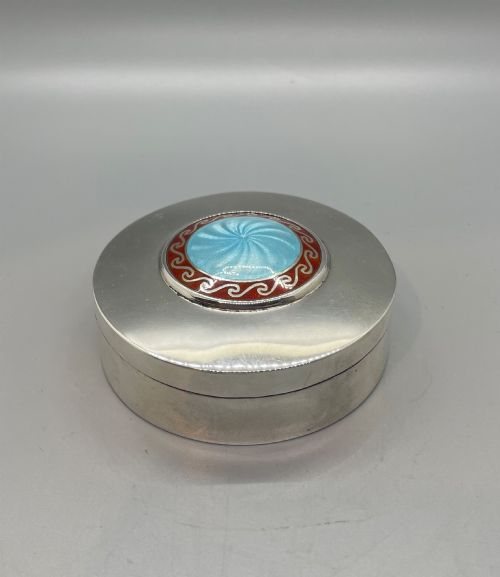
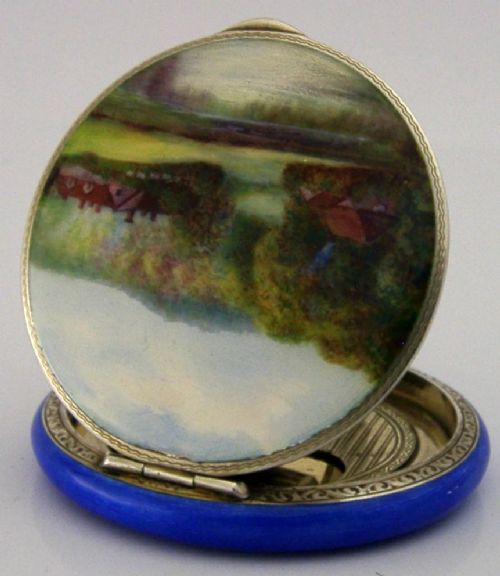
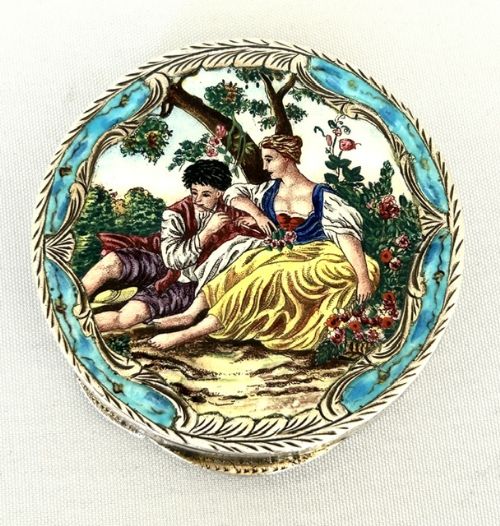
Makers fused vitreous enamel onto metal bases, often applying guilloche engraving beneath translucent layers to create geometric or sunburst patterns. Many pieces also feature hand-painted scenic details or coloured enamel finishes in shades of blue and green. Structural frames utilise silver, chrome, brass, or gilt metal, sometimes paired with interior suede linings.
Techniques combined traditional silversmithing with industrial metal stamping, particularly during the Art Deco period when chrome and geometric motifs gained prominence. Silver components typically bear hallmarks indicating assay offices in cities such as Birmingham and London alongside maker marks.
Some compacts managed to squeeze in a tiny mirror, a powder screen, rouge, and a pill compartment all while fitting neatly into a lady's evening glove.
What varies in quality
The distinction between tiers rests upon the complexity of the metalwork and the execution of the enamel surface. Hand-painted scenic panels and intricate guilloche engraving beneath translucent enamel represent higher levels of artisan skill than plain enamelling over stamped chrome or brass.
Maker attribution and precious metal content further separate standard items from exceptional specimens. Sterling silver and silver-gilt housings by documented makers command greater attention than unmarked base metal counterparts, while the preservation of the delicate glass mirror and interior fittings completes the hierarchy.
Henry Matthews·Henry Perkins and Sons·Richard Hudnut·Giuliano Spinelli·Houbigant·William Neale and Son
The Enamel Powder Compact Glossary
- Guilloche
- A decorative technique involving precise mechanical engraving cut into a metal substrate before translucent enamel is applied. This creates repeating wave or sunburst patterns that show through the coloured glass.
- Vitreous enamel
- A material made by fusing powdered glass to a metallic substrate at high temperatures. The resulting glossy coating resists tarnishing and provides vibrant colour.
- Silver-gilt
- Sterling silver or another silver alloy that has been coated with a thin layer of gold. This finish adds warmth and protects the underlying silver from oxidation.
- Combination compact
- A multi-functional dressing table accessory designed to hold loose powder alongside other items such as rouge, lipstick, or pills. These pieces often feature internal mirrors and specialised compartments.
Enamel Powder Compact: Frequently Asked Questions
What is an enamel powder compact?
An enamel powder compact is a small cosmetic container featuring a decorative enamelled lid, used by women during the twentieth century for powder touch-ups.
These accessories range from simple chrome cases to elaborate sterling silver pieces decorated with guilloche engraving or hand-painted scenes.
How were these compacts used?
Owners carried them in handbags or evening purses to maintain their makeup throughout the day or evening. They typically housed a mirror, a powder sift, and a small puff.
Some combination versions included extra compartments for rouge, pills, or lipstick to serve multiple needs on the go.
How do I identify Art Deco compacts?
Art Deco compacts display strong geometric patterns, symmetrical lines, and industrial metals like chrome alongside coloured enamel. They often feature streamlined shapes characteristic of design from the nineteen-thirties.
Makers such as Richard Hudnut and various French workshops frequently utilised these modernist aesthetics.