



Enamel Jardiniere
An enamel jardiniere brings vivid colour and intricate metalwork to a room, holding indoor plants with distinct decorative weight.
Enamel Jardiniere
When you search for an enamel jardiniere, you encounter vessels designed for housing plants, spanning periods from the eighteenth century through to the twentieth century. These pieces originate predominantly from Chinese and Japanese workshops, reflecting traditional techniques and export markets.
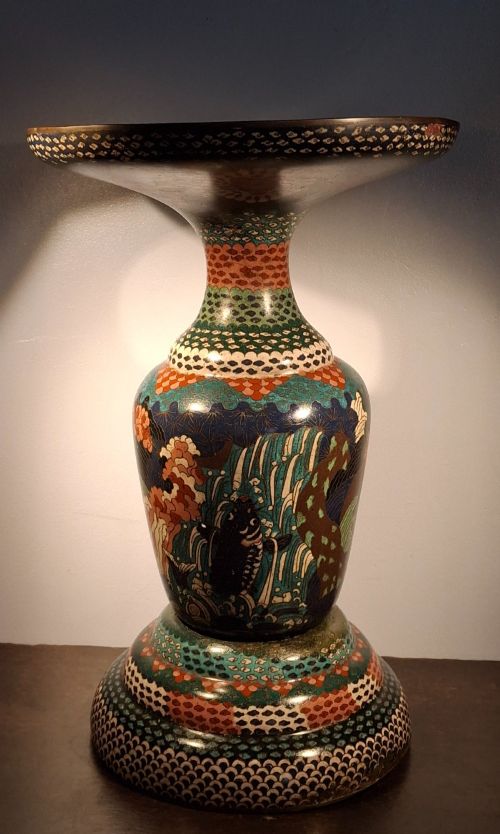
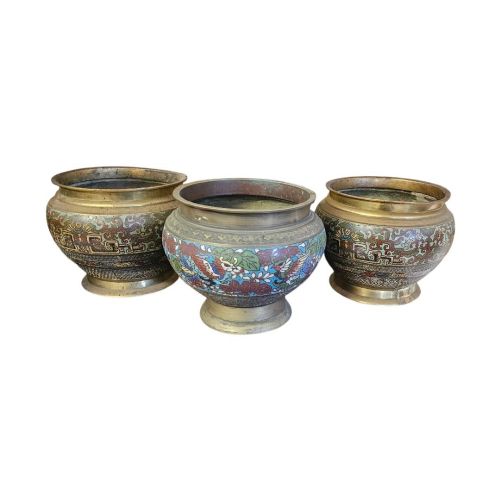
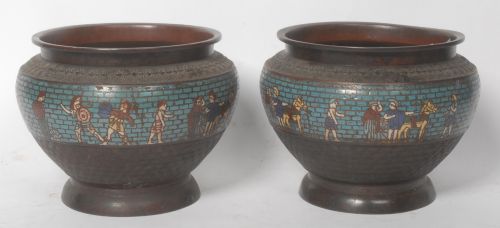
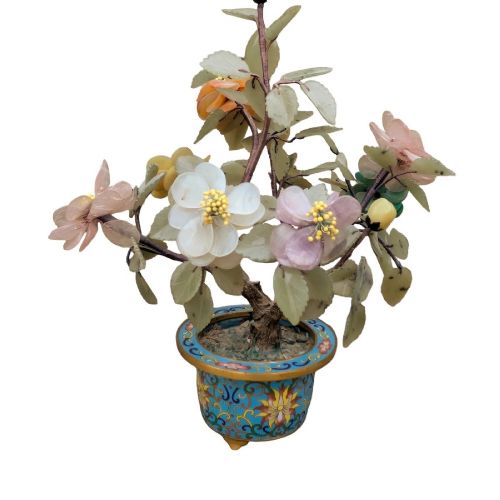
The most common examples on this page take the form of bronze or brass vessels decorated with cloisonne or champleve enamel, alongside porcelain planters decorated in famille rose palettes. Forms range from large floor bowls to hexagonal planters complete with drip trays.
These items intersect with related categories such as cachepots, vases, and decorative bowls, functioning as both functional plant holders and standalone sculptural objects. The selection includes works associated with specific stylistic periods like the Qing Dynasty and the Meiji period.
How they were made
The construction of these pieces relies heavily on metalwork, primarily bronze and copper, shaped to form the body of the planter. Artisans applied cloisonne and champleve techniques, soldering thin metal wires or carving cells into the metal surface to hold coloured enamel pastes before firing.
Porcelain alternatives utilise ceramic shaping and high-temperature firing, subsequently decorated with overglaze famille rose enamels and gold leaf highlights. Stoneware bodies also appear, demonstrating varied ceramic throwing and glazing traditions.
Surface detailing frequently incorporates hardstone elements and applied patination, combining metalworking, ceramic arts, and mineral decoration within a single vessel.
Enamel Jardiniere Retail Price Guide 2026
Typical asking prices for enamel jardiniere among the pieces listed under this phrase on Sellingantiques today, from the lower quarter to the upper quarter. They describe what is for sale here now, not the wider market.
The selection includes Japanese Meiji period pieces alongside Chinese export items decorated with cloisonne and champleve enamel techniques.
What varies in quality
The refinement of the enamel work dictates the visual distinction between tiers of pieces, observable in the crispness of the wire cells and the uniformity of the coloured infill. Finer examples display meticulous attention to detail in complex motifs such as koi or floral panels.
The weight and substance of the underlying bronze or copper armature contribute significantly to the perceived quality of a vessel. Substantial metal casting provides structural integrity that supports the decorative surface work.
Artistic attribution and specific period execution elevate certain pieces, particularly those bearing maker marks or demonstrating advanced mastery of traditional East Asian decorative arts.
Makuzu Kozan II
The Enamel Jardiniere Glossary
- Cloisonne enamel
- A technique where metal wires are soldered onto a metal base to create compartments, which are then filled with enamel paste and fired. This method produces intricate, partitioned patterns across the surface of the vessel.
- Champleve enamel
- A process in which troughs or cells are carved directly into the metal surface of an object and filled with enamel before firing. It creates a bold design where the metal lines form part of the final image.
- Jardiniere
- A large ornamental pot or container designed to hold a plant or floral arrangement. These vessels often sit on stands or directly on furniture surfaces.
- Cachepot
- An ornamental container used to conceal an unadorned flowerpot holding a plant. The term translates from French as hiding pot.
- Famille rose
- A palette of opaque overglaze ceramic enamels introduced in China during the eighteenth century, dominated by pink and rose hues. This style frequently decorates porcelain planters and bowls.
Enamel Jardiniere: Frequently Asked Questions
What is an enamel jardiniere used for?
These vessels serve primarily to house potted plants and flowers, acting as decorative cachepots that elevate ordinary greenery within an interior scheme. Their substantial decorative presence allows them to function equally well as empty sculptural bowls or centrepieces.
Historically, they formed part of refined interior displays in both Asian and Western domestic settings, complementing architectural woodwork and ceramic collections.
How do I date a bronze cloisonne jardiniere?
Dating relies on examining the weight of the metal, the composition and brightness of the enamel colours, and the style of the decorative motifs. Pieces associated with the Qing Dynasty or the Meiji period often exhibit distinct stylistic conventions in their floral or animal subjects.
Manufacturing techniques also shift over time, with nineteenth-century and early twentieth-century examples showing variations in wire thickness and base finishing.
Can these planters hold water directly?
Many antique metal and porcelain planters were designed to accommodate potted plants within a secondary inner pot rather than holding wet soil and water directly. Using an inner container protects the historic enamel and metal surfaces from prolonged moisture exposure and potential corrosion.
Examining the interior construction reveals whether a piece includes an integrated drip tray or requires a separate liner for live planting.