




Enamel Floral Pin
An enamel floral pin brings together bright vitreous colour and precious metal to form lasting miniature gardens for the lapel.
Enamel Floral Pin
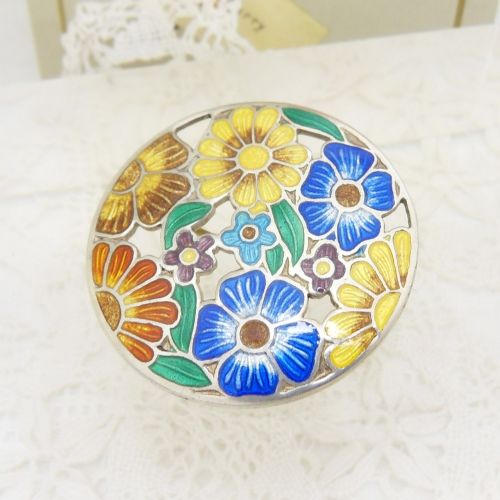
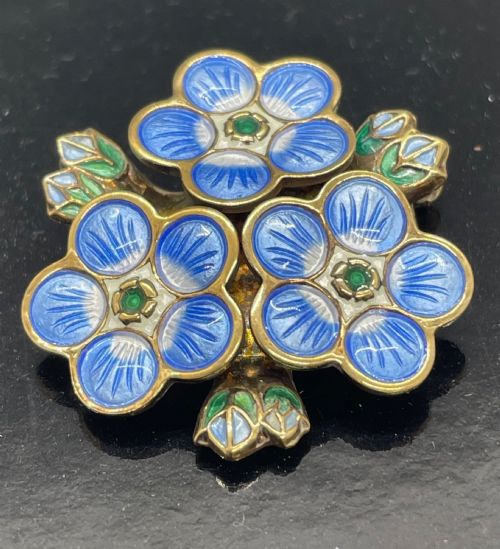
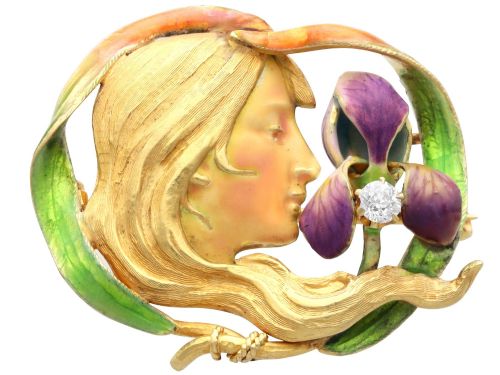
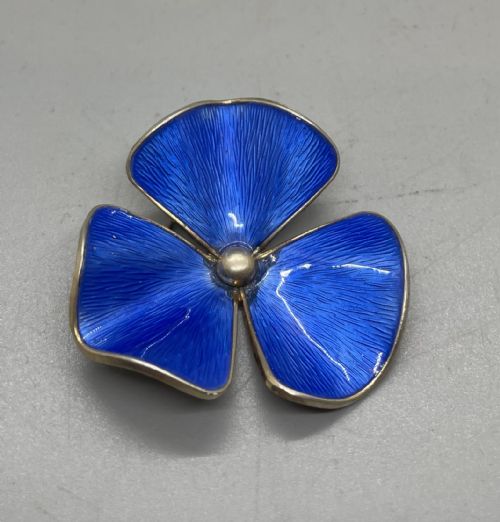
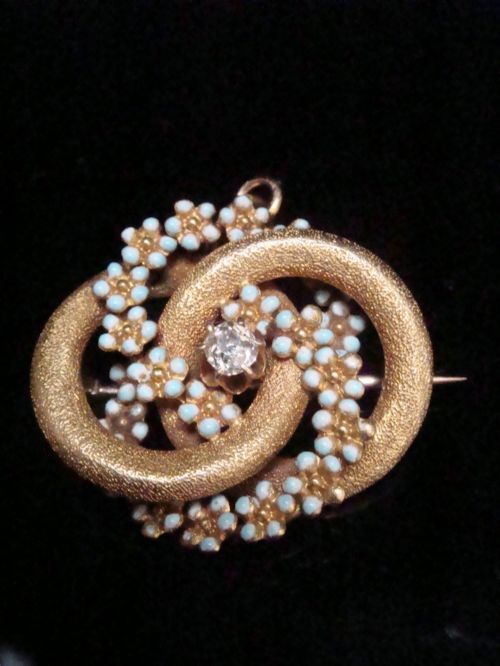
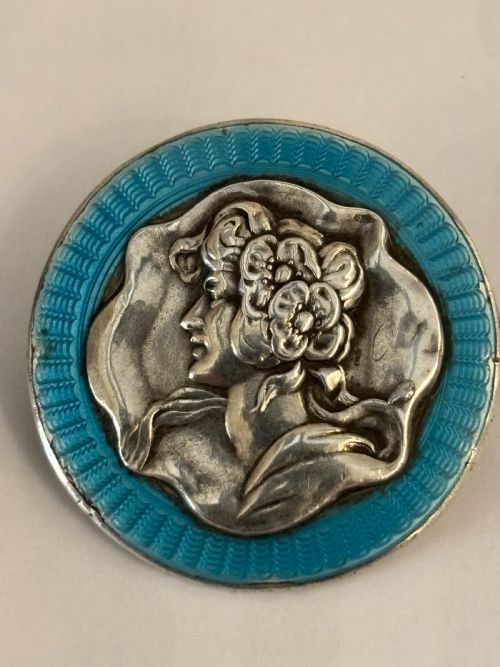
An enamel floral pin takes the form of brooches, stick pins, and convertible pendant brooches fashioned into botanical subjects. The pieces on this page span the Victorian, Edwardian, and Art Nouveau periods, moving through Arts and Crafts designs into mid-century Scandinavian modernist work.
Makers shaped these ornaments to depict pansies, forget-me-nots, and abstract floral sprays, utilising precious metals as stems and petals. Buyers encounter both delicate naturalistic creations from the nineteenth century and clean geometric interpretations from later decades.
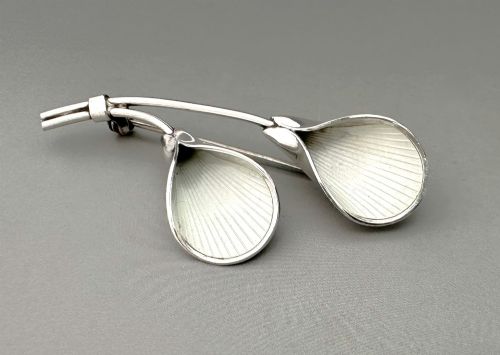
The selection includes specific regional contributions, notably guilloche enamel floral work originating from Norway and Denmark. These items function as wearable art, securing easily to coats, scarves, and hats while retaining their bright decorative surfaces.
How they were made
Goldsmiths and silversmiths constructed the foundational mounts from sterling silver, silver gilt, and eighteen-carat gold, often incorporating gemstones like diamonds, pearls, and moonstones to accent the floral motifs.
Craftspeople applied powdered glass to metal surfaces, firing the pieces at high temperatures to fuse the vitreous enamel into glossy, permanent colour. Techniques such as plique-à-jour suspended translucent enamel within open gold wire frameworks to catch the light like stained glass, while guilloche engraved geometric patterns beneath transparent enamel coatings.
Enamel Floral Pin Retail Price Guide 2026
Typical asking prices for enamel floral pin among the pieces listed under this phrase on Sellingantiques today, from the lower quarter to the upper quarter. They describe what is for sale here now, not the wider market.
Some floral pins secretly double as pendants, letting nervous owners twist their petals into lockets throughout the day.
What varies in quality
The standard of an enamel floral pin rests on the precision of the metalwork and the complexity of the enamelling technique employed. Hand-engraved guilloche patterns and translucent plique-à-jour cells demand advanced skill compared to opaque surface fills.
Quality also appears in the integration of supporting stones such as diamonds and pearls, and in the preservation of the vitreous surface. Pieces that retain their original gilding and show minimal stress in the glass display the highest level of period craftsmanship.
David Andersen Norway·A H Darby And Son
The Enamel Floral Pin Glossary
- Vitreous Enamel
- Glass powder fused to a metal base through high-temperature firing. This creates a durable, glossy coloured surface that resists fading.
- Guilloche
- A decorative technique where precise geometric patterns are mechanically engraved into metal before translucent enamel is applied over the top.
- Plique-a-jour
- An enamelling method resembling miniature stained glass where enamel is fired in open cells without a backing metal, allowing light to pass through.
- Silver Gilt
- Sterling silver that has been coated with a thin layer of gold. This provides the warm tone of gold while utilising a silver foundation.
- Stick Pin
- A long pin topped with a decorative motif, originally designed to secure neckties or lapels. The top displays the enamel floral design.
Enamel Floral Pin: Frequently Asked Questions
How do I clean my enamel brooch?
Clean these pieces gently using a soft cloth dampened with mild soapy water, avoiding harsh chemical dips that can damage the metal and glass surfaces.
Dry the brooch thoroughly immediately after washing to protect any exposed silver or gold components from moisture.
Can I wear a stick pin daily?
Wear stick pins on heavier fabrics like wool coats or stoles where the long stem holds firmly without bending delicate mountings.
Store the pin in a secure box when not in use to prevent the thin stem from catching on other items.
What periods do these pins cover?
The pieces span from the Victorian era through Edwardian and Art Nouveau designs into mid-century Scandinavian production.
Each period brings distinct stylistic choices, moving from sentimental naturalism to clean modernist lines.
How do I date an enamel floral pin?
Examine the metal purity marks, fastening mechanisms, and overall artistic style to determine the likely decade of manufacture.
Art Nouveau pieces show flowing organic lines, while mid-century Scandinavian items often feature bright guilloche patterns on clean silver shapes.