
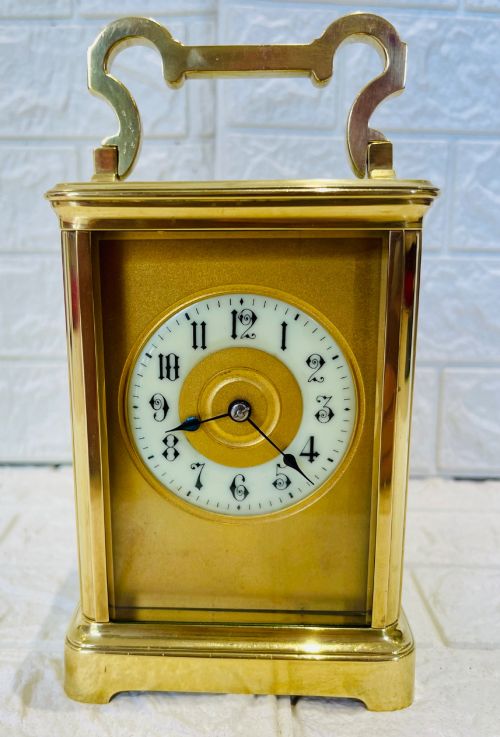
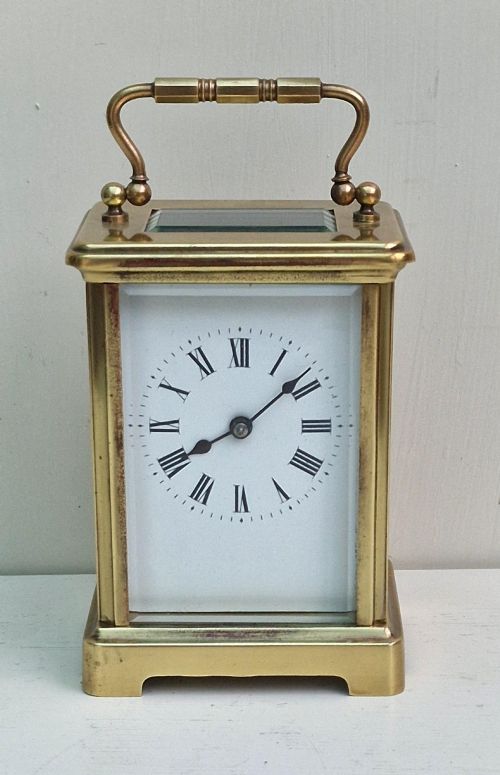
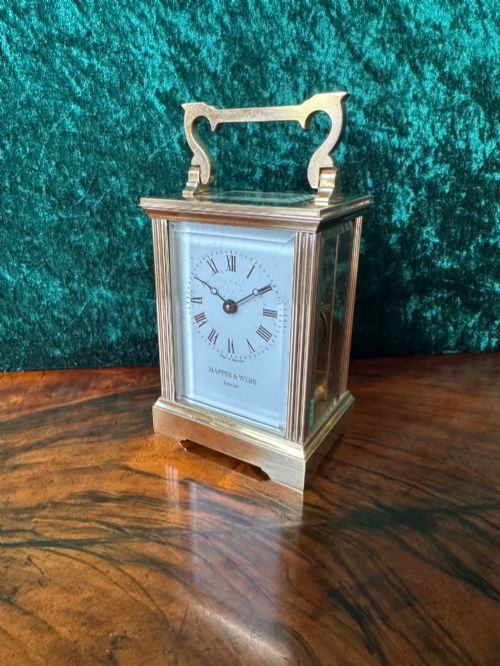
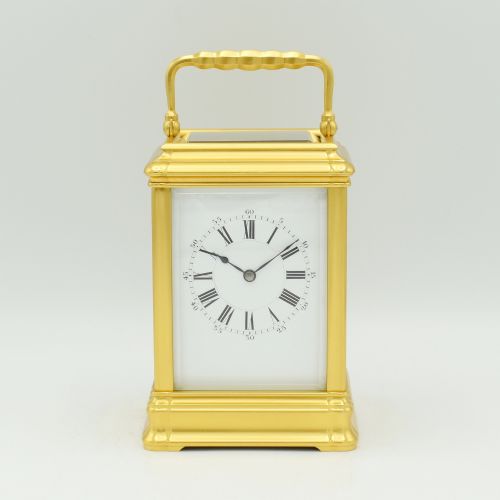


Enamel Dial Travel Clock
An enamel dial travel clock is a portable timepiece designed for journeys, featuring a dial of fused glass and metal.
Enamel Dial Travel Clock
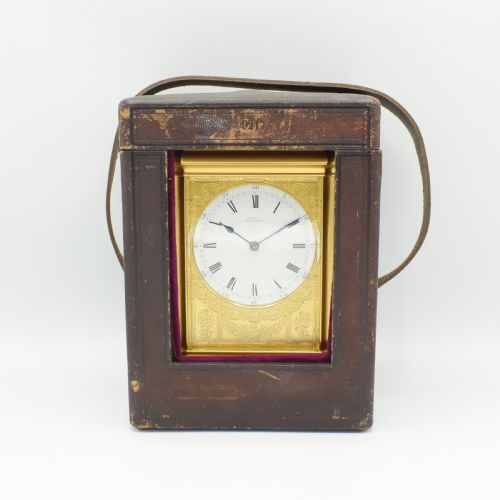
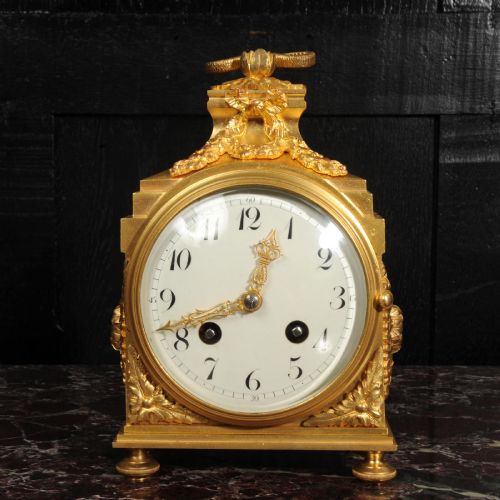
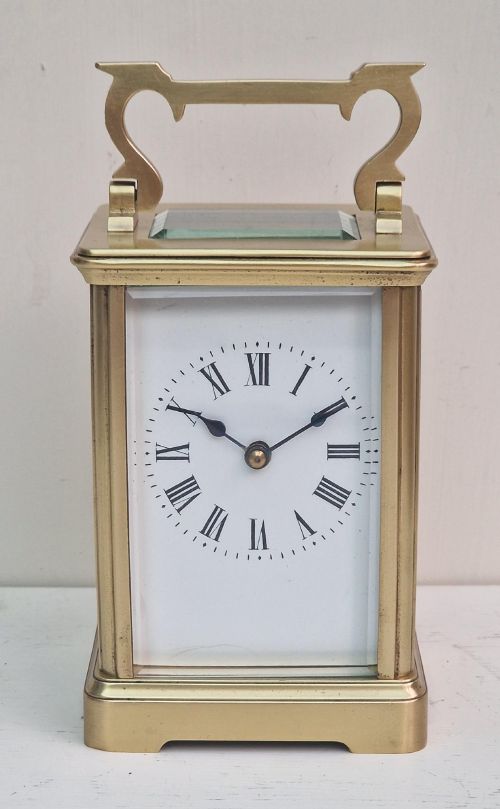
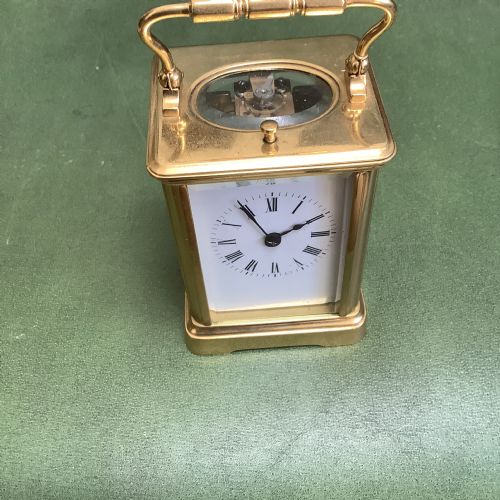
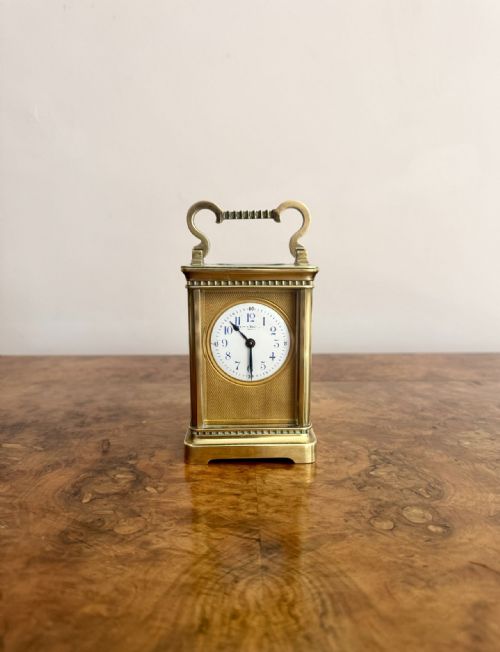
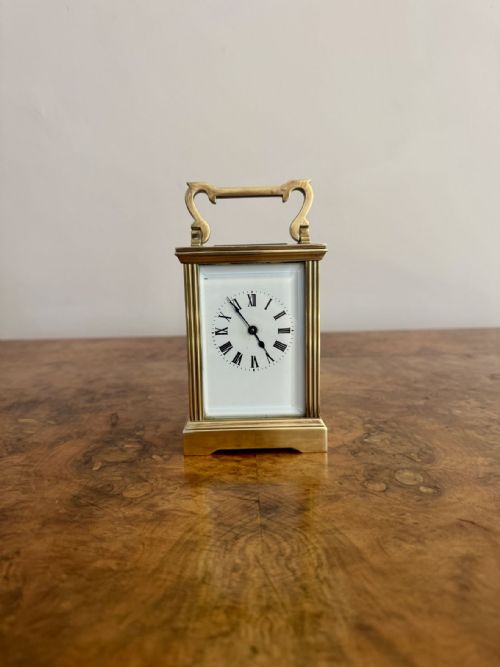
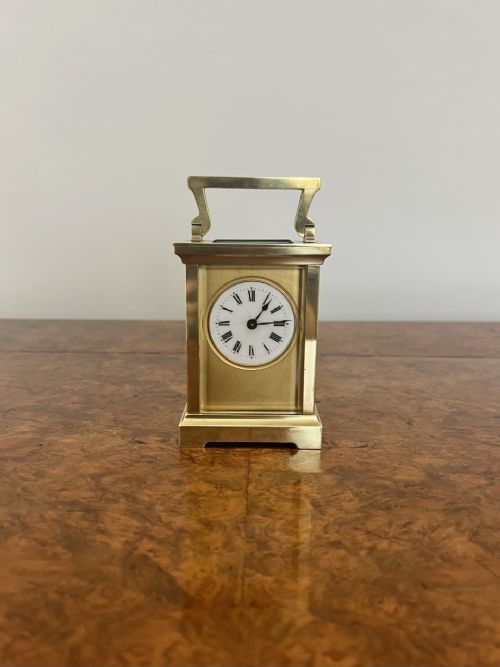
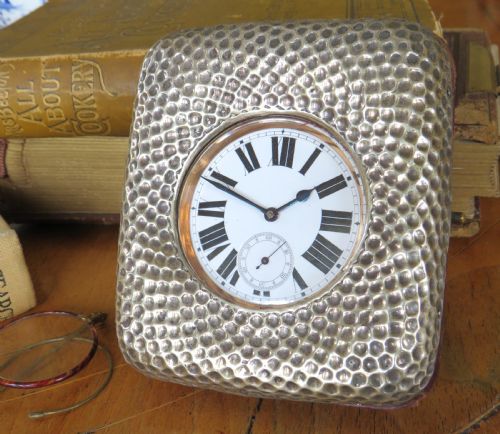
An enamel dial travel clock is typically a brass, gilt bronze, or ormolu carriage clock or cased pocket watch meant for portable timekeeping. These pieces originate from periods spanning the nineteenth century through the mid twentieth century, encompassing Victorian, Edwardian, and French Empire styles.
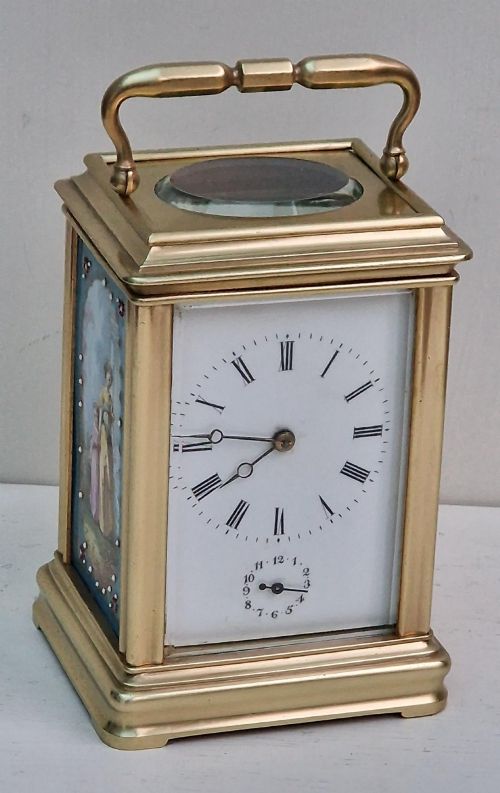
The version most commonly encountered on this page is the French carriage clock housed in a brass gorge case with glass panels. These examples often incorporate striking mechanisms, repeating functions, or alarm capabilities suited for travel.
Makers and retailers such as Henri Jacot, Drocourt, Mappin and Webb, and Pickford of London appear among the pieces. The forms range from miniature carriage clocks to large striking variants accompanied by travel cases.
How they were made
Brass, gilt brass, and ormolu form the structural cases, providing robust housings for intricate mechanical movements and glass viewing panels. Enamel is applied to metal dials to create smooth, durable surfaces for painted numerals and chapter rings.
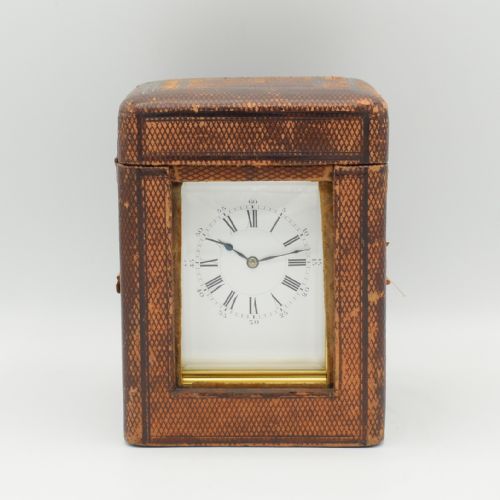
Leather frequently supplies the material for protective travel cases designed to shield the clock during transit. Silver and gilt metal also appear in specific cased travel watches and pocket watch formats.
Listings feature brass, gilt bronze, silver, and leather materials across Victorian and Edwardian periods.
What varies in quality
The sophistication of the internal movement distinguishes examples, particularly those with eight-day durations, repeat striking mechanisms, grand sonnerie functions, or alarm additions. Engraving upon the gilt brass or ormolu case reveals the hand of the maker and the level of ornamentation applied.
The preservation of the enamel dial and the presence of the original travel case influence the integrity of the piece. Miniature proportions combined with fully engraved cases represent finer execution in nineteenth-century French production.
Henri Jacot·Drocourt Paris·Mappin and Webb·Pickford of London·C. Detouche Paris·Margaine Of France
The Enamel Dial Travel Clock Glossary
- Carriage clock
- A portable spring-driven timepiece designed for travel during the nineteenth century. These clocks usually feature rectangular brass frames with glass panels.
- Gorge case
- A specific style of carriage clock case characterised by stepped mouldings at the top and base. This housing style is frequently found on French pieces from the nineteenth century.
- Grand sonnerie
- A complex striking train that chimes the hours and quarters automatically on bells or gongs. It represents a high tier of clockmaking capability.
- Pendule d'Officier
- A military-style French travel clock originating from the nineteenth century. These items often combine robust construction with refined desk utility.
- Enamel dial
- A metal dial face fused with powdered glass powder fired at high temperatures. This technique produces a hard, glossy surface for painted clock numerals.
Enamel Dial Travel Clock: Frequently Asked Questions
How do I wind a carriage clock?
Most mechanical travel clocks use a dedicated winding key inserted into arbors located on the backplate. Turning the key clockwise tensions the mainspring.
Care must be taken not to over-wind the movement, stopping as soon as resistance is felt.
What is a repeater mechanism?
A repeater mechanism sounds the last elapsed hours and quarters on demand when a button or pendant is pressed. This function allowed travellers to check the time in the dark.
Such complications require precise adjustment by a clockmaker.
How are these clocks transported?
Travel clocks are usually fitted into fitted leather outer cases lined with velvet or silk. The sturdy brass and glass construction also helps withstand moderate movement.
Securing the pendulum or balance wheel is sometimes necessary for older pieces during transit.
How do I date a brass carriage clock?
Dating relies on maker marks, serial numbers, case styles, and the design of the escapement visible through the glass panels. Victorian and Edwardian examples often feature registration marks or specific maker signatures.
Comparing the escapement type from cylinder to lever platforms narrows the period of manufacture.