


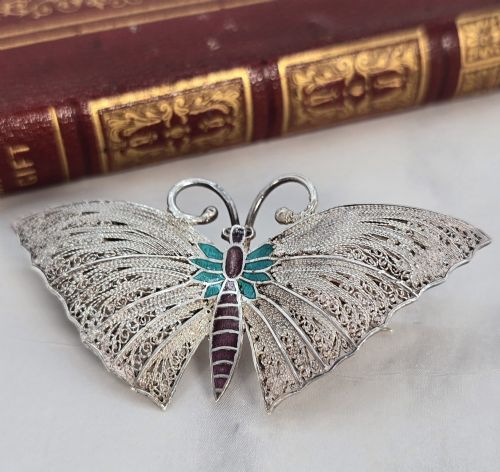


Enamel Butterfly Jewellery
Enamel butterfly jewellery brings delicate winged forms to life in vivid colour, offering collectors a charming piece of wearable history.
Enamel Butterfly Jewellery
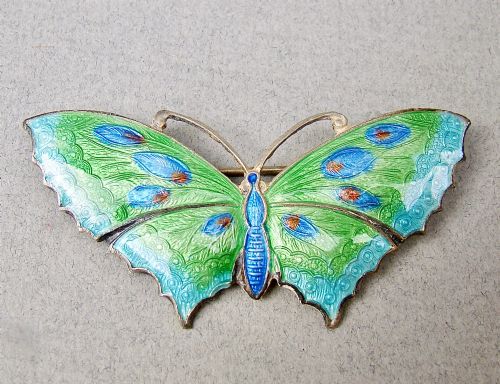
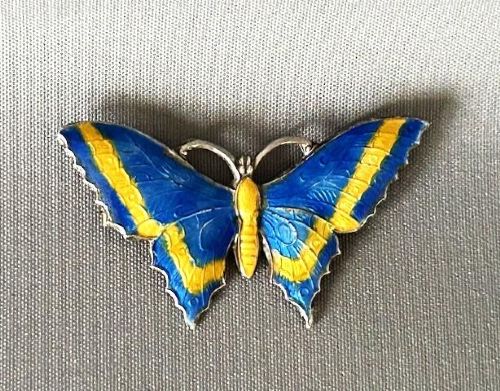
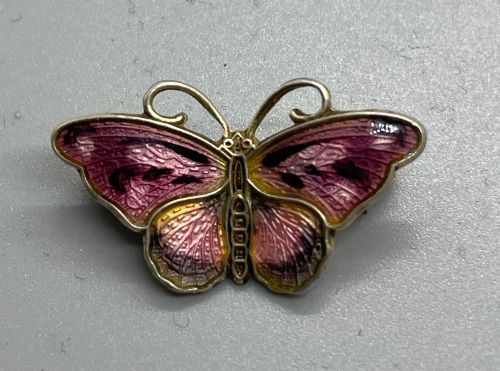
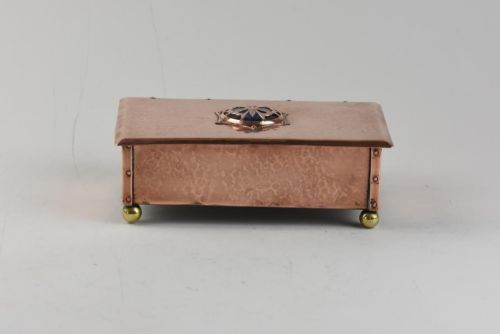
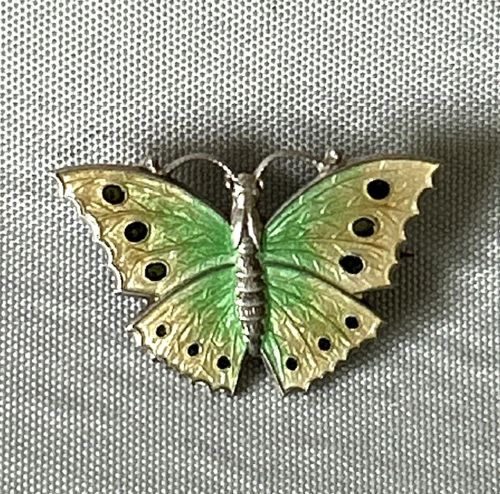
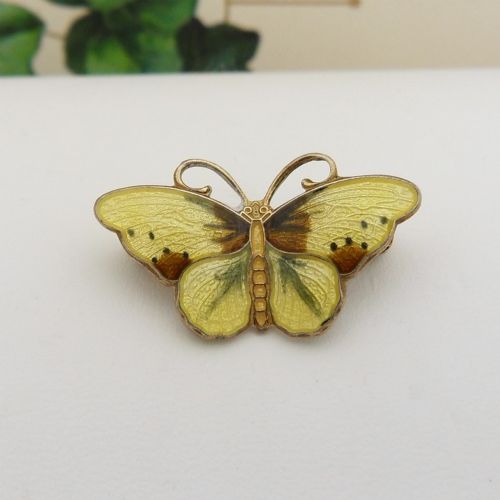
Enamel butterfly jewellery encompasses wearable accessories and small decorative containers shaped around the form of a butterfly. Pieces span several distinct periods including the Art Nouveau, Art Deco and Mid-Century eras, with items originating from Norway, China and various European workshops.
The selections on this page primarily consist of brooches and pins alongside pendants and trinket boxes. Silver and sterling silver form the predominant base metals, frequently finished with silver gilt or gold vermeil to enhance the appearance of the wings.
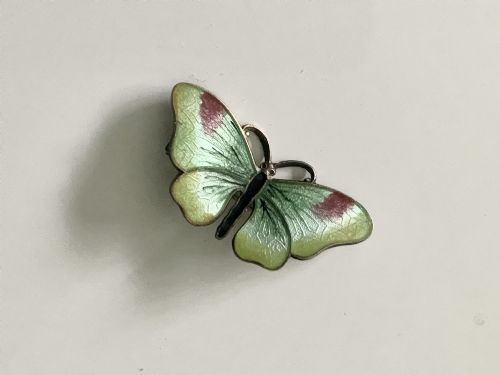
Buyers will most frequently encounter small brooches utilising guilloche or transparent enamelling techniques. These pieces often reflect specific regional designs, particularly the colourful winged pins associated with mid-century Scandinavian makers.
How they were made
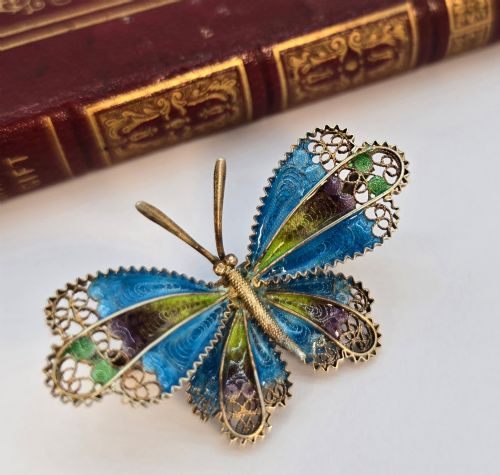
Artisans constructed these pieces using base metals such as silver, copper and brass to form the structural body and wing framework. Techniques like filigree wirework often outlined the delicate cellular structure of the wings before the application of powdered glass.
Vitreous enamel and plique-a-jour methods involved fusing coloured glass to the metal substrate through kiln firing. Guilloche work added machine-turned geometric patterns beneath translucent enamel layers, creating shimmering light effects across the wings.
Enamel Butterfly Jewellery Retail Price Guide 2026
Typical asking prices for enamel butterfly jewellery among the pieces listed under this phrase on Sellingantiques today, from the lower quarter to the upper quarter. They describe what is for sale here now, not the wider market.
Listings feature items spanning from nineteen hundred through to nineteen sixty, utilising silver, copper, brass, and vitreous enamel.
What varies in quality
The refinement of the metalwork and the complexity of the enamelling technique determine the distinction between standard and superior examples. Finer pieces display intricate filigree wire twists or precise guilloche engine-turning that catches the light evenly.
The clarity and depth of the vitreous or plique-a-jour enamel also dictate overall distinction. Smooth, even colour distribution without surface pitting or cloudiness marks the work of skilled workshops.
Hroar Prydz·Martin Mayer
The Enamel Butterfly Jewellery Glossary
- Guilloche
- An ornamental engraving technique that etches precise repetitive patterns into a metal surface. Enamellists apply translucent coloured glass over this texture to produce a shimmering striped or waved effect.
- Plique-a-jour
- A vitreous enamelling technique where the enamel is fired in open cells without a backing metal. This allows light to shine directly through the transparent coloured glass like stained glass.
- Silver gilt
- Silver that has been coated with a thin layer of gold. This treatment provides a warm golden finish while retaining the lighter weight and malleability of a silver base.
- Vitreous enamel
- A material made by fusing powdered glass to a substrate by firing. The process creates a durable, glossy coloured coating that resists fading over decades.
- Filigree
- Delicate jewellery metalwork formed from fine twisted threads of gold or silver soldered together. Artisans use this wire to create openwork patterns resembling lace.
Enamel Butterfly Jewellery: Frequently Asked Questions
How do I wear an enamel butterfly brooch?
These brooches fasten securely to lapels, scarves, or hats using traditional pin stems and safety catches. Pinning them against solid fabrics allows the vibrant enamel colours to stand out clearly.
Because the wings can be delicate, avoid placing them where heavy outerwear might crush or snag the metalwork. Storing them in a soft pouch when not worn protects the glass surfaces from scratches.
Are these pieces made of solid silver?
Many items utilise sterling silver or standard silver as the primary metal framework. Some pieces feature silver gilt, which coats the silver base in a layer of gold.
Other examples incorporate copper, brass, or fine filigree wire to achieve specific structural designs. Examining the metal settings helps identify the origin and period of manufacture.
How do I tell different periods apart?
Art Nouveau examples from around nineteen hundred often feature flowing organic lines and plique-a-jour enamel resembling insect wings. Art Deco and nineteen-thirties pieces tend toward symmetrical geometry and detailed guilloche patterns.
Mid-century Scandinavian items from the nineteen-fifties and sixties frequently showcase bright opaque or translucent enamel over clean silver forms. Comparing the metalwork style and colour palette clarifies the likely decade of production.
What is the best way to clean enamel jewellery?
Wipe the piece gently with a soft, dry or slightly damp microfiber cloth to remove dust and oils. Avoid harsh chemical dips, ultrasonic cleaners, or abrasive brushes that can damage the glass enamel or thin metal plating.
Store items individually away from other jewellery to prevent scratching the vitreous surfaces. Keeping them dry prevents tarnishing on the exposed silver and copper elements.