





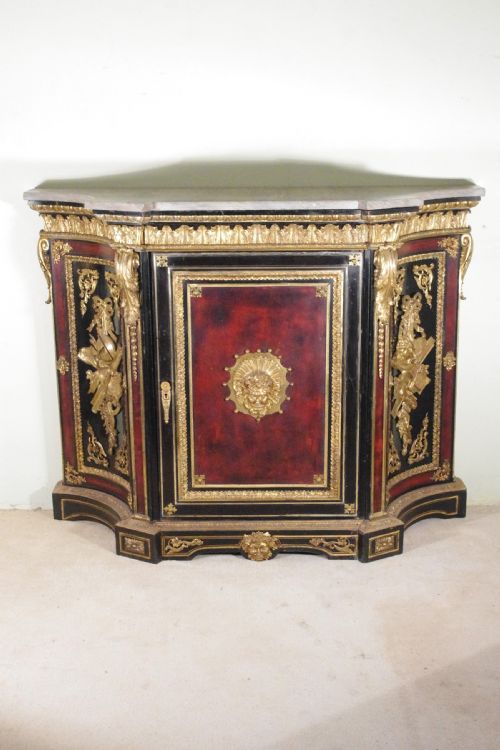

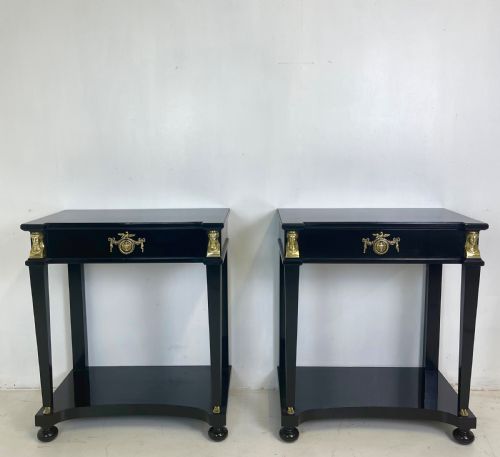

Empire Style Side Cabinet
An empire style side cabinet brings classical architectural dignity and rich wood tones to a room, offering structured storage rooted in nineteenth-century design.
Empire Style Side Cabinet
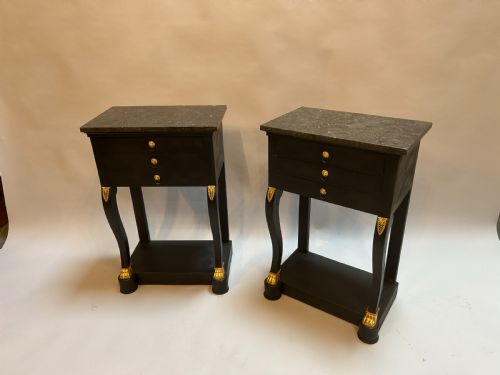
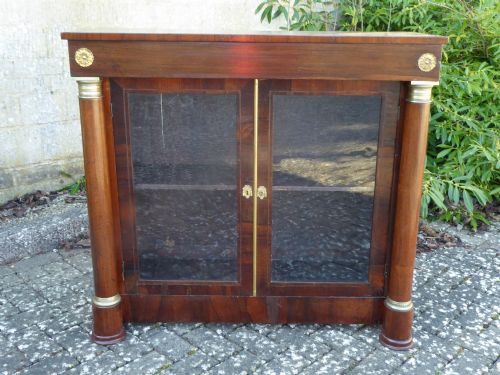
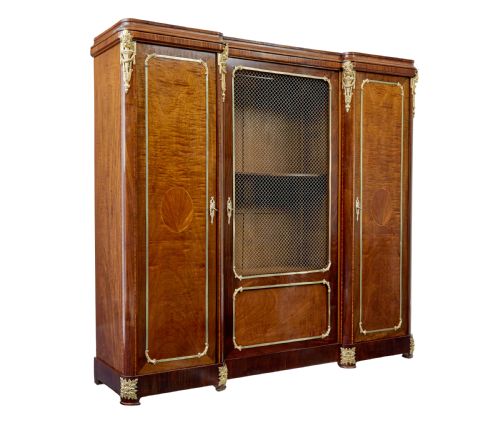
An empire style side cabinet draws on classical French and English design traditions, presenting sturdy forms in woods such as mahogany, rosewood, and walnut. These pieces frequently appear in smaller bedside formats as well as larger bookcase or chiffonier configurations.
The selections recorded here span from the early nineteenth century through later revivals, reflecting both French Empire and Regency influences. Buyers often encounter bedside chests, marble-topped cabinets, and open bookcases that reflect this formal aesthetic.
How they were made
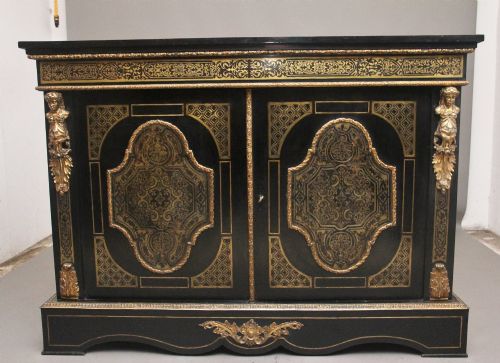
Cabinet makers utilised dense hardwoods including mahogany, rosewood, and ebonised wood as the primary structural foundations. Surfaces frequently incorporated burr walnut, cherry, and decorative veneers.
Metal ornamentation played a defining role in the construction process. Makers mounted cast brass, ormolu, and gilt metal details onto the wood carcasses, occasionally incorporating marble tops and porcelain plaques.
Empire Style Side Cabinet Retail Price Guide 2026
Typical asking prices for empire style side cabinet among the pieces listed under this phrase on Sellingantiques today, from the lower quarter to the upper quarter. They describe what is for sale here now, not the wider market.
Some nineteenth-century bedside cabinets hid their midnight essentials behind tambour doors.
What varies in quality
The refinement of the decorative mounts marks a clear distinction between standard production and superior examples. Finely chased ormolu and crisp gilt metal detailing demonstrate a higher level of craftsmanship than plain cast alternatives.
The selection of timbers and the precision of the veneer work also determine the standing of a piece. Figured mahogany, burr walnut, and intricate marquetry indicate dedicated workshop production.
S Jamar
The Empire Style Side Cabinet Glossary
- Ormolu
- Gilded bronze used for decorative mounts on furniture. This technique was widely applied during the nineteenth century to accent dark cabinet woods.
- Ebonised
- Wood treated to imitate ebony. Cabinet makers used this finish to create a stark contrast with metallic mounts.
- Chiffonier
- A low cabinet with doors or drawers. These pieces served practical storage functions in nineteenth-century interiors.
- Marquetry
- The art of applying pieces of veneer to a structure to form decorative patterns. This method appears on select tables and cabinet doors.
Empire Style Side Cabinet: Frequently Asked Questions
Where were these cabinets used?
Original examples served functional roles in bedrooms, libraries, and formal drawing rooms. They held books, personal items, or bedside necessities.
Today, buyers place them in living spaces and bedrooms as accent storage units that anchor a room's decor.
How do I identify nineteenth-century pieces?
Nineteenth-century pieces display authentic construction methods, dense hardwoods, and period-appropriate metalwork. Examining the timber grain and the fastening of the mounts helps establish age.
Revival pieces from later dates often emulate these earlier forms using similar materials and decorative motifs.
What woods are commonly found?
Mahogany and rosewood appear frequently across these listings, alongside ebonised wood and walnut. Makers also utilised burr veneers and cherry for distinct surface textures.
These rich timbers formed the dark ground necessary for highlighting applied brass and ormolu mounts.