
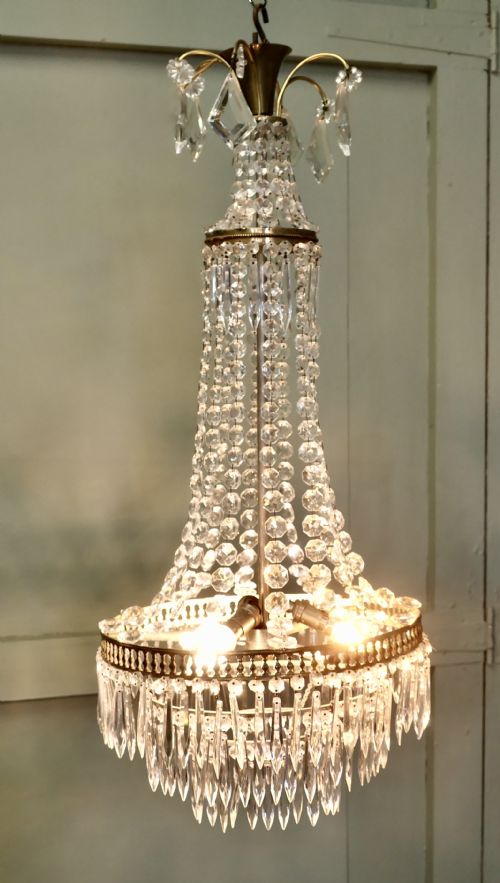
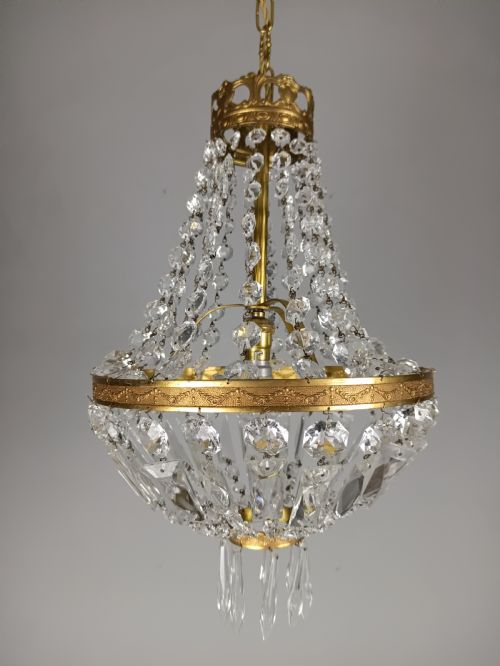


Empire Style Pendant Light
An empire style pendant light brings classical French grandeur to a ceiling, offering dramatic illumination through tiers of glass and metal.
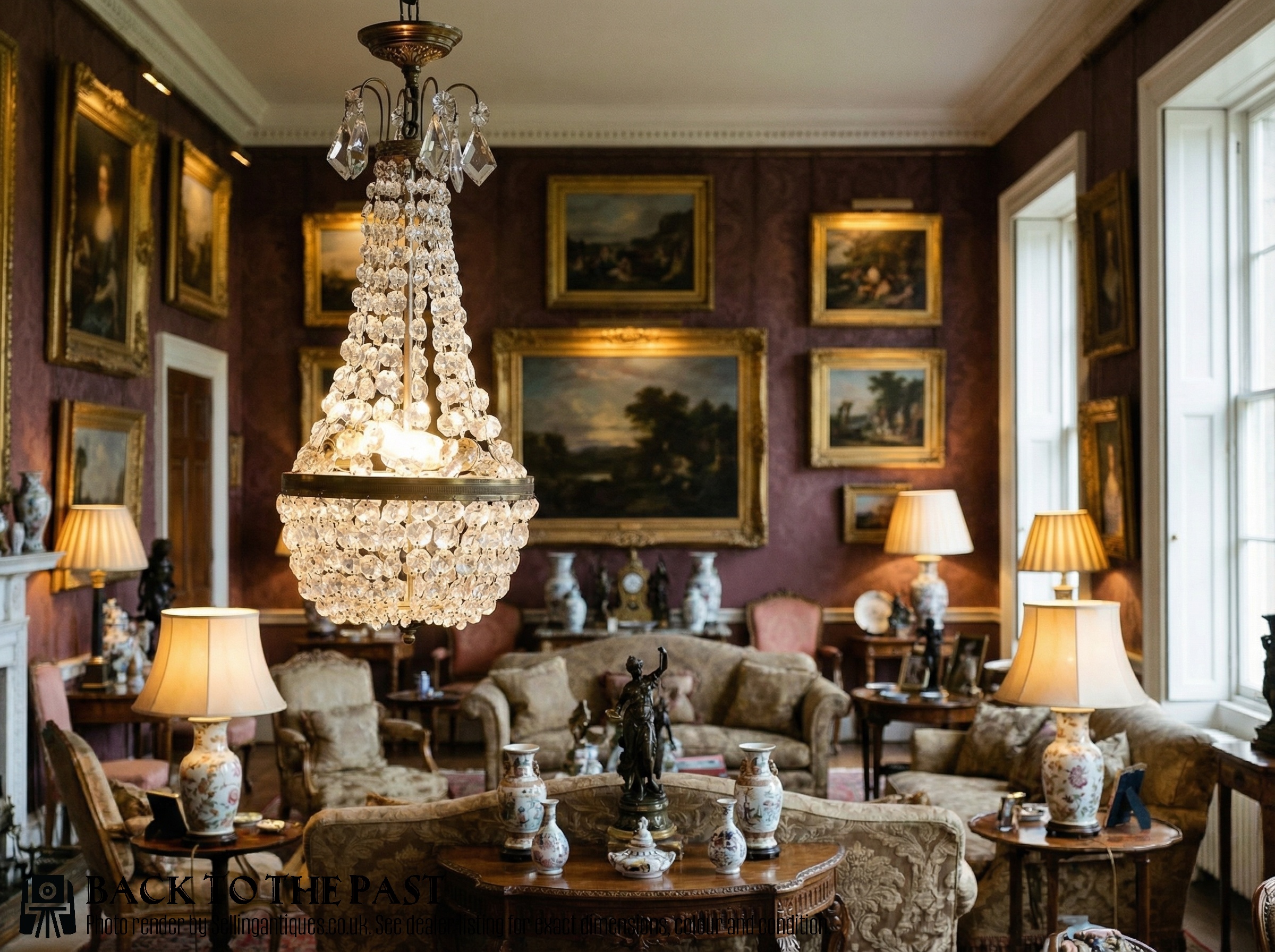
Empire Style Pendant Light
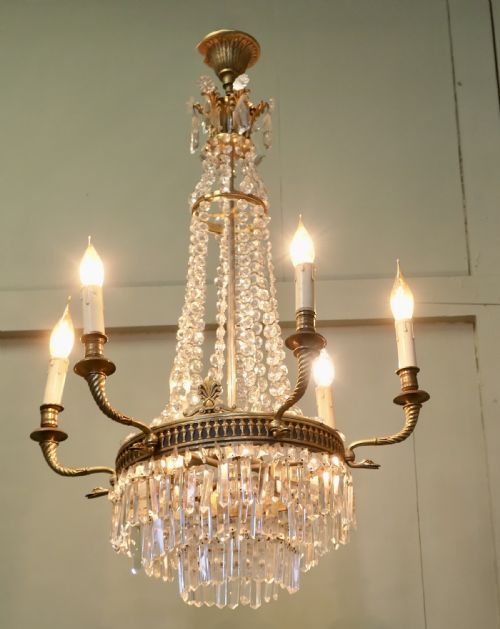
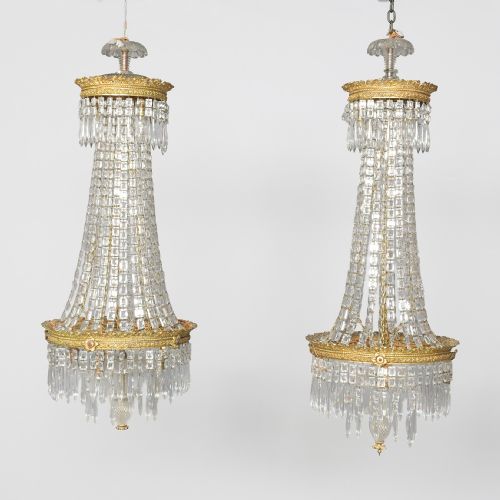
When you search for an empire style pendant light, you are looking at overhead ceiling fixtures rooted in neoclassical design and French Chateau aesthetics. These lights frequently manifest as multi-branch chandeliers, single-light baskets, and elaborate tent and waterfall configurations spanning from the eighteenth century into the twentieth century. The most common versions met on this page date from the late nineteenth century and the interwar decades of the early twentieth century.
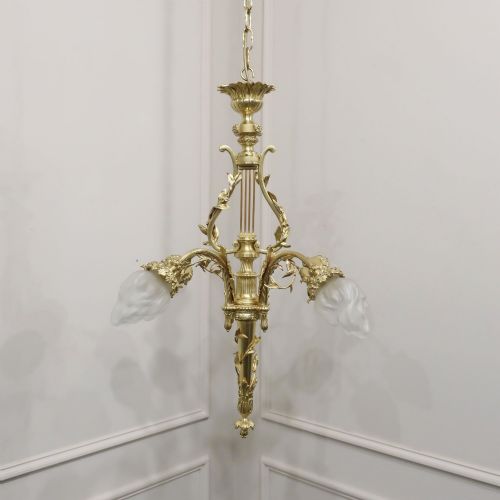
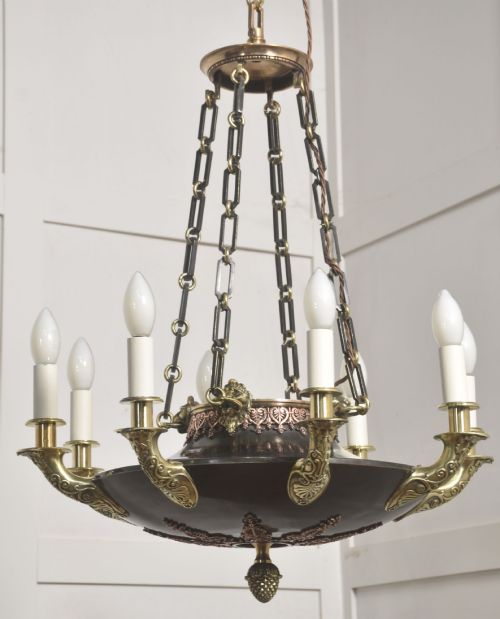
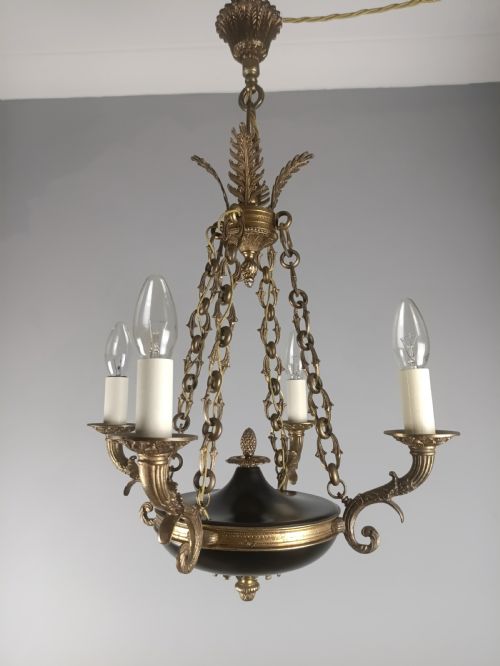
The forms draw heavily upon historical French motifs, incorporating classical shapes like lyres, rams heads, and urns within brass, bronze, and gilt metal frameworks. Pendant lights and ceiling fixtures in this tradition rely on vertical suspension, using chains or rods to drop the fixture to the desired height in a room. Buyers encounter both restrained single-light basket designs and massive multi-light fixtures carrying up to sixteen bulbs for substantial illumination.
What varies in quality
The refinement of the cast metalwork dictates the visual success of the piece, separating crisp, finely chased gilt bronze from softer, more generic brass castings. Heavier metal gauge ensures the structural integrity of the frame, particularly when supporting dense curtains of crystal drops.
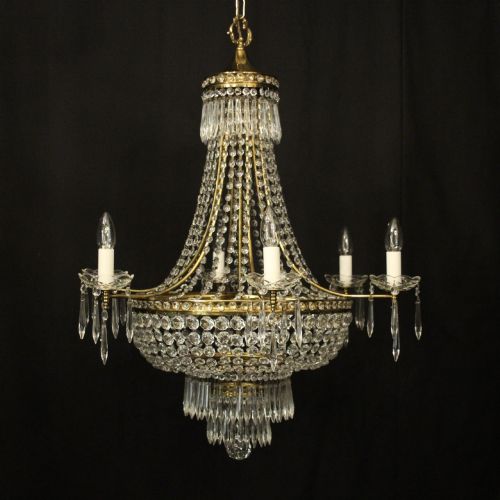
The clarity and cut of the glass prisms govern how light refracts through the fixture. Higher quality examples utilise brilliant cut glass and crystal that scatter light cleanly, whereas simpler or later revivals might employ pressed glass with less optical sharpness.
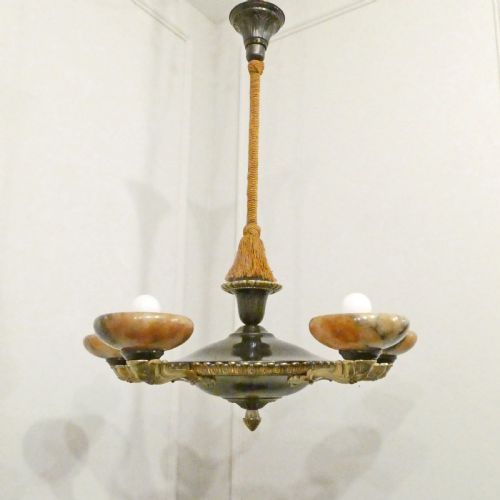
Listings feature pieces spanning from the eighteenth century through the nineteenth century and into twentieth-century revival periods including the nineteen-twenties and thirties.
The Empire Style Pendant Light Glossary
- Tent and waterfall
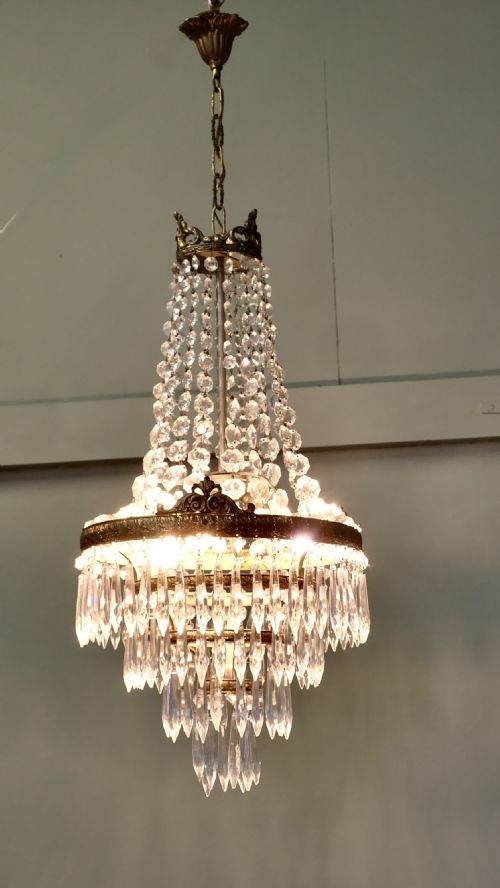
- A lighting configuration where strings of glass beads form an upper triangular tent shape that flows down into a cascading waterfall of crystal drops.
- Gilt bronze
- Metal cast in bronze and treated with a layer of gold leaf or mercury gilding to produce a rich, luminous surface finish.
- Basket chandelier
- A compact lighting form where glass drops enclose the lower portion of the fixture in a bowl or basket silhouette, often holding a single light source.
- Patinated bronze
- Bronze that has been chemically treated to age the surface, yielding dark brown or greenish tones rather than bright metallic lustre.
- Cut glass
- Glass that has been shaped and faceted on a wheel to enhance its brilliance and light-reflecting properties.
Empire Style Pendant Light: Frequently Asked Questions
How do I hang an empire style pendant light?
These fixtures suspend from the ceiling using a robust chain and ceiling canopy attached to the primary brass or bronze crown. Weight distribution requires secure anchoring into ceiling joists rather than plaster alone.
Professional installation is normally required to manage the electrical wiring safely through the central stem and ensure the hanging height suits the proportions of the room.
What rooms suit an empire style pendant light?
Dining rooms, high-ceilinged hallways, and principal reception rooms provide the vertical space and formal context these dramatic ceiling fixtures demand. Smaller single-light baskets function well in compact studies or bedrooms.
Consider the drop height relative to floor traffic, ensuring adequate clearance beneath the lowest tier of glass or metalwork.
How do I tell an original period piece from a revival?
Nineteenth-century examples and earlier eighteenth-century pieces display hand-finished casting marks, heavier gauge metals, and distinct patination on the bronze components. Revivals from the nineteen-twenties and thirties often integrate art deco sensibilities alongside classical motifs.
Examining the wiring channels, screw threads, and the method used to attach glass pins reveals the manufacturing era.
How should I clean the crystal on these fixtures?
Dust the glass elements regularly with a soft ostrich feather duster to prevent grime buildup from dulling the cut facets. For deeper cleaning, remove individual crystal drops and wash them in warm soapy water before drying thoroughly.
Avoid spraying cleaning fluids directly onto the metal frame, as moisture can damage gilt surfaces or older patination.