


Empire Style Furniture
Empire style furniture brings architectural grandeur and rich mahogany surfaces into domestic interiors through classical forms.
Empire Style Furniture
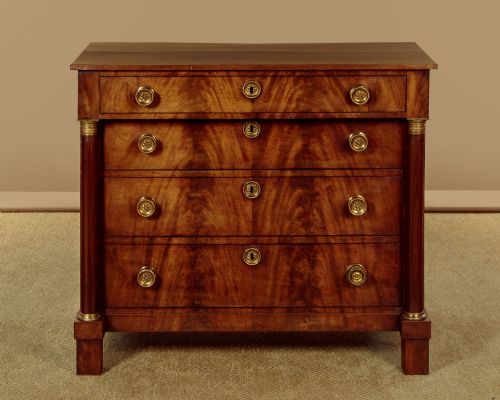
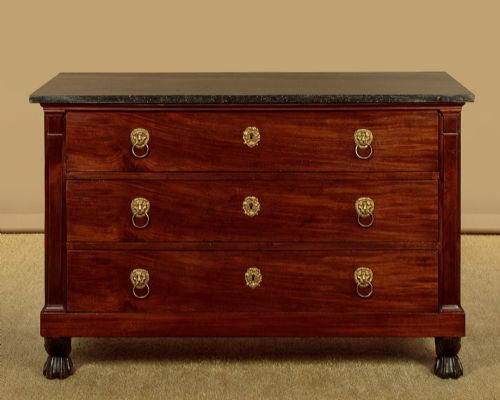
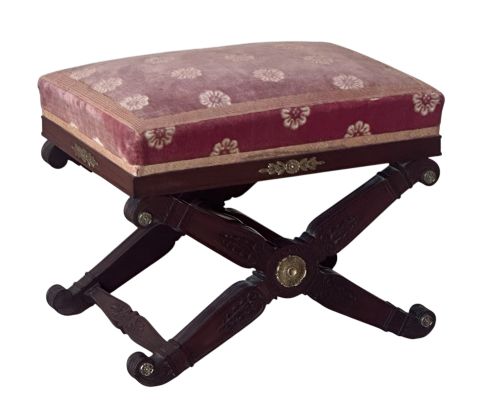
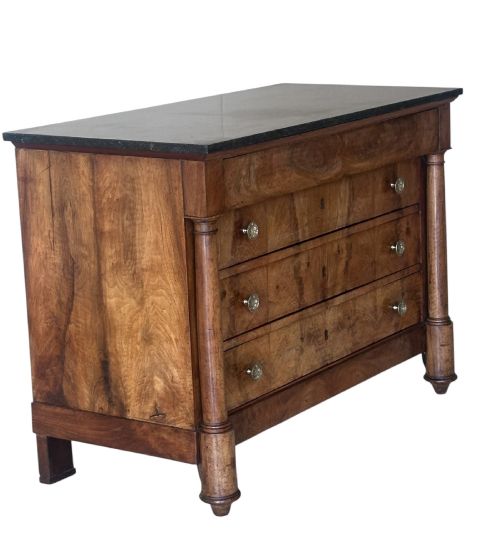
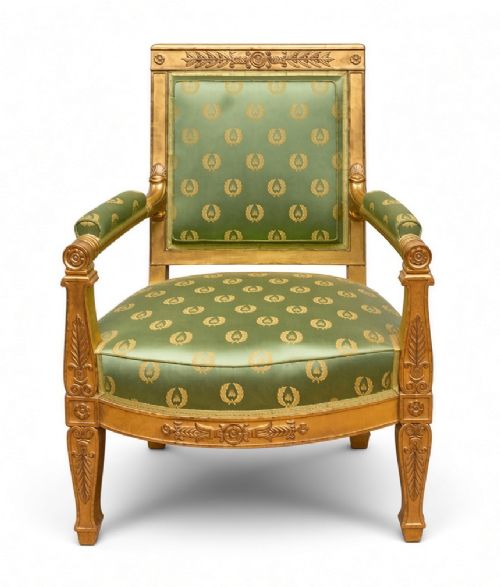
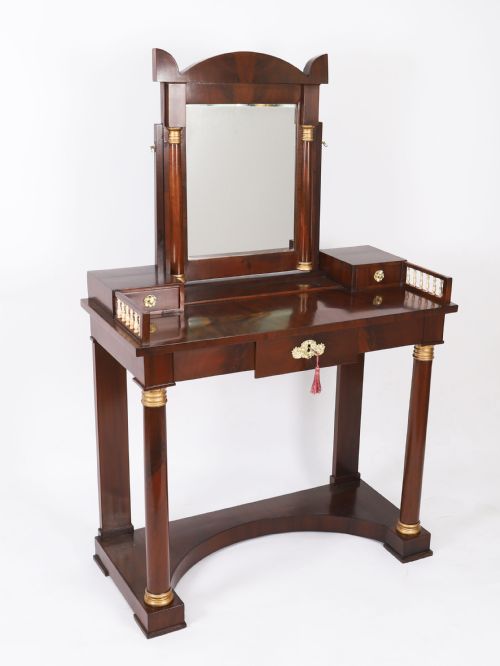
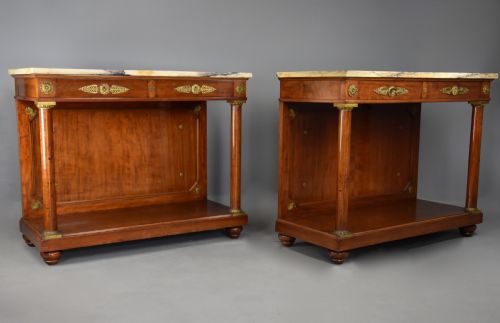
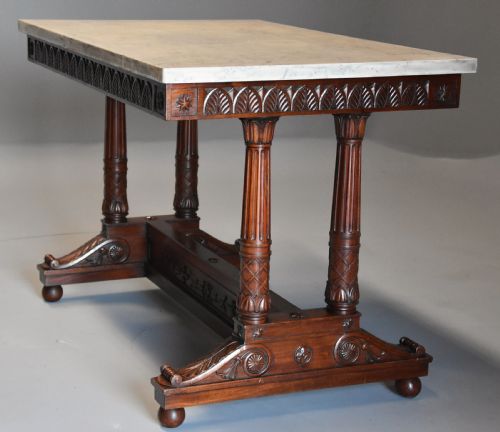
Empire style furniture encompasses grand seating, storage, and display pieces originating from the nineteenth century across French, Italian, Swedish, and Dutch workshops. Buyers encounter prominent forms such as mahogany commodes, marble-topped console tables, and structural armchairs reflecting classical antiquity.
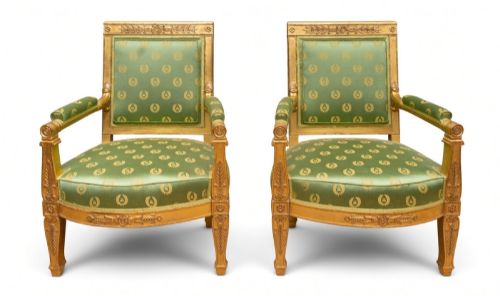
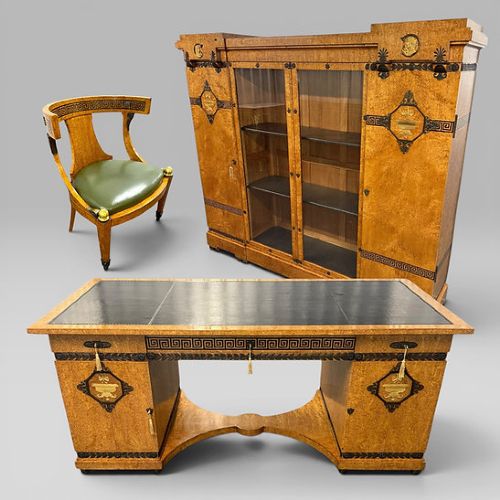
The selections span distinct regional interpretations, including Biedermeier birch pieces, Swedish neoclassical seating, and French Restauration creations. These works often integrate architectural columns, giltwood details, and dark timber veneers to establish a formal presence.
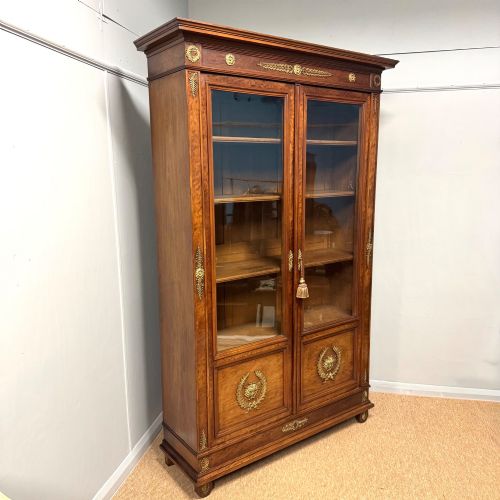
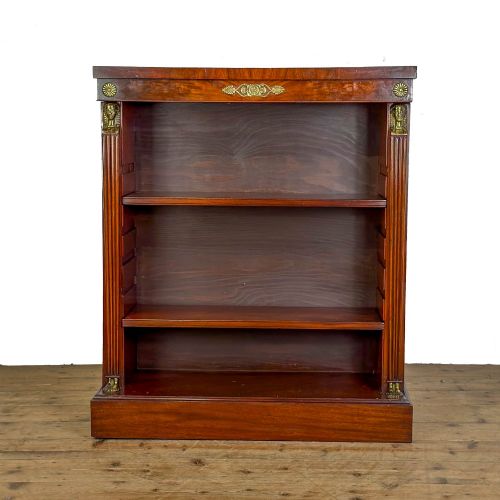
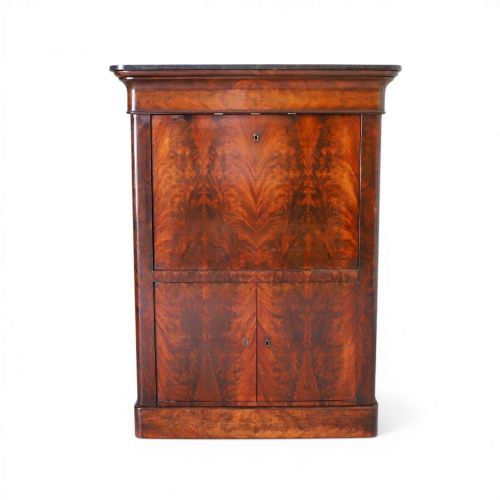
Commodes, centre tables, and bookcases dominate the available inventory, frequently pairing figured mahogany or walnut with contrasting mounts. Such pieces reveal the enduring influence of early nineteenth-century design trends adapted through subsequent decades.
Materials and Techniques
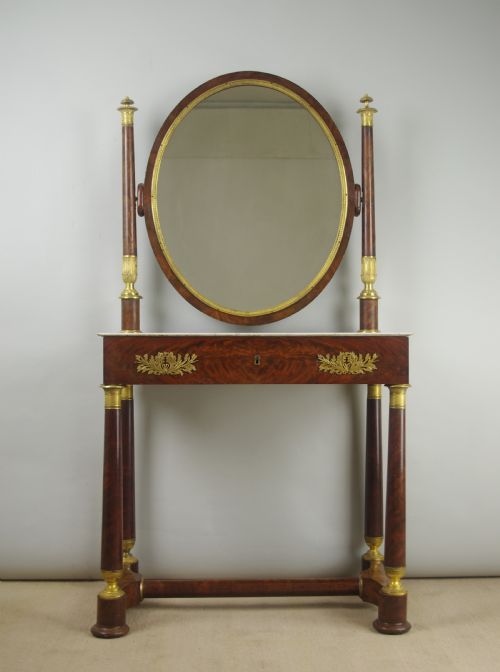
Cabinetmakers constructed these works primarily using solid timbers and decorative veneers like flame mahogany, walnut, burr elm, and Karelian birch over secondary woods. Surfaces frequently incorporate white marble tops and cast or chased ormolu mounts to accent the structural lines.
Craftsmen applied traditional joinery methods alongside parquetry and parcel gilding to achieve precise geometric patterns and gilded highlights. Ormolu elements were secured to mahogany and walnut frames to provide contrast against the dark timber.
Listings feature mahogany, birch, walnut, and burr elm alongside marble tops and cast ormolu mounts.
Craftsmanship and Proportion
Quality rests in the precision of the timber veneers, the crispness of the cast ormolu mounts, and the integrity of the structural joinery. Finer examples display carefully selected flame mahogany or burr elm grain aligned harmoniously across drawer fronts and tabletops.
The execution of carved details, such as swan motifs and parcel gilt accents, distinguishes standard production from exceptional pieces. Heavier proportions and simpler execution appear in regional adaptations, whereas master workshops achieved balanced neoclassical proportions.
Jacob-Desmalter·Mercier Frères·Krieger Paris·JACOB
The Empire Style Furniture Glossary
- Ormolu
- Gilded bronze used for decorative mounts on furniture. It provides bright metallic contrast against dark mahogany and walnut surfaces.
- Commode
- A low chest of drawers, often fitted with a marble top. These storage pieces form a central component of nineteenth-century bedroom and drawing-room furnishings.
- Guéridon
- A small round table supported by a central pillar or multiple legs. They frequently feature marble tops and intricate timber veneers.
- Fauteuil
- An open-armed upholstered armchair with exposed wooden framing. French examples from this period often display giltwood or carved mahogany structures.
- Parquetry
- Geometric wood-mosaic work used for decorative surface patterns. Craftsmen utilised contrasting timbers like fruitwood and mahogany to create detailed tabletops and borders.
Empire Style Furniture: Frequently Asked Questions
How do I identify French Empire furniture?
French Empire pieces are defined by heavy mahogany construction, classical architectural motifs, and prominent ormolu mounts depicting swans, columns, or military trophies. They typically date from the early nineteenth century and lean toward austere symmetry.
Makers often incorporated white marble tops on commodes and console tables to contrast with the dark timber. Examining the timber selection and the quality of the bronze mounts helps confirm the French origin.
Where were Biedermeier pieces made?
Biedermeier furniture originated in Central Europe, particularly German-speaking regions and Scandinavia, during the early nineteenth century. This aesthetic favoured clean lines and blonde timbers such as Karelian birch and cherry over heavy ornamentation.
These domestic pieces prioritized comfort and utility without abandoning classical restraint. Their understated elegance relies entirely on the natural grain of the wood rather than metallic mounts.
How do I care for marble-topped tables?
Marble tops require gentle cleaning with mild, pH-neutral soap and water to prevent the stone from absorbing stains. Avoid acidic substances like vinegar or citrus juice, which etch polished marble surfaces.
Using coasters and felt pads beneath objects protects both the stone and the timber frame from accidental damage. Regular dusting maintains the natural finish of the surrounding wood and ormolu mounts.
What distinguishes Swedish neoclassical pieces?
Swedish neoclassical and Empire furniture utilises lighter woods such as birch and elm, painted finishes, and parcel gilding to brighten domestic interiors. The forms remain rooted in classical antiquity but feel airier than their French counterparts.
Seating and tables often feature tapered legs and restrained carving rather than heavy bronze mounts. This regional style reflects Scandinavian adaptations of continental European design trends.