
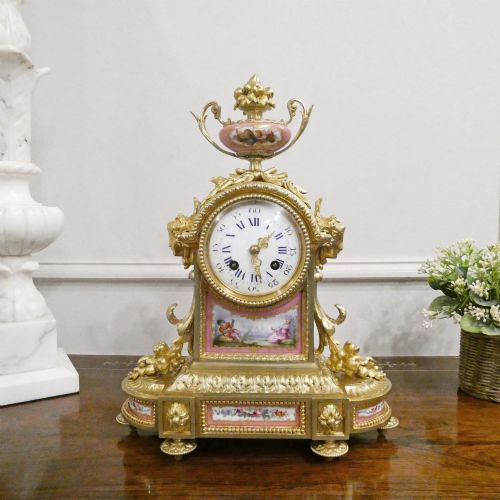
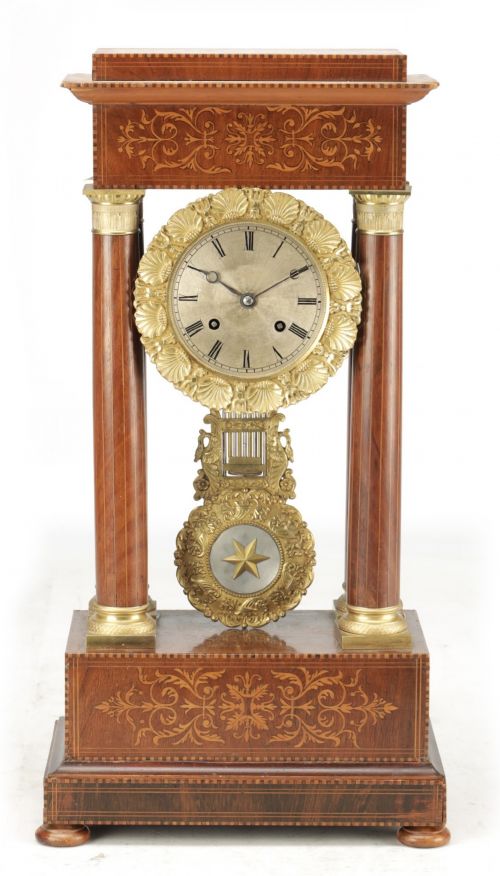
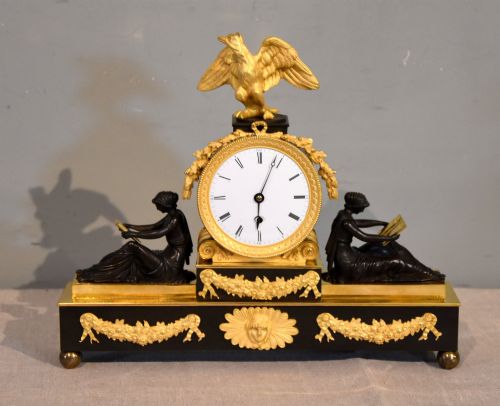
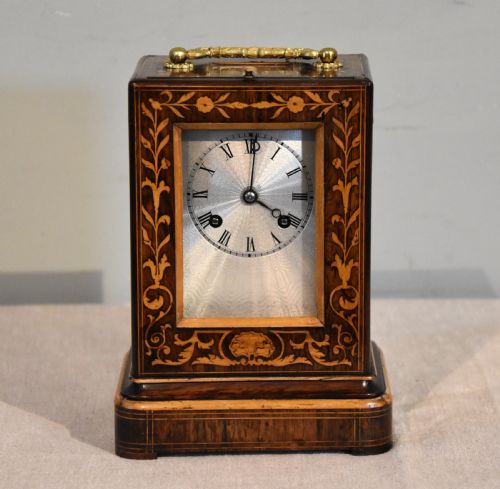
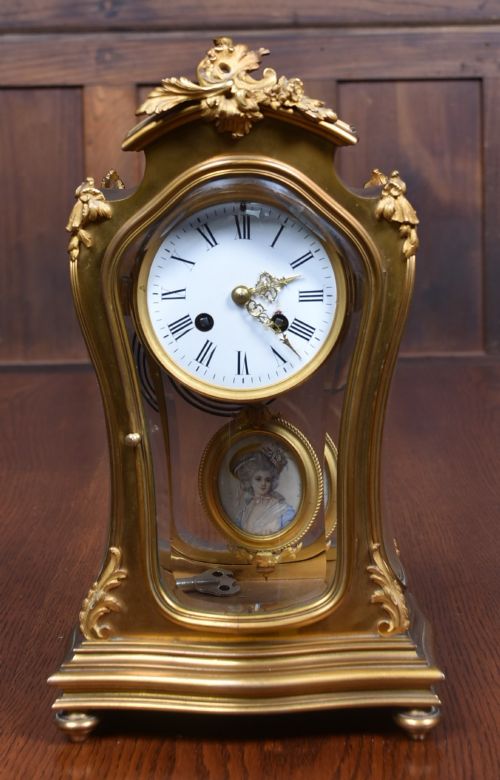


Empire Style Brass Clock
An empire style brass clock brings architectural dignity and precision mechanics into a room, combining neoclassical bronze work with reliable movement.
Empire Style Brass Clock
When you search for an empire style brass clock, you encounter mantel clocks, clock garnitures, and portico clocks that date from the nineteenth century. These pieces reflect French Empire, Regency, and Louis XVI revival styles, often featuring figural motifs like lions, explorers, and historical figures.
The objects listed on this page span the nineteenth century, including Victorian interpretations and specific decades such as eighteen fifty, eighteen sixty, eighteen seventy, eighteen eighty, and eighteen ninety. The dominant forms are mantel clocks housed in architectural cases of marble, onyx, and bronze.
English makers also contributed to this tradition, producing Regency period brass and gilt mantel timepieces with chain fusee movements alongside French works. Buyers find everything from simple brass timepieces to large garniture sets complete with side ornaments under glass domes.
Materials and Construction
Casting and fire gilding form the foundation of these pieces, utilising ormolu, gilt bronze, and patinated bronze to create sharp architectural details and figures. Artisans mounted these metal cases upon bases of white marble, rouge marble, or black onyx.
Dials frequently incorporate white enamel with painted Roman numerals, protected beneath glass plates or enclosed within portico structures featuring cut crystal columns. Movements range from eight day striking mechanisms to single chain fusee systems produced by notable makers.
Listings feature nineteenth-century pieces spanning the Regency, Victorian, and French Empire periods, constructed from gilt bronze, marble, and ormolu.
Assessing Craftsmanship
The crispness of the bronze chasing separates standard production from superior work, as finely chiselled acanthus leaves and sharply rendered figural elements retain deep relief and clean edges. Heavier gauge metal and substantial marble or onyx plinths indicate higher ambition in the workshop.
Movement quality is marked by signed backplates from established makers such as Japy Freres or Vincenti, alongside the inclusion of sophisticated escapements and clean, original gear trains that maintain reliable time.
Japy Freres·Vincenti of Paris·James Ritchie and Son·FB Adams London·Henry Berkeley Square London
The Empire Style Brass Clock Glossary
- Ormolu
- A technique of applying finely ground high-carat gold to a bronze object using a mercury amalgam. This process creates a rich, durable golden surface characteristic of nineteenth-century decorative arts.
- Portico clock
- A mantel clock designed with architectural columns supporting a central housing for the movement. This neoclassical form often incorporates glass or polished wood.
- Clock garniture
- A set comprising a central clock flanked by matching decorative objects such as urns or candelabra. These sets were designed to sit symmetrically on a mantelpiece.
- Silk suspension
- An early method of hanging the pendulum from a fine loop of silk thread behind the dial. This fragile mechanism appears in earlier nineteenth-century French clocks.
- Fusee
- A conical pulley used in mechanical clocks to maintain even tension on the gear train as the mainspring unwinds. English makers frequently incorporated this device into high-grade movements.
Empire Style Brass Clock: Frequently Asked Questions
Where should I place an empire style brass clock?
These clocks suit heavy wooden mantelpieces, sideboards, or dedicated console tables where their architectural presence can anchor the room. Ensure the surface is completely level to keep the pendulum swinging evenly.
Keep them away from direct sunlight and damp walls to protect the mercury gilding and enamel dials from environmental degradation.
How do I distinguish French and English movements?
French movements of this period typically utilise rack striking mechanisms mounted on circular or rectangular brass plates, often stamped with maker medals. English movements frequently feature chain fusee systems with substantial pillar construction.
Examining the backplate usually reveals signature engravings or workshop stamps that identify the origin of the mechanical components.
What is a clock garniture set?
A garniture set includes a central mantel clock accompanied by two matching side pieces, such as urns or decorative vases. These matching items were designed to create a balanced display across a fireplace opening.
Materials used for the side pieces match the central clock, combining marble, bronze, and ormolu into a unified decorative scheme.