





Empire Period Mirror
These empire period mirror pieces bring bold neoclassical lines and rich mahogany or giltwood surfaces into a room.
Empire Period Mirror
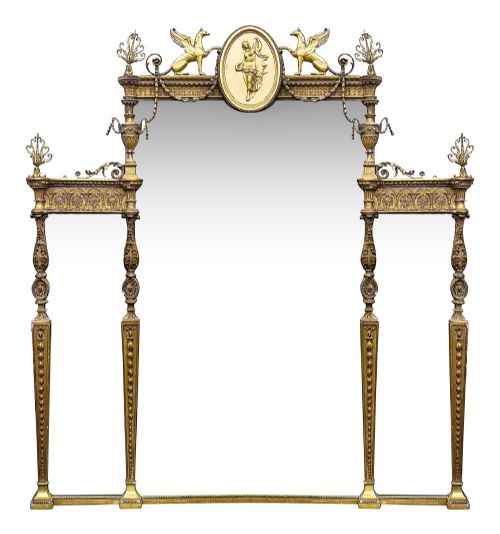
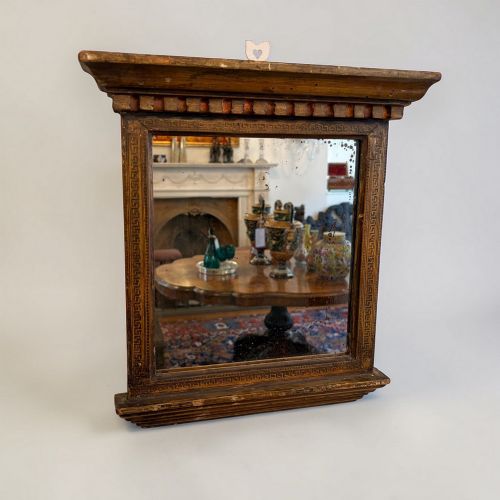
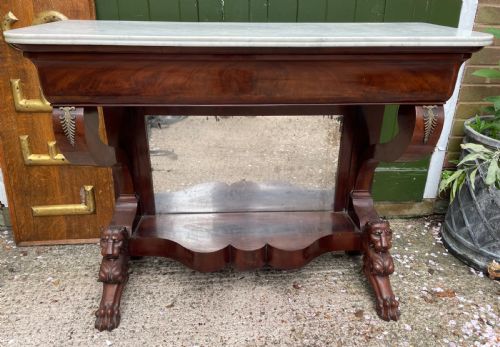
When you search for empire period mirror items, you encounter furniture and wall hangings shaped by nineteenth century neoclassical design. The selection includes wall mirrors, pier mirrors, and overmantel mirrors alongside smaller table mirrors and dressing tables.
French empire and regency influences dominate the pieces on this page, often pairing dark woods with striking metallic mounts. You will also find circular convex wall mirrors topped with eagle mounts and large triple plate overmantel mirrors intended for prominent domestic placement.
How they were made
Cabinetmakers built these objects using solid flame mahogany and ebonised wood, frequently applying polished surfaces to highlight the natural grain. Structural frames also rely on carved gesso and giltwood to achieve a bright, reflective finish.
Ornate decorative elements incorporate cast bronze and ormolu mounts, showcasing classical figures such as Bacchus and cherubs in relief panels. Glass plates are fitted securely into timber frames, sometimes accompanied by adjustable pedestals and marble elements.
Empire Period Mirror Retail Price Guide 2026
Typical asking prices for empire period mirror among the pieces listed under this phrase on Sellingantiques today, from the lower quarter to the upper quarter. They describe what is for sale here now, not the wider market.
The listings on this site span the nineteenth century, specifically featuring pieces from around eighteen ten up to eighteen fifty.
What varies in quality
The refinement of the cast bronze mounts and the crispness of the giltwood or gesso carving distinguish finer examples from simpler workshops. Details like decorative relief panels with clean edges demonstrate superior craftsmanship.
The choice and preservation of primary timbers also affect the overall character, with well-figured flame mahogany commanding particular attention. Integrity of the original mirror glass and structural stability of the frame complete the assessment.
The Empire Period Mirror Glossary
- Ormolu
- Gilded bronze used for decorative mounts on furniture and mirrors. This technique gives metallic elements a rich, golden appearance.
- Giltwood
- Timber that has been coated with thin gold leaf or gilt powder. It provides a luminous surface popular in neoclassical design.
- Convex mirror
- A circular looking glass with a curved surface that reflects a wide field of view. These pieces frequently feature eagle surmounts.
- Pier mirror
- A tall looking glass designed to hang on the wall space between windows. They often complement console tables positioned directly beneath them.
Empire Period Mirror: Frequently Asked Questions
Where should an empire period mirror go?
These mirrors suit principal living spaces or hallways where their reflective glass and architectural frames can catch the light. Overmantel mirrors sit naturally above a fireplace, while pier mirrors function well between windows.
Smaller table mirrors and dressing tables serve effectively on top of appropriate nineteenth century surfaces in a bedroom or dressing room.
How do I care for giltwood and ormolu?
Giltwood surfaces require gentle dusting with a soft, dry brush to protect the delicate gold leaf finish from abrasion. Avoid using chemical cleaners or excess moisture on these antique frames.
Bronze and ormolu mounts similarly benefit from careful, dry maintenance to preserve their historic patination over the centuries.
What distinguishes french empire from regency mirrors?
French empire pieces often feature bold mahogany construction, architectural symmetry, and classical bronze or ormolu mounts inspired by antiquity. They lean heavily into military and imperial motifs.
Regency examples from Britain share similar neoclassical roots but frequently incorporate giltwood frames, convex glass with eagle surmounts, and ebonised details.
Are these mirrors heavy to hang?
Many of these pieces possess substantial weight due to dense timbers, plaster gesso, and thick glass plates. Proper wall fixings into solid masonry or secure stud work are essential for safe installation.
Larger overmantel and pier mirrors demand professional wall mounting to support their size and ensure stability.