


Empire Pedestal Lamp
An empire pedestal lamp brings monumental classical presence to an interior through stately columns, rich timbers and cast bronzes.
Empire Pedestal Lamp
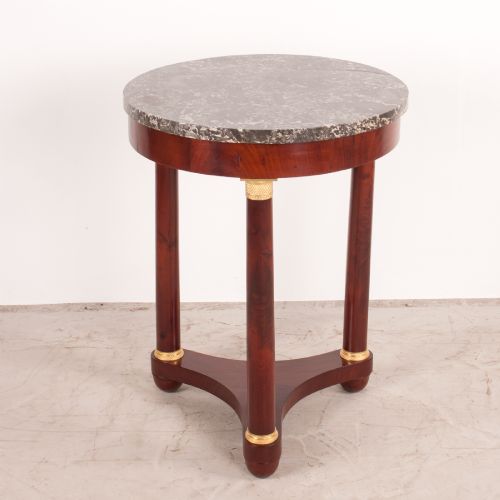
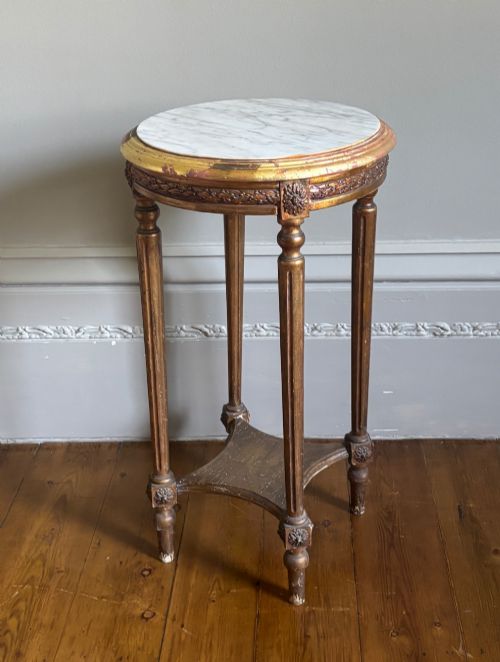
When you search for empire pedestal lamp, you enter a domain of classical proportions, architectural columns, and sculptural supports rooted in nineteenth-century design. The pieces meeting this search on the floor take the form of table lamps, floor lamps, and occasional or gueridon tables that often served to hold illumination.
The aesthetic draws heavily on French Empire, Regency, and Neoclassical vocabularies, featuring dark hardwoods, marble tops, and classical motifs. You are most likely to encounter nineteenth-century French and English works alongside later revivals from the early twentieth century.
Forms range from slender classical columns to tripod gueridons and figural bronze torchères. These objects bridge furniture and lighting, serving as functional pedestals or direct sources of classical light.
Materials and construction methods
Cabinetmakers utilised dense timbers such as mahogany and burr elm, often paired with cool white or veined marble tops. Structural stability in tables and column bases relied on precise joinery and heavy hardwood construction.
Metal components involved cast bronze, brass, ormolu, and gold leaf applied to carved wood or metal surfaces. Patination on bronzes and gilding on wood create the characteristic dual tones typical of the period.
Fabric shades and hand-finished mounts complete the construction, bringing together metalwork, stonemasonry, and woodworking traditions.
Current listings demonstrate a strong presence of nineteenth-century French gueridons featuring marble tops and mahogany construction alongside classical bronze columns.
Distinctions in quality
The distinction between standard production and exceptional work rests on the crispness of cast bronze mounts and the depth of hand-carving on wood or gilt surfaces. Superior examples display sharply defined classical details such as rams' heads or acanthus leaves rather than soft, muddy casting.
Material selection dictates the upper tier, marked by high-grade statuary marble, substantial ormolu accents, and well-figured mahogany or burr elm veneers. Lesser pieces rely on simpler turned timber with minimal ornamentation.
Proportion and architectural balance separate masterworks from ordinary items. The most successful pieces maintain correct classical scaling whether executed as a towering floor lamp or a compact occasional table.
François-Christophe-Armand Toussaint·Messenger
The Empire Pedestal Lamp Glossary
- Gueridon
- A small round table on a central pillar or tripod base, originating in France during the seventeenth century. Many examples function effectively as lamp or occasional tables.
- Ormolu
- Gilded bronze produced by applying a mercury and gold amalgam to cast bronze. This technique creates a rich golden finish characteristic of Empire metalwork.
- Torchere
- A tall ornamental stand or candlestick designed to carry a light source. In nineteenth-century examples, these often take figural bronze forms.
- Regency
- An English design style spanning the early nineteenth century that shares classical restraint and Greco-Roman inspiration with the French Empire style.
- Canework
- Woven cane material utilised for shelf tiers or panels on tables and cabinets. It lightened the visual weight of dense mahogany furniture.
Empire Pedestal Lamp: Frequently Asked Questions
What defines an empire pedestal lamp?
An empire pedestal lamp embodies the classical revival styles of the early nineteenth century, drawing on Roman and Greek architectural vocabulary. These pieces utilise columnar supports, heavy patinated bronzes, and rich timbers like mahogany.
They stand apart through their monumental presence and formal symmetry, reflecting the imperial tastes of the period.
How were these pedestal lamps used historically?
Historically, such pieces illuminated grand drawing rooms, libraries, and parlours, often placed upon central tables or pedestals to cast light over reading areas. Their sturdy bases allowed them to support heavy oil or candle configurations safely.
Over time, many were electrified for modern domestic illumination while retaining their sculptural function.
How do I distinguish French Empire from Regency styles?
French Empire design tends toward heavier, more ostentatious displays of ormolu, martial motifs, and rich giltwood, reflecting continental court tastes. Regency pieces often exhibit a slightly more restrained English interpretation of classical archetypes.
Both styles share a devotion to columns, patinated bronze, and ancient architectural references.
How do I style a gueridon lamp table today?
A gueridon or lamp table works effectively beside seating arrangements or as a freestanding centrepiece in a hallway. The marble top provides a durable surface for lighting while introducing cool textural contrast to timber floors.
Pair the piece with neutral surroundings to let the classical mahogany and bronze details command attention.