





Empire Ormolu Cherub
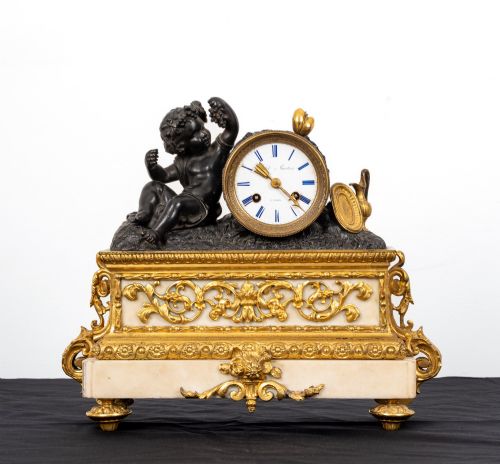
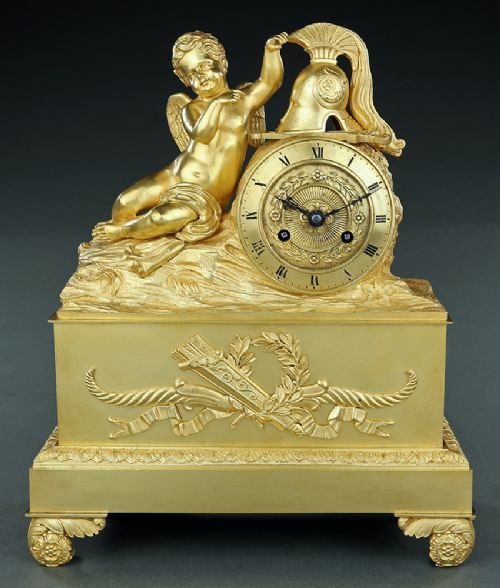
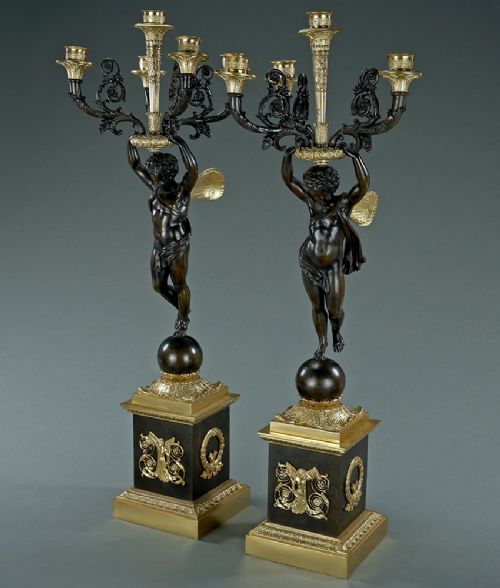
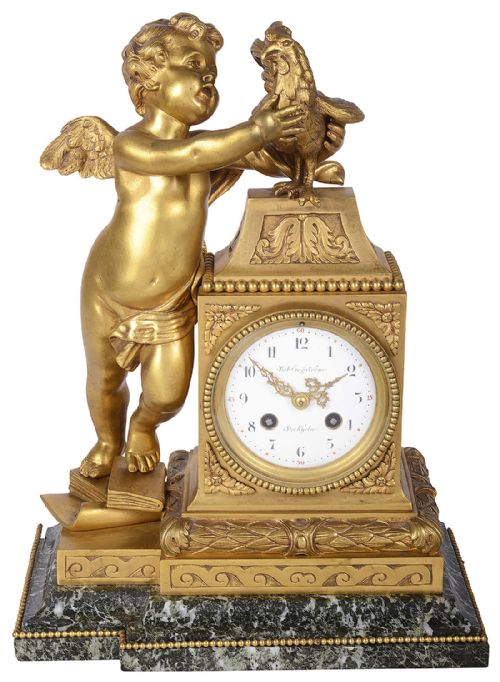
Empire ormolu cherub pieces combine neoclassical French bronze work and marble bases to bring sculptural figures into functional mantel clocks, lamps and candelabra.
Empire Ormolu Cherub
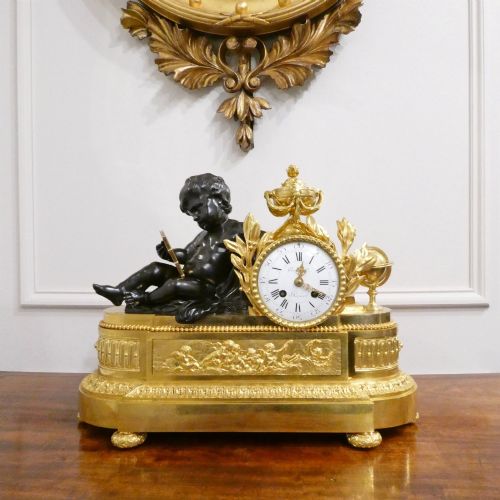
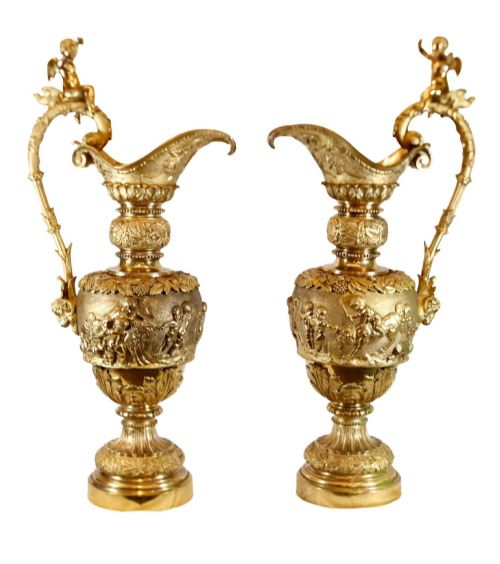
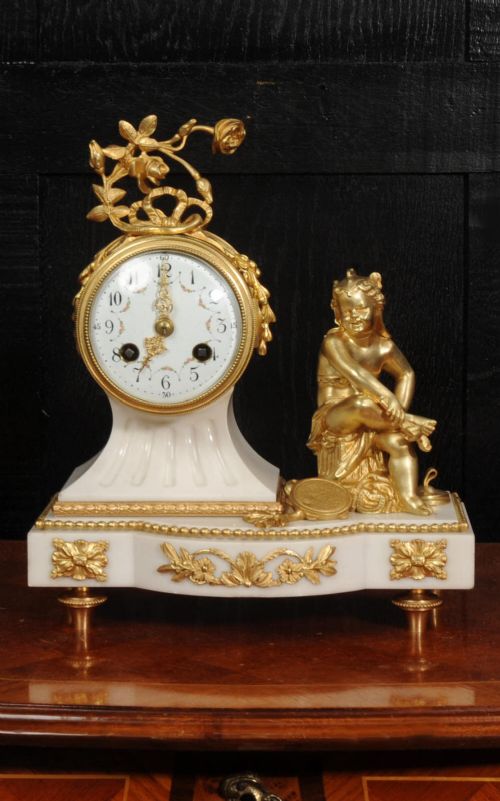
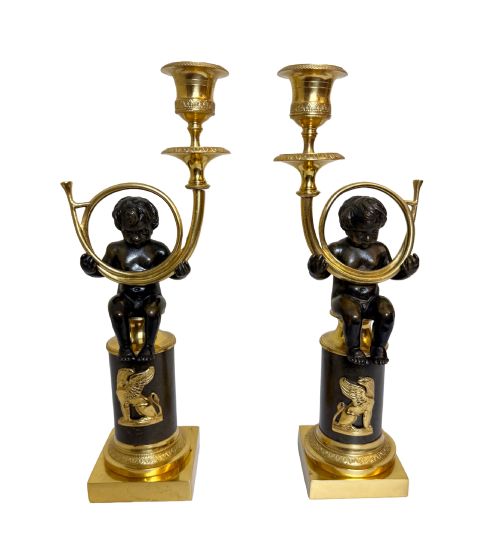
When searching for empire ormolu cherub items, buyers encounter decorative household objects fashioned in France during the nineteenth century, including the Regency and Victorian eras. These items typically take the form of mantel clocks, candelabra, table lamps, candlesticks and garniture sets featuring winged putti or cherubic figures.
The most common versions met on this page are figural mantel clocks and matched pairs of candelabra made from cast metals paired with contrasting marble bases. They draw upon French Empire, Louis XVI and Rococo Revival design vocabularies, often incorporating mythological motifs alongside the central cherub figures.
How They Were Made
The construction of these pieces relies heavily on metal casting, combining ormolu and patinated bronze to create depth and textural contrast. Ormolu, or gilded bronze, provides the bright, reflective gold-coloured highlights, whilst patinated bronze offers a darker, matte finish for the bodies of figures or background elements.
White marble, coloured marble and occasionally porphyry serve as substantial plinths and bases for clocks and candelabra, anchored by cast bronze feet and mounts. Enamel dials, glass bezels and porcelain plaques integrate into the clock movements and lamps produced by period workshops.
Empire Ormolu Cherub Retail Price Guide 2026
Typical asking prices for empire ormolu cherub among the pieces listed under this phrase on Sellingantiques today, from the lower quarter to the upper quarter. They describe what is for sale here now, not the wider market.
Listings feature items from the 1850s to the 1910s, combining gilt bronze, patinated bronze and marble.
What Varies in Quality
The integration of materials also defines the hierarchy, where solid marble plinths, substantial bronze weights and fully signed clock movements indicate superior manufacture. The harmony between the patinated bronze figures and the surrounding ormolu mounts determines the visual success of the composition.
Japy Freres·Siffel and Cartier·Christofle Paris·Henry Berkeley Square London
The Empire Ormolu Cherub Glossary
- Ormolu
- A technique of applying finely ground high-carat gold amalgam to a bronze object, followed by mercury heating to leave a rich golden finish. This surface coating provides the distinctive bright lustre seen on nineteenth-century French clock mounts and candelabra.
- Putto
- A plump, naked child figure, frequently winged, used extensively in classical and revival decorative arts. In these pieces, putti act as playful supports for clock faces or hold candle nozzles.
- Garniture
- A set of matching ornamental objects designed to be displayed together on a mantelpiece, usually comprising a central clock flanked by two matching candelabra or vases. These matched groups create a balanced decorative scheme.
- Patinated Bronze
- Bronze treated with chemical solutions to produce a dark brown, black or greenish surface coloration. This dark finish creates visual contrast against the bright gilt ormolu details.
- Porphyry
- An extremely hard igneous rock containing large crystals, prized for its deep reddish-purple colour and speckled texture. It appears on high-status nineteenth-century bases and pedestals.
Empire Ormolu Cherub: Frequently Asked Questions
How do I clean ormolu cherub clocks?
Dust these items gently with a dry, soft brush to prevent accumulation in the recesses of the cast bronze. Avoid chemical cleaners or abrasive cloths that can strip the delicate gilt surface.
For the marble components, use a damp cloth followed immediately by a dry one to remove surface dirt. Keep moisture away from the metal mounts and historic clock movements at all times.
What periods do these pieces date from?
The objects on this page originate predominantly from the nineteenth century, spanning the Regency, Victorian and Second Empire eras. Stylistic revivals of Louis XVI and French Empire designs remained popular throughout this period.
Exact production dates often align with the mid to late nineteenth century, reflecting the peak of French decorative metal manufacturing and clockmaking.
How do I tell clock movements apart?
Nineteenth-century French clocks frequently house quality brass movements produced by established volume makers like Japy Freres. These movements often feature eight-day striking capabilities and delicate escapements.
Signatures or numbers stamped onto the backplate help identify the movement maker and confirm the period. Winding keys and pendulum suspensions should match the original mechanical specifications.
Where were these decorative items displayed?
Mantel clocks and paired candelabra traditionally occupied prominent positions on drawing room mantelpieces above fireplaces. Garniture sets created a symmetrical focal point for formal nineteenth-century interiors.
Table lamps, ewers and wall sconces provided secondary pools of light and decorative accentuation in libraries, boudoirs and entrance halls.