


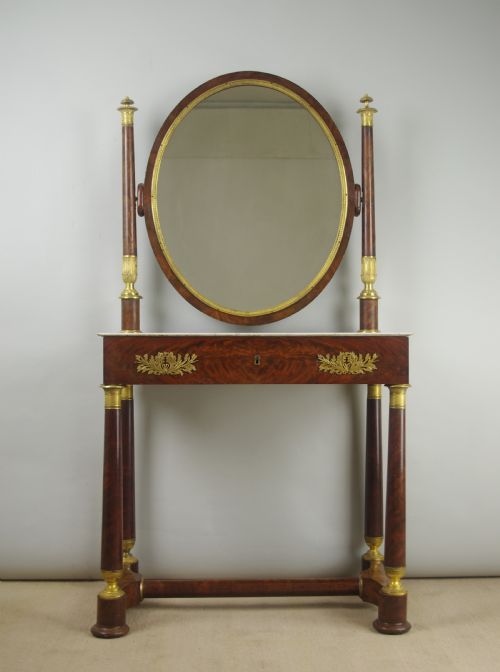
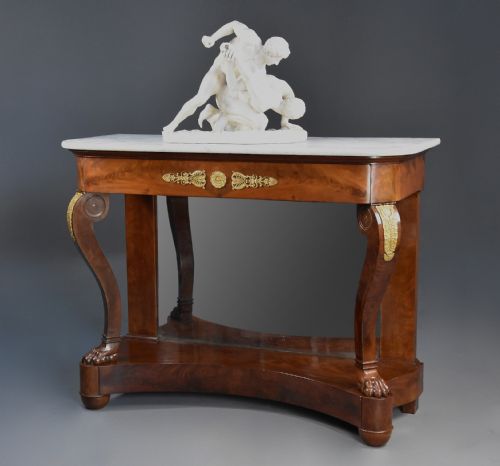
Empire Marble Table
An empire marble table brings classical proportions, heavy timber, and cold stone together for a grand centrepiece.
Empire Marble Table
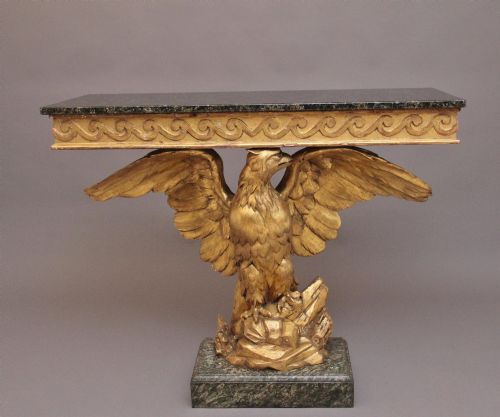
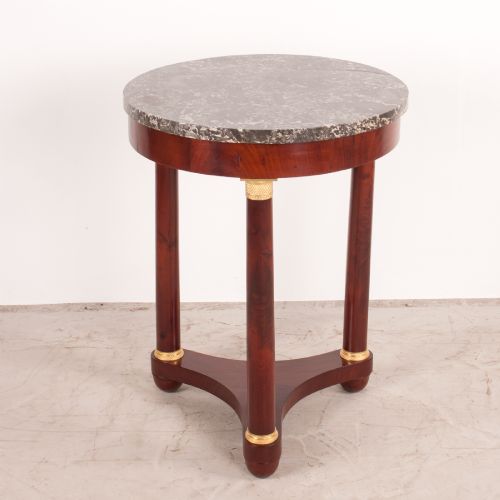
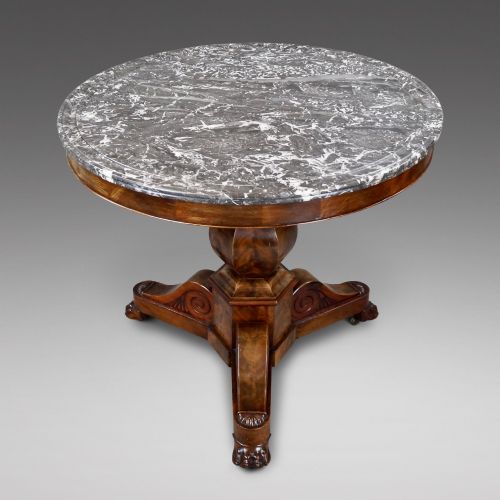
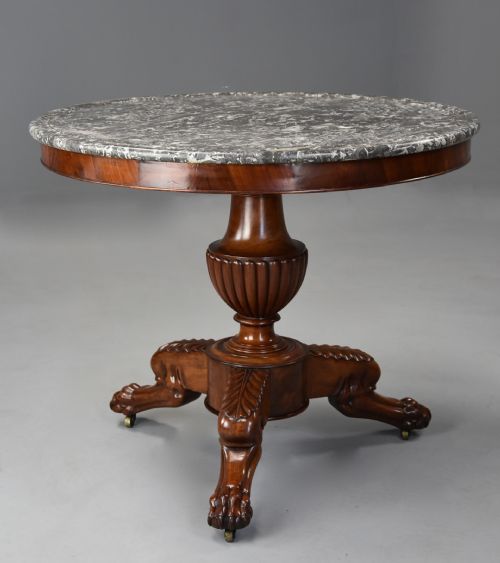
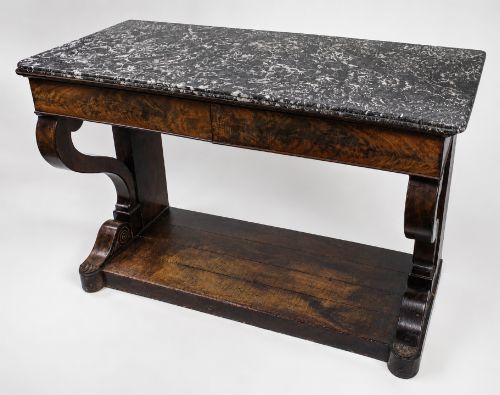
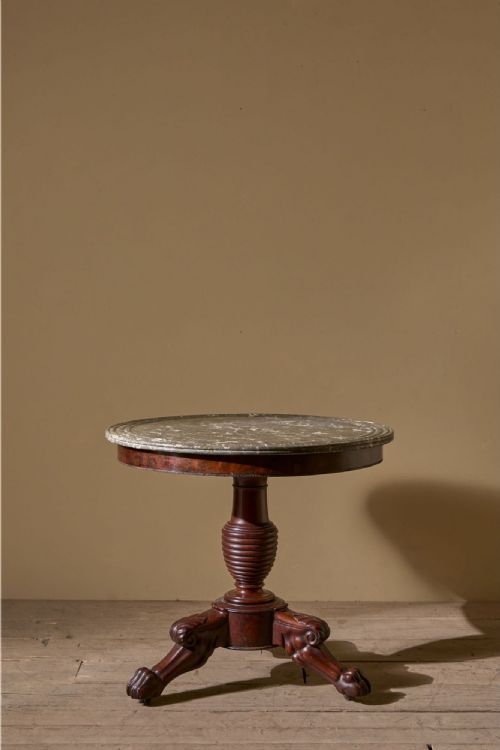
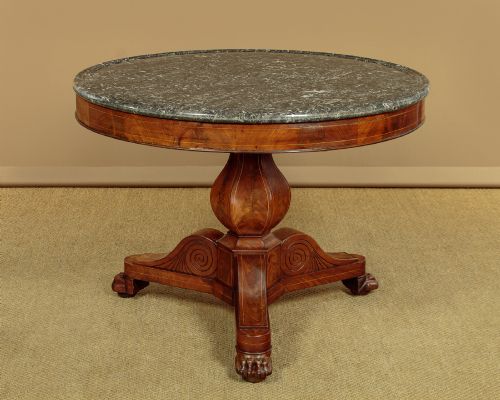
When you search for an empire marble table, you are looking at heavy timber frames topped with veined or polished stone, most frequently seen as round gueridon centre tables or rectangular wall-mounting console tables.
The pieces on this page span the nineteenth century and revival periods, originating largely from French and Italian workshops adhering to neoclassical and empire design canons.
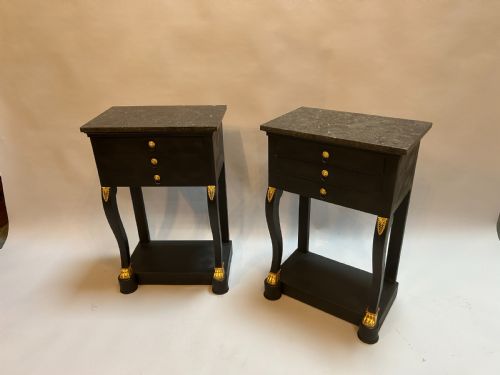
Beyond standard centre tables, the selection includes occasional, side, bedside, and coffee table formats, all united by heavy stone surfaces and architectural timber supports.
How they were made
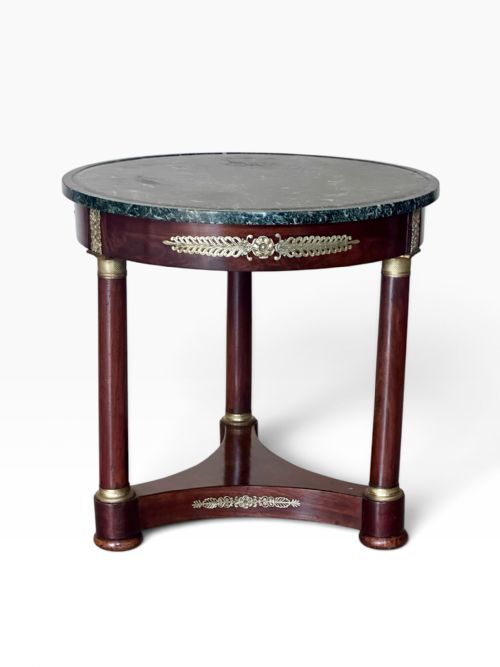
Cabinetmakers constructed these frames using dense hardwoods like mahogany, walnut, satinwood, and burr elm, often building round gueridon pillars upon tripartite or circular plinth bases.
Decoration relied heavily on cast brass and ormolu mounts fixed along friezes, table collars, and support columns, while marble slabs were cut thick and polished smooth to rest directly upon the timber framing.
Listings feature nineteenth-century periods alongside revival styles, constructed primarily from mahogany, marble, ormolu, and giltwood in gueridon and console formats.
What varies in quality
Quality reveals itself in the crispness of the cast bronze or ormolu mounts and the depth of the timber grain, where master workshops used flame mahogany and fine giltwork rather than plain brass and secondary veneers.
The integration of the marble top also separates standard production from exceptional pieces; superior tables feature heavy, finely figured marble slabs that fit precisely into recessed mahogany or giltwood rims.
Krieger Paris·Jacob·Siffel and Cartier·Reiche
The Empire Marble Table Glossary
- Gueridon
- A small French round table, typically supported by a single central column resting on a triangular or circular base. These tables frequently feature heavy marble tops and bronze mounts.
- Ormolu
- Gilt bronze, created by applying a mercury and gold amalgam to cast bronze. It provides a bright, durable metallic finish found on mounts and decorative fixtures.
- Console table
- A table designed to stand flat against a wall, often secured with brackets. They frequently display elaborate carved timber, marble tops, and mirror backs.
- Neoclassical
- A style spanning the late eighteenth and nineteenth centuries that revived classical Greek and Roman motifs. It prioritises symmetry, straight lines, and classical columns.
- Plinth
- The heavy flat base supporting the central column of a gueridon or console table. It provides structural stability for the weighted marble top above.
Empire Marble Table: Frequently Asked Questions
What is an empire marble table?
An empire marble table is a heavy nineteenth-century furniture piece featuring a polished stone top supported by mahogany, walnut, or giltwood frames.
These designs draw heavily on French neoclassical styles, utilising architectural timber columns and cast bronze mounts.
How do I use a gueridon table?
A gueridon table works best as a freestanding centrepiece in a hallway or principal room, where people can walk around it completely.
The sturdy marble surface also suits use as a lamp table or occasional display stand.
Where did empire tables originate?
Most pieces originate from nineteenth-century French and Italian workshops following neoclassical design trends.
Parisian cabinetmakers drove much of this production, supplying grand console tables and round gueridons across Europe.
How do I style a console table?
A console table stands flat against a wall, making it ideal for entryways or reception rooms beneath a mirror.
Its shallow depth allows it to hold lamps or decorative objects without obstructing pathways.