
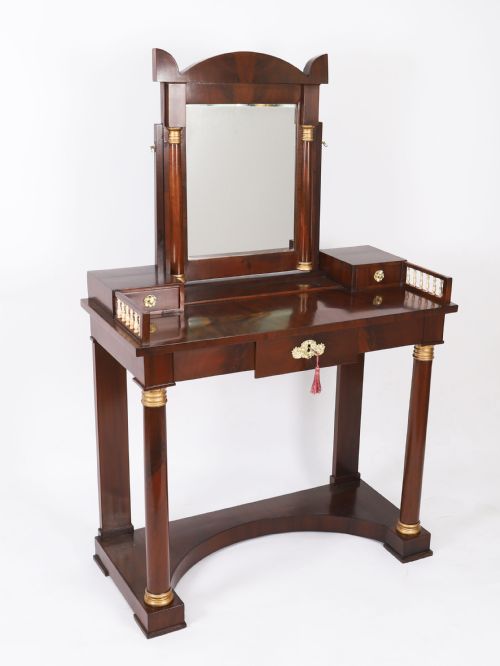


Empire Mahogany Mirror
An empire mahogany mirror brings grand architectural presence and deep wood tones to a room, drawing the eye with polished surfaces and classical metal mounts.
Empire Mahogany Mirror
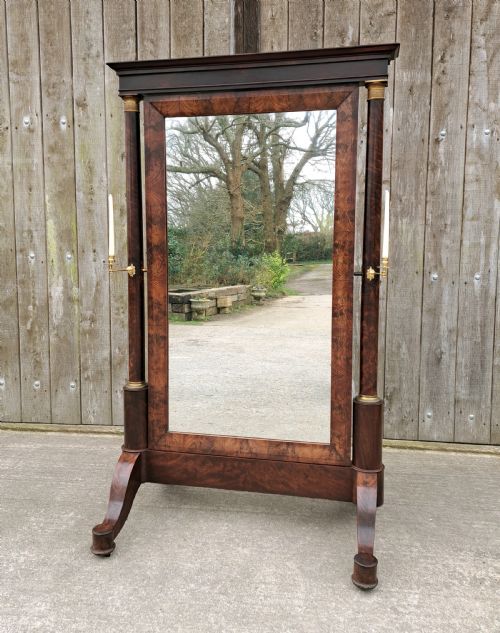
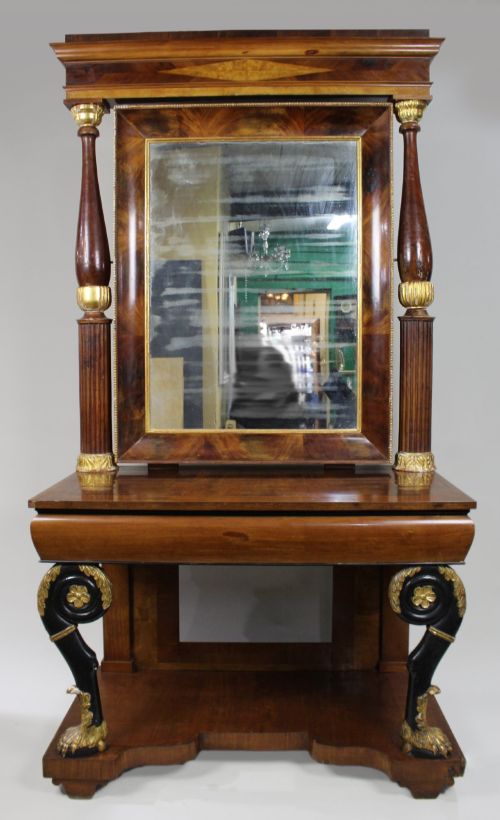
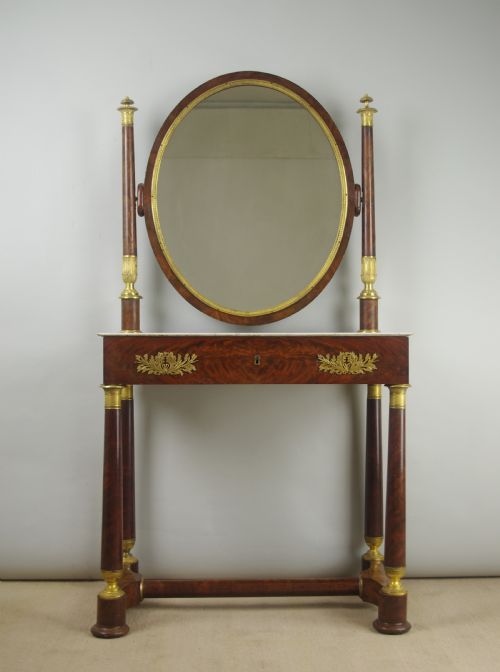
When you search for an empire mahogany mirror, you encounter substantial furnishings designed in French Empire, Grand Regency, Biedermeier, and later Revival styles across the nineteenth century. These pieces include large wall mirrors, tall cheval mirrors, pier mirrors paired with console tables, and dressing mirrors integrated into tables or cabinets.
The version you are most likely to meet on this page is a French Empire wall or cheval mirror from the nineteenth century, often showing architectural proportions and classical details. Continental and English examples also appear, spanning periods from the early nineteenth century through to the Empire Revivals of 1870, 1890, and 1910.
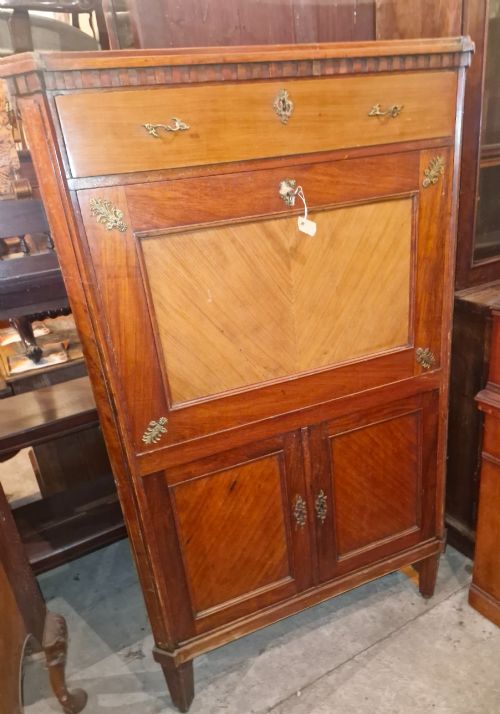
Many items combine mirror glass with functional furniture forms, such as dressing tables, chiffoniers, and side cabinets incorporating mirrored backs. These dual-purpose objects reflect light around an interior while providing storage or display surfaces.
Materials and Construction
Makers utilised solid mahogany and flame mahogany veneers applied over robust secondary timbers to achieve rich, figured grain patterns across the frames and associated cabinetry. Selected pieces incorporate parcel gilt elements, giltwood, or gilded wood highlights that contrast against the dark timber.
Cast and chased ormolu, brass, and gilt bronze mounts decorate the timber structures, taking the form of classical bezels, rosettes, and figurative appliques. Mirror glass is set within these heavy frames, occasionally accompanied by brass articulated candle holders or metal hardware.
Quality Variations
The refinement of the cast metal ormolu mounts and the vibrancy of the flame mahogany veneer distinguish the finest examples from simpler utilitarian pieces. Crisp detailing in the bronze work and harmonious grain matching across large surfaces indicate higher workshop standards.
Proportion and architectural balance dictate the success of the design, where classical motifs integrate smoothly into the overall mahogany frame without appearing crowded or heavy.
The Empire Mahogany Mirror Glossary
- Ormolu
- Gilded bronze mounts applied to furniture. This technique involves mercury gilding on bronze, producing a bright metallic finish popular in classical furniture.
- Cheval mirror
- A freestanding full-length mirror mounted on a pivoting frame between upright posts. It allows the glass to tilt for viewing angles.
- Pier mirror
- A large mirror designed to hang on the wall between two windows, frequently positioned above a matching console or pier table.
- Flame mahogany
- A veneer cut from timber where the branches join the trunk, creating a distinctive flamed or feathered grain pattern.
- Biedermeier
- A Central European style emphasising clean lines and domestic comfort without excessive ornamentation, utilising native timbers like mahogany.
- Restauration period
- A French style bridging the fall of the Empire and the July Monarchy, retaining classical proportions with refined decorative mounts.
Empire Mahogany Mirror: Frequently Asked Questions
What is an empire mahogany mirror?
An empire mahogany mirror is a classical nineteenth-century furnishing characterised by rich mahogany timber, architectural framing, and often gilt bronze or ormolu mounts.
These pieces reflect the neoclassical tastes popularised during the French Empire and subsequent revival periods across Europe and America.
How were cheval mirrors used?
Cheval mirrors served as freestanding dressing glasses where individuals could check their entire outfit.
Pivoting frames allowed users to tilt the glass to various angles, and some examples included attached candle holders for illumination.
Where should I place a pier mirror?
Pier mirrors are traditionally hung on the wall space between two windows, often directly above a console table or pier table.
This placement maximises natural light reflection and creates a balanced architectural focal point in a reception room or hallway.
How do I distinguish Empire from Empire Revival?
Original Empire pieces date from the early nineteenth century and reflect the primary classical movement under Napoleon.
Empire Revival pieces date from later decades like 1870, 1890, or 1910, reinterpreting the earlier classical vocabulary with late-nineteenth-century manufacturing methods.