


Empire Mahogany Gueridon
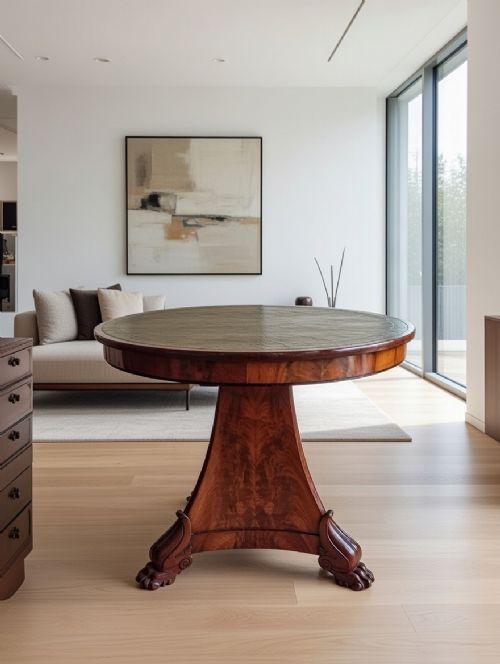
An empire mahogany gueridon brings architectural gravity and French neoclassical polish to a room as a freestanding centre or occasional table.
Empire Mahogany Gueridon
An empire mahogany gueridon is a round pedestal table originating in French neoclassical design, typically utilised as a centre, side or occasional table. These pieces frequently appear in nineteenth century French iterations, often associated with the Empire, Restauration and Charles X periods.
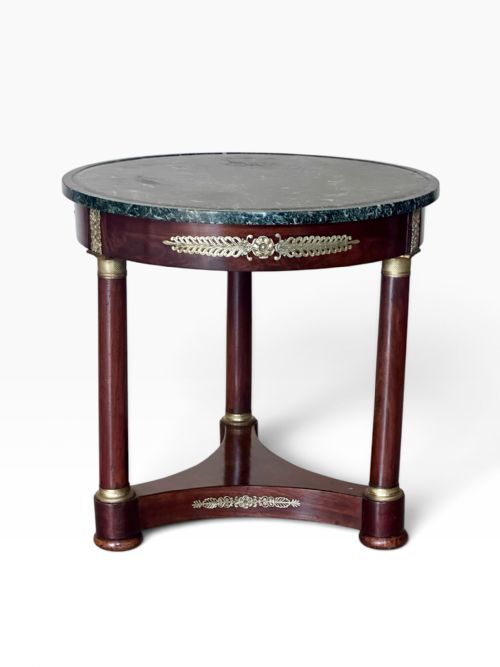
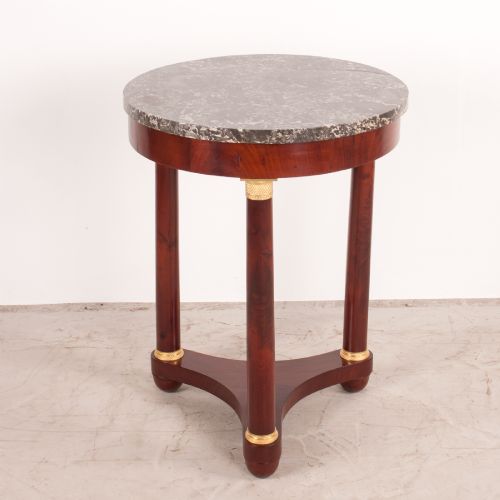
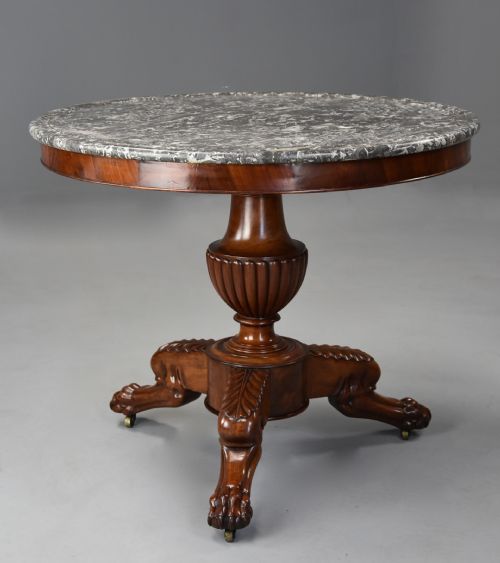
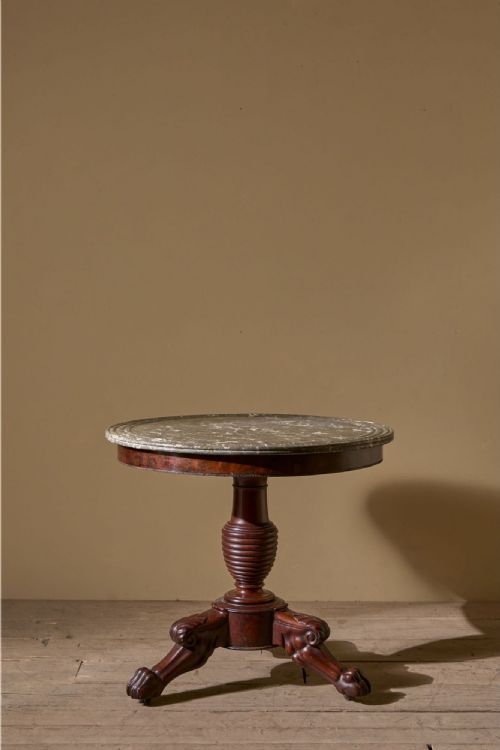
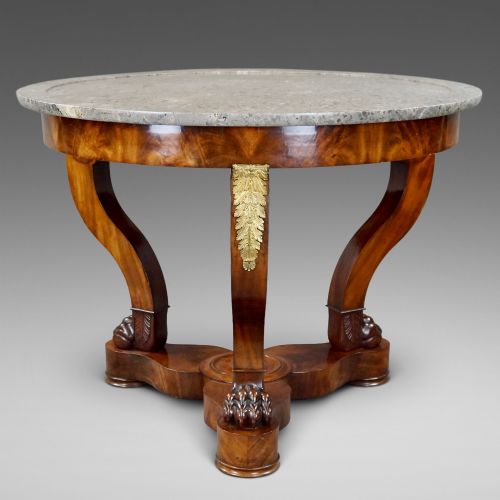
The form stands upon a central pillar, frequently resting on a triform or platform base, and often carries a heavy inset stone top. Buyers searching for an empire mahogany gueridon encounter diverse formats, including marble-topped pedestals with distinctive swan or ram supports.
Materials and Construction
Cabinetmakers utilised dense timbers, notably solid mahogany and figured flame mahogany veneers laid over robust carcases, to build the circular tops and central pedestals. These wooden structures are commonly paired with heavy inset slabs of grey, red, black or white marble.
Gilt bronze, ormolu and cast brass mounts articulate the structural junctions, embellishing collars, feet and capitals. Carved wooden details, such as swan supports and ram heads, complete the classical vocabulary.
Listings demonstrate materials spanning mahogany, flame mahogany, grey and red marble, ormolu, and gilt bronze across nineteenth century French styles.
Assessing Quality and Execution
The distinction between ordinary and superior examples lies in the crispness of the cast ormolu mounts and the depth of carved wooden elements such as swans or rams heads. Finer tables exhibit disciplined symmetry, tight veneer matching, and heavy, well-figured marble tops that sit flush within the mahogany frame.
Proportion and structural integrity dictate the standing of a piece, separating workshops that produced mass commercial items from those executing bespoke commissions for elite interiors.
The Empire Mahogany Gueridon Glossary
- Gueridon
- A small French round table supported by a single central column or pedestal. The form evolved from eighteenth century candle stands into substantial freestanding centre tables.
- Ormolu
- Gilt bronze ornamentation cast, chased, and applied to furniture mounts. This technique provides sharp metallic contrast against dark mahogany surfaces.
- Triform
- A three-sided base structure commonly utilised on pedestal tables for stability and visual weight. It often rests on paw feet or castors.
- Restauration
- A French decorative arts period spanning the early decades of the nineteenth century. Furniture from this era often retains neoclassical restraint while softening heavy Empire forms.
- Flame mahogany
- Timber veneer cut from the fork of the mahogany tree to create a distinctive flickering flame pattern. Cabinetmakers reserved this material for prominent table tops and drawer fronts.
Empire Mahogany Gueridon: Frequently Asked Questions
Where do I place a gueridon?
These round pedestal tables function best as freestanding centrepieces in a hallway, library or drawing room where people can walk entirely around them. Their compact circular footprint also allows them to serve as occasional or side tables in corners.
Because they lack corners, they soften rigid room layouts and hold lamps, decorative objects or books effectively without crowding the floor space.
How do I care for the marble top?
Wipe the marble surface regularly with a soft, damp cloth and mild neutral soap to prevent staining from acidic liquids like wine or citrus. Avoid abrasive cleaners or scouring pads that scratch the polished stone.
Apply a specialised stone wax periodically to maintain the surface sheen and protect the veining from moisture penetration.
What is the difference between Empire and Restauration pieces?
Empire furniture carries heavy neoclassical authority, featuring prominent military motifs, dark mahogany, and aggressive use of gilt bronze mounts. These pieces lean heavily on Roman and Greek archetypes.
Restauration furniture, following shortly after, softens these rigid militaristic lines with lighter timber tones, simplified proportions, and a subtler integration of brass or ormolu mounts.
How do I maintain the mahogany wood?
Dust the mahogany surfaces weekly with a clean, dry lint-free cloth to prevent particulate buildup. Avoid silicone-based polishes that leave a persistent film and instead utilise traditional beeswax sparingly.
Keep the timber away from direct heat sources and strong sunlight to prevent the mahogany finish from drying out or fading unevenly over time.